


Analysis
Justice Yashwant Varma inquiry: The witnesses the Committee did not hear
Three specific evidentiary failings of the Justice Varma inquiry stand out from his withdrawal letter
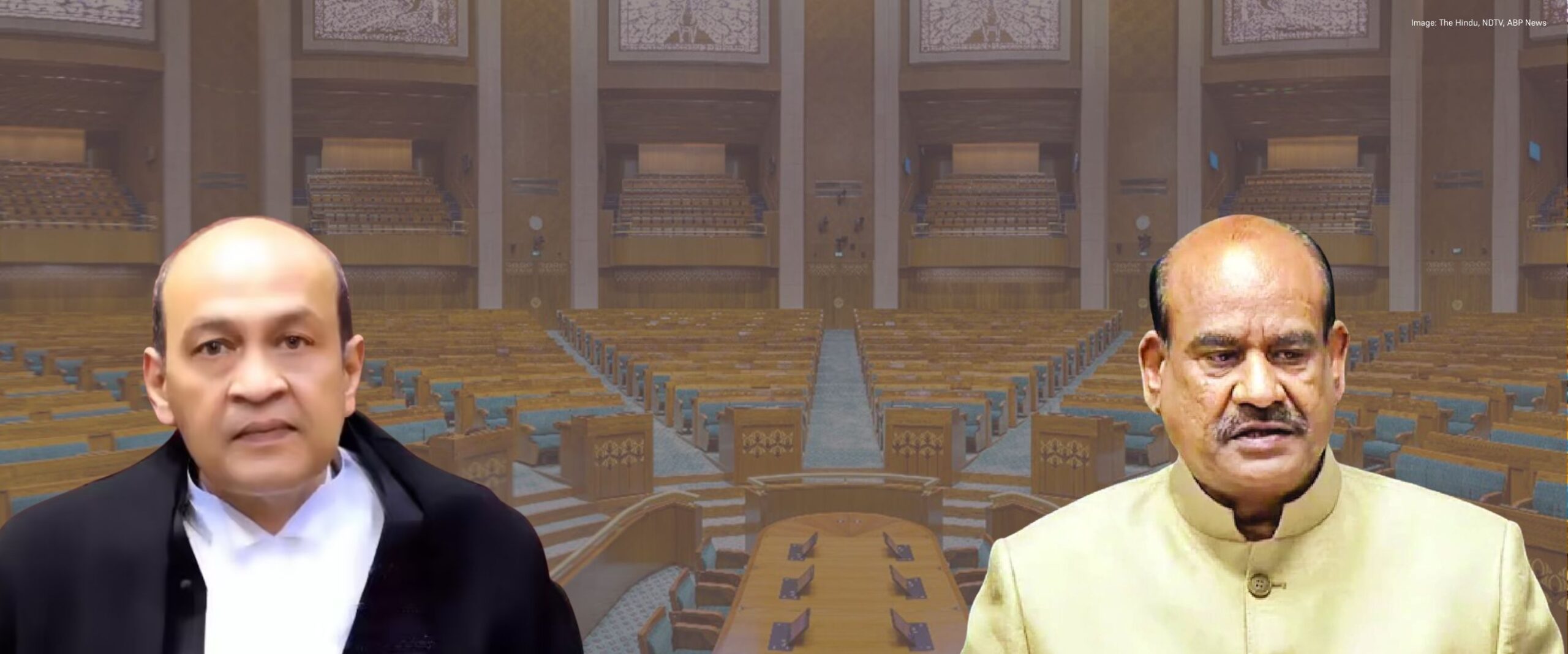
On 9 April, Justice Yashwant Varma wrote to President Draupadi Murmu, tendering his resignation with immediate effect. Justice Varma was facing impeachment proceedings after burnt currency notes were discovered in his official residence during a firefighting operation. The retired judge has maintained his innocence for over a year.
Justice Varma wrote a subsequent letter to the statutory Inquiry Committee set up by Lok Sabha Speaker Om Birla. The letter of withdrawal is now part of the public record.
It contains three specific evidentiary allegations that deserve attention. Each goes to show how the statutory Committee, constituted under the Judges (Inquiry) Act, 1968, conducted itself.
Witnesses cited and not produced
Justice Varma alleges that the Committee only examined nine witnesses out of the 31 witnesses that were cited. Some of them had provided testimonies that were “not unfavourable”. The 22 witnesses who were dropped did so in a pattern.
These included two senior Delhi Fire Services officers, Assistant Divisional Officer Suman Kumar and Divisional Officer Rajinder Atwal. A key fact was revealed during cross-examination. The decision to not record any cash in the Fire Report was taken at 12:15 a.m. on 15 March 2025 by Atwal and Kumar. Moreover, Justice Varma was only informed about the fire until roughly an hour later. Both officers were dropped after this came on record.
Similarly, cross-examination revealed that senior Delhi police officers, in a parallel administrative decision, decided not to record or seize the alleged cash in accordance with statutory procedure. They were dropped “without any proper explanation”.
Further, all three of Justice Varma’s Personal Security Officers were dropped on 17 March 2026 after he challenged their affidavits. He stated that the affidavits falsely claimed the presence of one of his personal security officers, PSO Ajit, at the premises when the fire took place. Justice Varma had moved applications seeking location data and Google records to test this claim.
The Fire Report
According to Justice Varma, the Committee had excluded material that was favourable for his case. One of these was the statutory Fire Report, which carries a presumption of authenticity in law—and does not mention any cash or currency at his premises. It also records the continued presence of fire personnel at the site until 1:56 a.m. on 15 March 2025—well after the fire had been brought under control. Justice Varma was not permitted to put it to the relevant witness in cross-examination. His letter implies that a contemporaneous official record of that probative weight cannot be set aside by silent administrative discretion in proceedings of this nature.
The In-House Committee record, used differently
The Articles of Charge framed against Justice Varma in November 2025 drew their material almost entirely from the In-House Committee (IHC) record. A Spot Inspection Report containing the personal observations of the IHC members was used as substantive evidence before the statutory body. The Supreme Court itself, in dismissing Varma’s writ petition, observed that the in-house procedure is preliminary and confidential. It is meant for the eyes of the Chief Justice of India and high constitutional functionaries alone.
A preliminary mechanism designed as the trigger for further proceedings should not itself become the substantive evidence in those proceedings. That is the structural objection. The procedural one is sharper. Justice Varma had no opportunity to cross-examine the IHC members whose personal observations were now being read as findings of fact against him. The in-house process was never built to bear that evidentiary weight.
What the letter does not displace, and what it nonetheless asks
None of these allegations unsettles the IHC’s findings on the cash. Those findings rest on 10 independent eye-witnesses. They rest on CFSL-authenticated video and still evidence. They rest on the open door of the storeroom. They rest on Justice Varma’s own admission that the liquor cabinet key inside the storeroom was in his exclusive possession. The procedural complaint in the withdrawal letter operates on different terrain.
The standards now being applied to Justice Varma are those that fitted Justices P.D. Dinakaran and Soumitra Sen—judges who faced similar inquiry proceedings in the past. Their files were built on documentary records: disproportionate assets and land encroachment in one case, a parliamentary finding of misappropriated funds in the other. The Justice Varma file, as the IHC itself describes it, rests on strong inferential evidence. Inferential evidence is not documentary proof. The withdrawal letter, read carefully, is asking whether the procedural standards of the 1968 Act should differ when the evidentiary base differs in kind.
Related articles
Analysis
Quit before the verdict: The judicial accountability gap
Justice Yashwant Varma's exit revives a constitutional lacuna that has remained unresolved for 15 years

Analysis
Judge inquiry: The opacity of the in-house process
The CJI’s power to recommend removal of a judge on the basis of an in-house committee’s report may be diluting the separation of powers
Analysis
SC dismisses Justice Yashwant Varma’s challenge against Inquiry Committee
The Court held that the Judges (Inquiry) Act cannot be interpreted to obstruct proceedings that investigate actions against a Judge
Analysis
Speaker admits motion for Justice Varma’s removal: What lies ahead?
The Speaker constituted a three-member committee under the Judges Inquiry Act. We explain the steps involved in the parliamentary process