


Analysis
Sri Lanka: A long-delayed judicial check on emergency powers
A landmark ruling breaks with decades of judicial deference to the State’s ‘public security’ claims amid rights violations
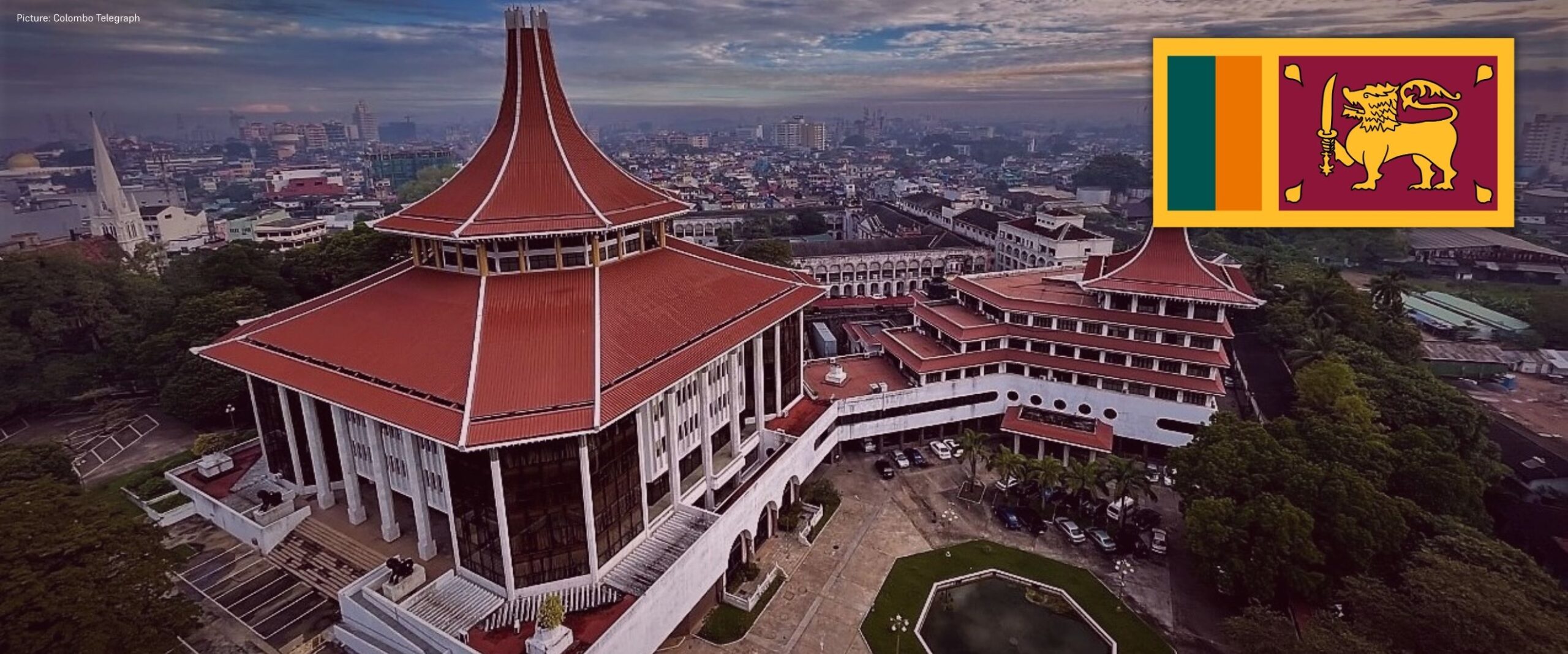
Sri Lanka’s constitutional landscape is shaped by extraordinary executive power. One of its clearest manifestations lies in the normalisation of emergency authority. This is visible in the near-permanent state of emergency that persisted through the civil war from 1983 until 2009, and in the Prevention of Terrorism Act of 1979—enacted as a temporary measure, but in force for over four decades.
Despite well-documented abuses of these powers, ‘national security’ continues to serve as a closing argument that easily sways legislators and the judiciary. Against this backdrop, the Supreme Court’s 2025 decision in Ambika Sathkunanathan and Others v The Attorney General represents something rare: a judicial approach that genuinely engages with executive authority when it invokes national security. The case concerned a state of emergency declared by the Acting President under the Public Security Ordinance of 1947. On 23 July 2025, the Supreme Court held the proclamation to be void.
In Karunathilaka and Another v Dayananda Dissanayake (1999), the Court had recognised that an emergency proclamation was an executive act over which judicial review may lie—a possibility left open but never exercised. In a country where emergency powers have been used routinely, and where the armed forces continue to be called out regularly to maintain public order, Ambika Sathkunanathan marks a significant development.
The ‘aragalaya’ of 2022
The proclamation was issued in response to mass protests (commonly referred to as the ‘Aragalaya’ or ‘Porratam’) against President Gotabaya Rajapaksa’s government over the collapse of the national economy. The crisis had engulfed the country by early 2022, with long queues for fuel, cooking gas and other essentials. By March, public protests had erupted. In April, the government conceded that the country was bankrupt and suspended repayment of external debts.
In response to sustained protests, the Prime Minister resigned in May, followed by the President in July. Ranil Wickremasinghe was sworn in as Acting President. At the time, he occupied the sole parliamentary seat held by his party—the United National Party had failed to win a single constituency in 2020 and was allocated one seat under the party-list system. Meanwhile, the ruling party—the Sri Lanka Podujana Peramuna (SLPP)—retained 145 of the 225 seats in Parliament. An election among Members of Parliament to choose an interim President was scheduled for 20 July. Though constitutionally valid, this process was at odds with public demands for a broader change of government.
As Acting President, Wickremasinghe declared a nationwide state of emergency on 18 July, without disclosing any specific or localised threat that necessitated it. Two days later, he was elected interim President. In the early hours of 22 July, the military moved in to forcibly clear protesters who had occupied the site opposite the Presidential Secretariat for nearly four months. Within a month, five petitions were filed challenging the proclamation. Three years later, the Supreme Court, by a two–one majority, struck it down.
Core failures of the Constitution
Article 155 of the 1978 Constitution, contained in the chapter on Public Security, gives constitutional recognition to the Public Security Ordinance of 1947 (PSO), a pre-independence statute. Under the PSO, the President may declare a state of emergency by proclamation. Once such a proclamation is in force, the President may make emergency regulations that have the force of law. Emergency regulations are capable of overriding all laws of the land other than the Constitution.
A proclamation remains in force for 30 days. It must be placed before Parliament without delay and will lapse if not approved within 14 days. The PSO vests expansive discretion in the executive, with broadly framed thresholds and clauses attempting to bar judicial review. It has never been substantially revised to reflect the normative commitments of a constitutional democracy.
In the post-independence era, the PSO has operated through a trade-off: civil liberties surrendered in exchange for the promise of security. The executive presidency entrenched by the 1978 Constitution, together with the Prevention of Terrorism Act of 1979 (PTA), reinforced this logic. During the civil war, the PTA enabled routine oppression and torture of Tamil citizens, often with limited court intervention. The mass arrests of Muslims following the 2019 Easter attacks rehearsed the criminalisation of entire communities in the name of security.
The Constitution fails to explicitly recognise the right to life and human dignity as foundational values, fails to make socio-economic rights justiciable and bars fundamental rights applications not brought before the Court within 30 days of the violation. It allows the overly powerful executive president to directly appoint judges and other high officials. It entrenches parliamentary dominance by insulating enacted legislation from judicial review, a feature unique among South Asian constitutions.
A jurisprudence of accountability
Constitutional reform captured the public imagination with the backdrop of war: it was seen as central to resolving the ethnic conflict and its underlying causes. Successive Parliaments engaged in a tug-of-war over presidential powers: the 17th, 19th and 21st Amendments of 2001, 2015, and 2022 introduced checks on presidential appointments and expanded the fundamental rights jurisdiction over the official acts of the President, while the 18th and 20th Amendments of 2010 and 2020 removed fetters on presidential discretion.
Over the same period, the Supreme Court developed an accountability-oriented jurisprudence. In Waters Edge (2008), it held that the President’s sale of public land breached the ‘public trust doctrine’ and ordered personal fines against him. In the Dissolution of Parliament case (2018), a seven-judge Bench restored Parliament after finding the President’s early dissolution unconstitutional. In the Economic Crisis Accountability case (2023), the Court found, once again, that the President had breached the public trust doctrine by contributing to the 2022 collapse. In two decisions in 2024 (Royal Park murder and Duminda Silva), the Court held that the President had misused the power to pardon. In Accountability for Victims of the Easter Terrorist Bombings (2024), the Court ordered the President to pay LKR 100 million for failing to act on actionable intelligence.
Notwithstanding this accountability-oriented turn, the Court’s fundamental rights jurisprudence in cases involving national security reflects a marked deference to the State, especially where petitioners lack public prominence and come from marginalised communities.
The Supreme Court decision
In the late 1990s, the Karunathilaka case had left open the possibility of reviewing emergency declarations. Last year’s Ambika Sathkunanathan verdict closed that gap. The three judges unanimously affirmed the Court’s authority to review presidential acts and to assess—with the appropriate margin of appreciation—whether the actions were supported by adequate reasons, whether due process was followed and whether the response was proportionate to the claimed emergency. It was in the factual determination that the Bench divided but two of three judges held the 2022 Emergency Proclamation to be in breach of the petitioners’ fundamental right to equal protection of the law.
This verdict represents constitutionalism in action—asserting values, checking the exercise of power, demanding justification and refusing to accept “national security” as a phrase that ends all inquiry. It is no coincidence that the decision came at a moment when the majority community found itself at the receiving end of the excesses of emergency rule. But the precedent it sets is not so limited. It establishes a legal framework that can be invoked to secure democratic rights for all citizens.
The challenge ahead
It remains to be seen whether Ambika Sathkunanathan represents a genuine turn or merely an exceptional moment. The security apparatus—including the routine militarisation of civilian life since 2009—remains constitutionally and legally unaddressed. Much work remains to be done to move towards a genuine culture of constitutionalism.
Constitutional design matters. The Constitution ought to explicitly recognise the right to life and human dignity, make socio-economic rights justiciable and improve access to justice. It must also address the overly powerful role of the executive President and establish clear legal thresholds for the exercise of emergency and public security powers.
Further, the Constitution must provide for judicial review of enacted legislation. Constitutionalism cannot thrive where the constitutional design subordinates rights to the interests of political majorities.
The composition of the Supreme Court should be representative of Sri Lankan society, drawing in equal measure from the state, private and academic spheres. Representation enhances institutional capacity to genuinely hear the marginalised. At present, the Court is composed entirely of career judges and senior lawyers who have earlier represented the State. Such a composition risks creating conditions for deference to executive power.
The Emergency Proclamation verdict was delivered during the first year of the National People’s Power (NPP) government, which declared in its manifesto that it would introduce a new constitution to strengthen democracy, abolish the executive presidency and repeal the Prevention of Terrorism Act. The country has yet to see movement on any of these commitments. Indeed, with respect to the PTA, there has been regression, reflected in its continued use and the promotion of draft legislation (the Protection of the State from Terrorism Bill) which proposes to confer even wider executive powers.
Thus, while Ambika Sathkunanathan may suggest that the dominance of security-based thinking in Sri Lankan constitutional law has begun to shift, whether it signals a deeper transformation of a legal culture shaped by decades of emergency rule remains uncertain.
Ermiza Tegal is an Attorney-at-Law of the Supreme Court of Sri Lanka with 19 years of experience in public law, particularly fundamental rights. She also appeared as counsel for one of the petitioners which resulted in the ‘Ambika Sathkunanathan’ verdict.
Related articles
Analysis
Bangladesh: A year of unprecedented constitutional upheaval
The referendum on the July Charter and a Supreme Court decision on caretaker governments raise questions of legality and legitimacy
Analysis
Bhutan: Constitutional guarantees come up against resource constraints
Declining press freedom and two recent incidents highlight how institutional capacity continues to lag behind constitutional aspiration
Analysis
Pakistan: New court, old elite
Recent constitutional amendments have recalibrated the judicial role and entrenched the military’s influence on the political process
Analysis
Maldives: Supermajority enables ‘rule by law’
An anti-defection law—followed by moves against independent commissions, the judiciary and the media—has hollowed out constitutional checks