


Channel
What did the Supreme Court hold on the stray-dogs matter?
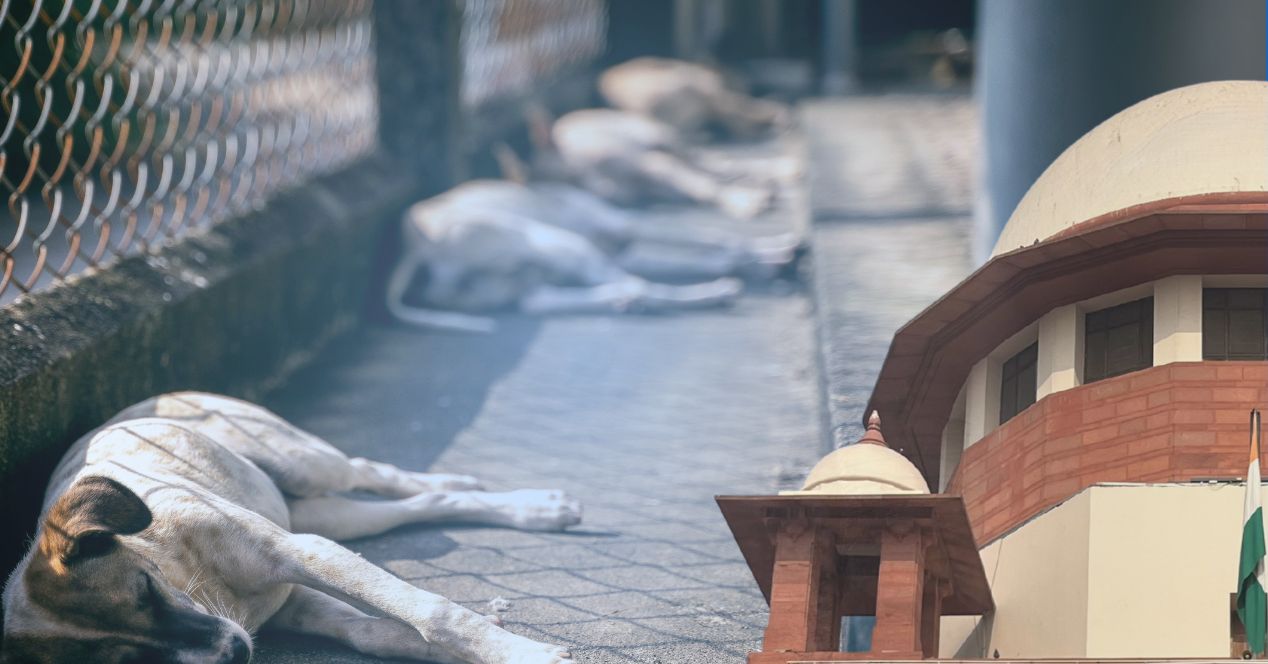
The Bench barred routine FIRs against officials carrying out dog-control operations.
Transcript:
The Supreme Court’s handling of the stray dog question has swung like a pendulum — from removal, to restraint, to something in between.
On 28 July of last year, the Supreme Court took suo moto cognisance of the issue based on a newspaper report which reported the death of a six-year-old girl following a stray dog attack.
The case was taken up by a bench of Justices J.B. Pardiwala and R. Mahadevan. The Bench ordered that stray dogs be removed from the streets of Delhi and NCR and relocated to shelters and pounds within eight weeks, with a clear bar: the dogs detained could not, under any circumstances, be released back to the streets.
Between 28 July and 11 August, the Court’s records show that five Interlocutory Applications were filed in the case, raising concerns over the lack of infrastructure to implement the order and health consequences of mass sheltering and the conflict with Animal Birth Control Rules, 2023.
The order was met with nationwide outrage. Critics alleged that the Court had passed an order that was both inhumane and impossible to implement. The very next day, an oral mention was made before the CJI seeking urgent listing of a pending 2024 matter challenging a Delhi High Court Order on sterilisation and vaccination of community dogs in Delhi — a matter the 11 August order had effectively ignored.
A re-constituted three-judge Bench of Justices Vikram Nath, Sandeep Mehta and N.V. Anjaria acknowledged that the 11 August order to a blanket non-release direction was “too harsh,” and directed the dogs to be picked up, sterilised, dewormed, vaccinated and then released back to the same locality, except if they are rabid. In addition, the Court mandated designated feeding spaces and helplines to report violations, signalling an effort to regulate human behaviour around the animals.
But this order came with an unusual move, this Bench directed individual petitioners and NGOs to deposit funds with the Court Registry within seven days – Rs. 25,000 for each individual; Rs. 2 lakh for each NGO – stating that the failure to deposit would disqualify them from further participation in the case.
In the next hearing, the Bench carved out what it called “institutional areas” — schools, hospitals, bus depots and similar spaces — as zones requiring exceptional, preventive measures. Every stray dog found within these premises was to be removed and shifted to a designated shelter, not returned to the same location.
The Bench pronounced its final judgement on 19 May 2026, and upheld the Animal Welfare Board of India’s (AWBI) Standard Operating Procedure (SOP). It issued a fresh set of directions to States, Union Territories and civic authorities for implementation of the Animal Birth Control (ABC) framework.
Authorities were permitted to take legally permissible measures, including euthanasia of incurably ill, rabid or demonstrably dangerous dogs, in areas where aggressive attacks have become frequent and pose a continuing threat to public safety. The bench also barred routine FIRs against officials carrying out dog-control operations.
The Bench held that the right to life under Article 21 includes the right to move freely and access public spaces without living under a constant apprehension of physical attack or exposure to life-threatening incidents such as dog bites. The state, it said, cannot remain a passive spectator where preventable threats to human life continue despite statutory mechanisms designed to address them.
Read more on scobserver.in!
Related articles

Analysis
Must citizens outsprint stray dogs to exercise Article 21? SC’s answer comes with euthanasia nod
Bench barred routine FIRs against officials carrying out dog-control operations.
Analysis
Stray dog ‘menace’: Making sense of the Supreme Court’s intervention
A three-judge Bench reserved its decision on whether to stay an earlier Order directing authorities to free Delhi and the NCR of stray dogs

Analysis
SC says earlier order on strays ‘harsh’, allows release of sterilised dogs
The three-judge Bench’s ruling modifies the 11 August Order on stray dogs in Delhi-NCR but it raises new questions about municipal logistics
Analysis
Supreme Court’s latest order keeps stray dog issue on a short leash
The ‘institutional area’ carve-out shields campuses and transport hubs from returning stray dogs, reviving concerns about harshness