


Analysis
Supreme Court’s Special Lok Adalat resolves 1712 cases over three days
SAMADHAN began in April as a pre-settlement exercise; 3285 cases were listed during the Special Lok Adalat and 240.94 crores was disbursed
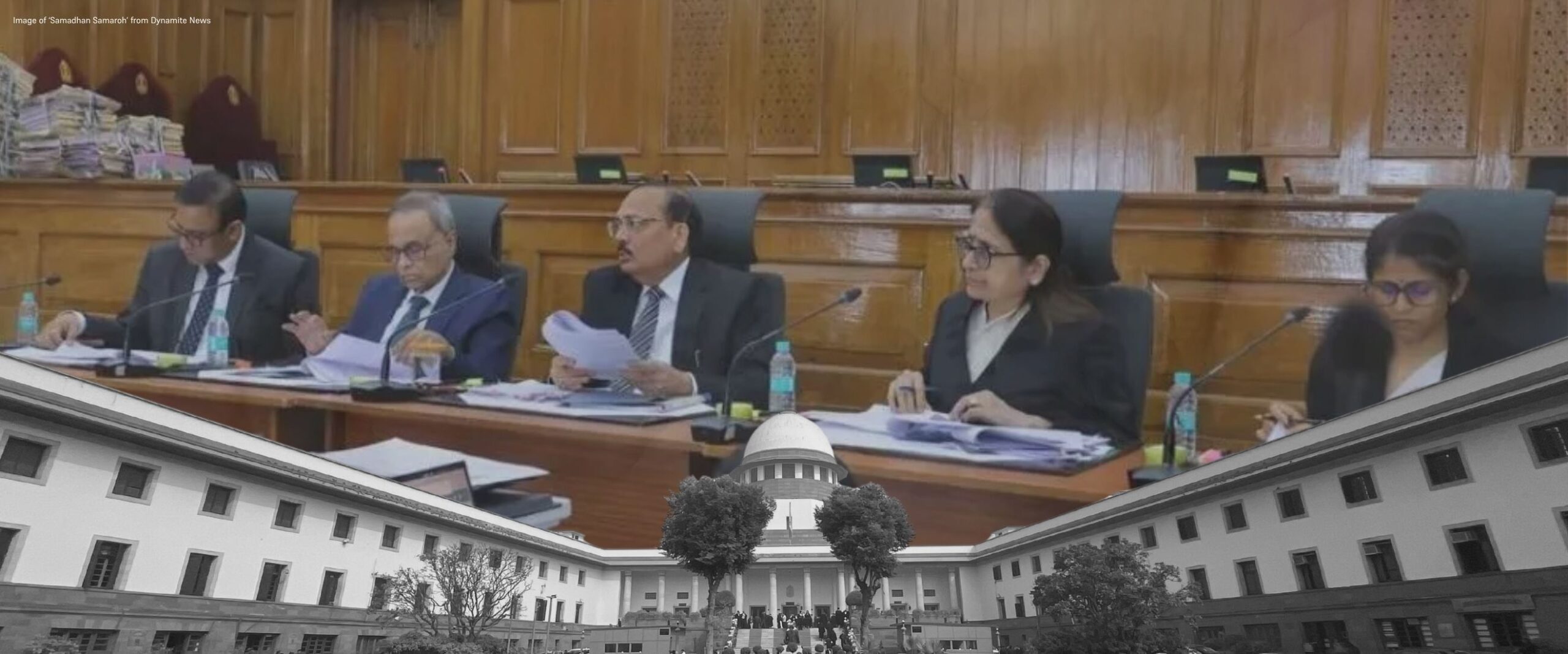
The Supreme Court’s three-day Special Lok Adalat concluded on 23 August. 3285 cases were listed out of which 1712 cases—1664 settled or disposed; 48 resolved through mediation—settled or disposed of.
The Special Lok Adalat was the culmination of SAMADHAN SAMAROH—Supreme Court Action for Mediated Adjudication and Disputes Harmonization Across Nation. The initiative began on 21 April with a pre-settlement process to identify pending matters where an amicable resolution was possible. Litigants and their counsel were approached in advance to explore settlement before the matters were listed before the Special Lok Adalat.
The exercise comes as the Supreme Court’s pending docket remains above 95,000. As on 1 August, 95,718 cases were pending. In July, the Court disposed of 6303 cases but received 7440 new cases. July was the third month in 2026, after March and June, in which fresh filings exceeded disposals.
1,712 cases resolved
The figures show that the number of cases listed increased substantially over the three days. On 21 August 588 cases were listed, of which 402 were settled or disposed of. On 22 August 1159 cases were listed and 350 were settled or disposed of. The final day saw the highest number of listings, with 1538 cases taken up and 912 settled or disposed of. In total, 3285 cases were listed and 1664 were settled or disposed of during the three-day Special Lok Adalat. A further 48 cases were resolved through mediation, taking the total number of cases disposed of to 1712.
The Court said the benches sought to persuade parties to arrive at settlements “of their own volition.” The benches were presided over by CJI Surya Kant and other Supreme Court judges and included Senior Advocates and Advocates-on-Record, with assistance from Senior Registrars and other Registry officials. The cases covered matrimonial and property disputes, motor accident claims, land acquisition and compensation matters, taxation, and service and labour disputes.
Mediation as a continuing process
Ahead of the Special Lok Adalat, CJI Surya Kant said the objective was to resolve cases through mediation and other consensual mechanisms in a manner that left both sides satisfied. “The focus is to ensure that both parties leave the court with a feeling that they have both won,” he said. He also said litigants face considerable stress during judicial proceedings and that the initiative sought to provide a mutually acceptable resolution.
Justice P.S. Narasimha, who was part of the Special Lok Adalat benches, said the exercise should not be judged only by the number of settlements. He said its success should also be assessed by whether it helped “institutionalise mediation as a continuous process.”
“The essence of this resolution is informality,” Justice Narasimha added, distinguishing mediation from conventional court proceedings. He said mediation allowed the parties themselves to decide the dispute through a voluntary process. He also identified the shortage of trained mediators as a challenge and said a permanent institutional mechanism and subject-matter expertise among mediators were needed. The longer-term objective, he said, was to build “institutional memory” around mediation.
A wide range of cases
The Court had identified 14 categories for the initiative: banking; civil law; compensation and MACT matters; consumer and RERA disputes; matters under the Negotiable Instruments Act; family laws; labour and industrial laws; land acquisition; property tax; rent and eviction; service laws; transfer petitions; direct taxation; and indirect taxation. The final list issued on 18 August ran to 257 pages and 2044 numbered entries. Some entries contained connected matters. The High Court-wise lists included 4409 matters from Bombay, 2731 from Delhi and 2113 from Allahabad, among others.
Several entries showed that settlement efforts had begun before the cases reached the Special Lok Adalat. The Registry recorded matters in which a “Mediation report [was] received”, a “settlement agreement [was] received”, or both the mediation report and settlement agreement had been received. The initiative also included a One Stop Centre, described by the Court as a “War Room”, to coordinate the settlement process.
Lok Adalats beyond the Supreme Court
SAMADHAN operates within a much larger Lok Adalat system. National Lok Adalats settled 10,45,26,119 matters in 2024 and 14,84,25,050 in 2025, according to the Ministry of Law and Justice. In 2024, 8,70,19,059 of these were pre-litigation matters and 1,75,07,060 were pending cases. In 2025, the corresponding figures were 12,65,89,535 pre-litigation matters and 2,18,35,515 pending cases. The Supreme Court’s Special Lok Adalat is narrower: it deals with matters already pending before the Court. But, as with Lok Adalats more generally, the objective is to resolve disputes by consent rather than through contested adjudication.
The Court held its first large Special Lok Adalat from 29 July to 3 August 2024, as part of its 75th anniversary celebrations. More than 14,000 cases were identified during the preparatory process, with about 1,600 eventually listed for the six-day sitting.
This year’s exercise was structured differently. Rather than limiting settlement efforts to the three days of the Lok Adalat, the Court began working on identified matters in April and continued settlement efforts until the August sittings. The Court’s own account frames the exercise as an effort to strengthen consensual dispute resolution and conserve judicial time for matters requiring adjudication.
For a Court with pendency crossing the 95,000 mark, the immediate result is a reduction in its docket. The longer-term question, reflected in the comments of CJI Surya Kant and Justice Narasimha, is whether the settlement process developed through SAMADHAN will continue beyond this exercise.
Related articles

Analysis
Supreme Court’s week-long Special Lok Adalat begins
Supreme Court sets up Special Lok Adalat to hear and clear cases with “elements of settlement,” commemorating its 75th anniversary
Court Data
July 2026: Pendency increases after partial break
The Court resumed regular sittings in July, but fresh filings continued to outpace disposals, keeping pendency above 95,000 cases.