


Analysis
What constitutes quality legal assistance?
Supreme Court revives mother’s appeal in dowry death case, faults High Court on legal aid
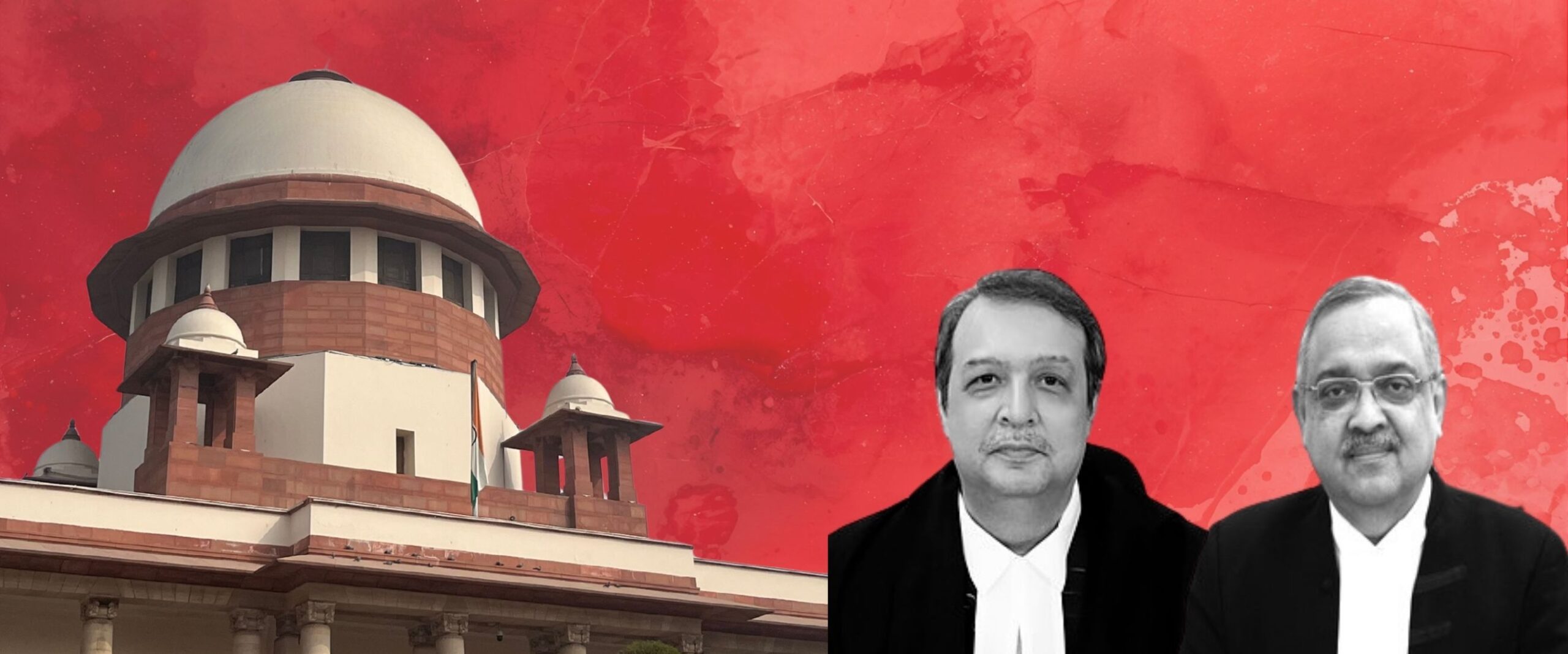
Last week, in Ummed Devi v State of Rajasthan, the Supreme Court restored a criminal appeal which had been dismissed by the Rajasthan High Court for a filing defect and the absence of counsel. The order emphasised that legal aid is more than mere appointment of a counsel and extends to quality representation that protects the litigant’s right to be heard.
Ummed Devi’s appeal to the High Court was against the acquittal of persons accused of dowry-related demands and harassment that allegedly led to her daughter’s death. Filed 19 days late, her appeal was not accompanied by an application seeking “condonation of delay” as is ordinarily done in such cases. When no lawyer appeared for her before the High Court, it closed the case without considering the acquittal on merits.
When Devi challenged the dismissal through special leave petitions, a Bench of Justices J.B. Pardiwala and K.V. Chandran restored her appeal. While accepting that a condonation application should have been filed, the Bench described the delay as “minimal” and identified the omission as a consequence of Devi’s lack of adequate legal representation.
The Court observed that constitutional courts must remain “alive to the travails of a litigant”. If legal representation is inadequate, courts have a duty to provide “quality legal assistance”, whether the litigant is a victim or an accused. In the absence of counsel for Devi, the High Court should have appointed an amicus curiae or an advocate from the Legal Services Authority (LSA).
Legal aid as an outcome
The expression “quality legal assistance” is the analytical core of Ummed Devi. It draws attention to the role of representation in a litigant’s journey.
In Devi’s case, identification of the limitation period, preparation of the condonation application and appearance before the High Court were central to provision of effective legal representation. The omission of these elementary steps extinguished a statutory remedy.
The Court’s approach provides a functional way of assessing legal assistance by breaking it down into the multiple responsibilities involved. It questioned the counsel on whether available remedies were identified and procedural requirements completed, and gave the litigant an opportunity to correct the defect.
Most importantly, the Court’s response distinguished access to a lawyer from access to justice. It recognised that appointment of counsel is merely the first step of the process and that having an advocate’s name on the record offers little protection when the advocate fails to provide sustained, quality assistance.
The institutional framework already demands competence
Article 39A of the Constitution directs the State to ensure that the legal system promotes justice on the basis of equal opportunity. It mandates free legal aid to ensure that economic or other disabilities do not prevent citizens from securing justice. The Supreme Court’s legal-aid jurisprudence connects representation for accused persons with the guarantee of fair procedure under Article 21.
The Legal Services Authorities Act, 1987 gives institutional form to Article 39A. Section 4 requires the National Legal Services Authority (NALSA) to make “competent legal services” available. Section 2(c) defines legal services to include conducting a case and providing legal advice. Under Section 12(c), every woman is eligible for legal services irrespective of income, subject to the prima facie case requirement in Section 13.
The NALSA (Free and Competent Legal Services) Regulations, 2010 expanded this responsibility a step further. Regulation 8 requires authorities to consider a lawyer’s competence, integrity, suitability and experience before empanelment. Regulations 10 to 12 require Monitoring and Mentoring Committees to track court-based legal-aid cases, guide panel lawyers and maintain records of their day-to-day progress. These committees must assess the progress of each case and the performance of the lawyer. Where performance is unsatisfactory, Regulation 8 permits the case to be withdrawn from the lawyer and the lawyer to be removed from the panel.
The regulations therefore treat legal aid as a supervised professional service. Selection, subject-matter suitability, monitoring, training and replacement are all components of “competent” service.
The evolution of a victim’s right to legal aid
The constitutional law of legal aid developed primarily through cases involving unrepresented accused persons who faced trial and loss of liberty. Ummed Devi expressly speaks of assistance to both parties, a formulation which responds to the expansion of a victim’s position under criminal procedure.
The proviso to Section 372 of the Code of Criminal Procedure, 1973 gives a victim the right to appeal against an acquittal, conviction for a lesser offence, or award of inadequate compensation. Section 2(wa) defines ‘victim’ to include the victim’s guardian or legal heir.
In Satya Pal Singh v State of Madhya Pradesh (2015), the Court recognised the father of a deceased woman as a victim entitled to challenge an acquittal. Mallikarjun Kodagali v State of Karnataka (2018) treated the victim’s appeal as a substantive statutory right and emphasised meaningful access to justice. Jagjeet Singh v Ashish Mishra (2022) later held that victims have participatory rights in the investigation until the conclusion of appeal or revision.
Ummed Devi identifies the support required to enforce these rights. A right to appeal has limited value if deficient assistance prevents the victim from meeting the mandated procedural requirements.
Vigilance at the High Court
Ummed Devi places the High Court as a safeguard between professional failure and the loss of a statutory remedy. When counsel is absent and a curable defect threatens to end an appeal, the court can appoint an amicus or seek assistance from the LSA. The appointed lawyer can then examine the record, correct the omission and place a relevant explanation before the court.
This safeguard enables the court to consider whether delay should be condoned. It ensures that adjudication is based on an effective hearing instead of a counsel’s silence.
The Rajasthan High Court will now decide Devi’s appeal on merits.