


Analysis
Pakistan: New court, old elite
Recent constitutional amendments have recalibrated the judicial role and entrenched the military’s influence on the political process
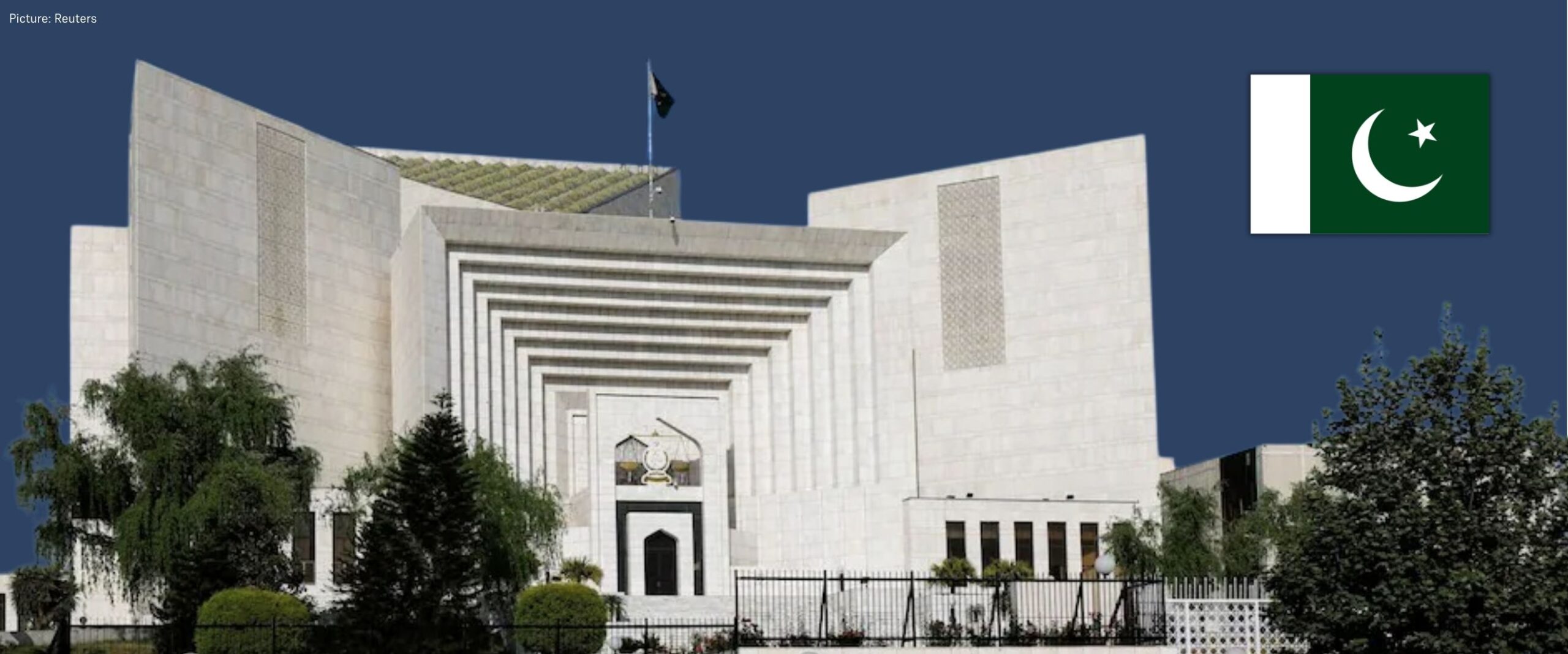
Over the last year and a half, Pakistan has witnessed frenetic constitutional activity in the form of two significant amendments to its five decades-old Constitution of 1973. Taken together, the 26th and 27th Constitutional Amendments (“Amendments”) strengthen the military’s hold over the political process while clipping the wings of a recalcitrant judiciary.
The indecent haste with which the Amendments were passed made the protracted wrangling over past unconstitutional amendments by military dictators—General Zia’s 8th Amendment in 1985; General Musharraf’s 17th Amendment in 2003—look like feats of deliberative democracy. But what appeared abrupt was the culmination of processes that unfolded over several years. The amended constitutional text symbolises a renewed elite compact between civilian and military actors. This coalition is united in its determination to neutralise what it regards as the anarchy unleashed by the military-backed former Prime Minister Imran Khan and his party, Pakistan Tehreek-i-Insaf (PTI).
This common goal aside, institutional actors across the civil-military divide have seized upon the moment to engage in a quid pro quo to maximise their long-term political advantage. There are limits, however, to what political opportunism can buy, and it is no wonder that civilian supremacy, judicial autonomy and free speech are all under fire in this messy reset.
Around six months after the disputed February 2024 general election that installed a coalition led by the Pakistan Muslim League-Nawaz (PML-N), reports surfaced about hectic negotiations over a new constitutional amendment. On 21 October 2024, the 26th Amendment was rushed through Parliament with a clear aim: to place the constitutional courts under executive superintendence.
Despite PTI’s fierce opposition and continuing allegations of electoral manipulation, the Bill was cleared by the Senate after last-minute wrangling and was passed by the National Assembly the same night, buoyed by the government’s two-thirds majority. The 27th Amendment followed in late 2025, after another year of closed-door parleys. Framed by the India–Pakistan military crisis of May 2025, it both entrenched the military’s political role and formalised a new constitutional court.
The army as political engineer
Two developments in the run-up to the 27th Amendment are especially salient to contextualise the military’s expanded powers. First, the Pakistan Army Act, 1952 was amended to extend the army chief’s tenure from three to five years. Second, Asim Munir, the current army chief, was promoted to the rank of Field Marshal.
The 27th Amendment constitutionalises these shifts. It creates a new, centralised office of Chief of Defence Forces, to be held concurrently by the army chief, displacing the longstanding tri-service post of Chairman of the Joint Chiefs of Staff Committee. It also transforms the rank of Field Marshal into a vehicle for enduring power by conferring lifelong retention of rank and privileges, alongside blanket immunity from criminal proceedings. Finally, by allowing the President to appoint service chiefs on the advice of the Prime Minister alone, the Amendment removes cabinet scrutiny.
In sum, Field Marshal Munir firmly consolidated the military services under the army’s command, negotiated a term of office that equals if not outlasts the maximum term of an elected government, and secured for himself lifetime immunity against criminal liability, ostensibly also overriding the constitutional offence of high treason. This is significant in view of the fact that it was only two years ago that the Supreme Court upheld the first-ever conviction of an ex-military dictator for high treason.
Coming in the wake of the India–Pakistan military crisis, the incumbent military leadership secured these changes from a position of strength, despite widespread public censure for its role in subverting politics. The army has thus come full circle, aligning itself with the very political forces it once sought to marginalise through Khan’s PTI: the Pakistan People’s Party (PPP) and the PML-N. The parallel move to unify internal military command signals an effort to reassert discipline within the ranks amid this political reversal.
A new court in town
The other crucial development is the introduction of an entirely new judicial institution: the Federal Constitutional Court (FCC). Prior to the Amendments, Pakistan’s constitutional court system, like India’s, was derived from the colonial judicial structure in which constitutional review powers were integrated into the general appellate structure of provincial High Courts and an apex Supreme Court. Anomalous as it may be to have a specialised constitutional court in a common law system, there has been a longstanding demand of political parties (particularly the PPP) to separate constitutional adjudication from ordinary and appellate matters.
Vested with exclusive jurisdiction over constitutional matters, one can expect the FCC to affirm its authority to decide whether a case involves a constitutional question, albeit with an explicit proscription against the Supreme Court’s open-ended suo motu powers that have overextended Fundamental Rights jurisprudence in the last two decades.
With these guardrails in place, the FCC is to hear appeals directly from constitutional benches in the provincial High Courts, altogether bypassing the Supreme Court which is now simply an apex appellate court for non-constitutional litigation. At the same time, political levers on the FCC, including new judge appointment and transfer mechanisms and a three-year cap on the Chief Justice’s term, appear designed to restrain judicial activism.
The demand for the FCC was made in the context of a long arc of judicial-military collaboration and judicialisation of politics that set a precedent for the removal of elected prime ministers through judicial discretion. While continuing to weaponise this precedent, the Supreme Court further asserted its newfound legitimacy over elected governments in the post-Musharraf era by relocating the power to appoint constitutional judges from the executive to an exclusive cohort of senior Supreme Court judges known as the Judicial Commission of Pakistan (JCP). The period of judicial populism in the aftermath of the Lawyers’ Movement (2007-2009) was no less marred by judicial collusion with the military on ‘Project Imran Khan’.
The Amendments indicate, at once, a backlash against a deadlocked judiciary sharply polarised between pro and anti-PTI camps, and an attempt to rein in the excesses of the Supreme Court. From intruding into policy matters with high financial stakes, to aligning with the military to destabilise civilian governments, to acting as populist crusaders, the Supreme Court’s interventions were perceived by many as eroding democratic institutions.
Appointments: Commission to Committee
A third development relates to judicial appointments. Both the Supreme Court and the FCC are tethered to a revised scheme that sets up appointing bodies with mixed judicial-parliamentary-executive compositions in place of an incestuous system where the Chief Justice, along with three other senior judges and a former judge of the Supreme Court, controlled appointments through the JCP.
That version of the JCP was broadly comparable to India’s judicial Collegium. The principal difference lay in its composition: in addition to senior judges of the Supreme Court, it included the Federal Minister for Law and Justice, the Attorney General, and a senior representative of the Bar. The amended JCP expands this panel further. It adds two members from each house of Parliament—the Senate and the National Assembly—nominated in equal strength from the Treasury and the Opposition, as well as a woman or non-Muslim member nominated by the Speaker of the Assembly.
Critics lament that the earlier mechanism was more objective than the current arrangement, in which judges are outnumbered by parliamentary and executive representatives. They further argue that the seniority principle, which previously determined the appointment of the Chief Justice, was politically neutral and self-regulating. This has now been replaced by a Special Parliamentary Committee of twelve members, drawn from political parties in proportion to their strength in Parliament, which may appoint the Chief Justices of the Supreme Court and the FCC by a two-thirds majority from among the three senior-most judges of each court.
To be empirically fair, the earlier system did little to curb judicial overreach or its collusion with the establishment’s political projects. Pluralising the appointments process may therefore not be the abomination it is often portrayed to be.
The new scheme echoes the judicial appointments framework introduced by the unanimously passed 18th Constitutional Amendment in 2010, which was later hollowed out by a populist Supreme Court. That framework envisaged a two-tier process: a judge-dominated JCP nominated judges, while a Parliamentary Committee confirmed them. The Court subsequently dismantled the Committee, entrenching near-exclusive judicial control. Against this backdrop, Parliament has now opted to expand and pluralise the JCP, while empowering parliamentary representatives to appoint Chief Justices from a pre-determined, seniority-based pool.
What is worrying is the amended JCP’s power to transfer High Court judges without consent, and to compel the resignation of judges who refuse appointment to the Supreme Court or the FCC. On the other hand, the requirement that the FCC include equal representation of judges from all federating units has been widely welcomed, particularly given longstanding inter-regional imbalances.
The more things change
The prospects for constitutionalism in Pakistan in the 21st century depend less on disputes over constitutional text, military prerogatives or the mechanics of judicial appointments than on how the Constitution functions within the hybrid civil–military structure. Unlike earlier periods, pro-democracy forces have voluntarily accommodated this arrangement, by enthusiastically joining military-backed coalitions as a safeguard against populism.
Yet such coalitions have long been unstable. While the Amendments may advance the immediate interests of current incumbents, even minor shifts in the triangular relationship between the military, civilian actors, and the judiciary can flip the winners and losers. History offers multiple examples. Rubber-stamped amendments have been reversed; all-powerful military chiefs have exploded among mangoes or died in ignominy; sidelined courts have reasserted themselves; new institutions have reproduced old hierarchies; and “same page” alignments have proved fleeting. Formal constitutional design alone cannot displace these underlying dynamics.
The challenge is political at its core: whether civilian representatives can join their struggle for a constitutional democracy to a people’s politics. Apart from a brief moment of issue-based mobilisation in the 1970s, the Constitution has functioned mainly as a periodic vehicle for enabling a resurgence of civilian politics against the backdrop of military power. The instability that accompanies this form of hybrid constitutionalism has ingrained a vicious cycle of elite power politics, the only way out of which is a new social contract.
Dr. Maryam S. Khan is a socio-legal scholar on South Asia, and a Research Fellow at the Institute of Development and Economic Alternatives (IDEAS) in Pakistan. Her focal interests relate to comparative constitutional law and history, judicialisation and legal mobilisation in authoritarian contexts, ethnic federalism and conflict, and social movements.
Related articles

Analysis
Bhutan: Constitutional guarantees come up against resource constraints
Declining press freedom and two recent incidents highlight how institutional capacity continues to lag behind constitutional aspiration
Analysis
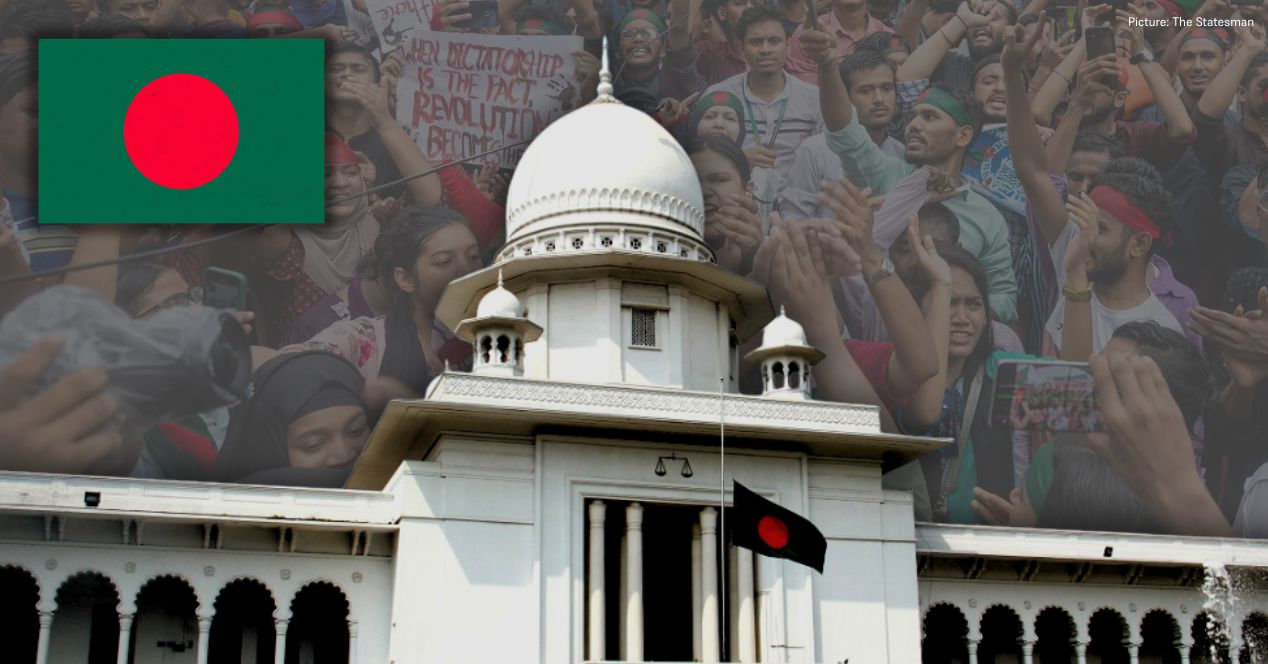
Bangladesh: A year of unprecedented constitutional upheaval
The referendum on the July Charter and a Supreme Court decision on caretaker governments raise questions of legality and legitimacy
Analysis
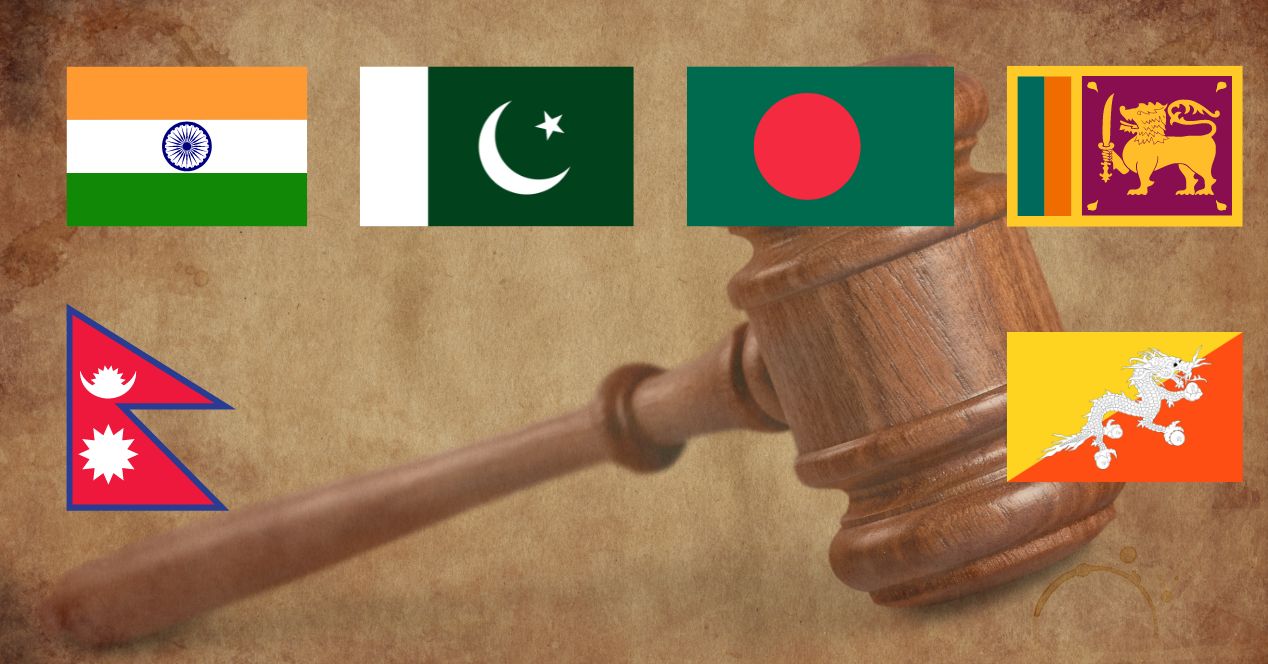
The Supreme Courts of South Asia: A comparative look
A ready-reckoner about some of the key features of the top courts of India, Pakistan, Bangladesh, Sri Lanka, Nepal and Bhutan
Analysis
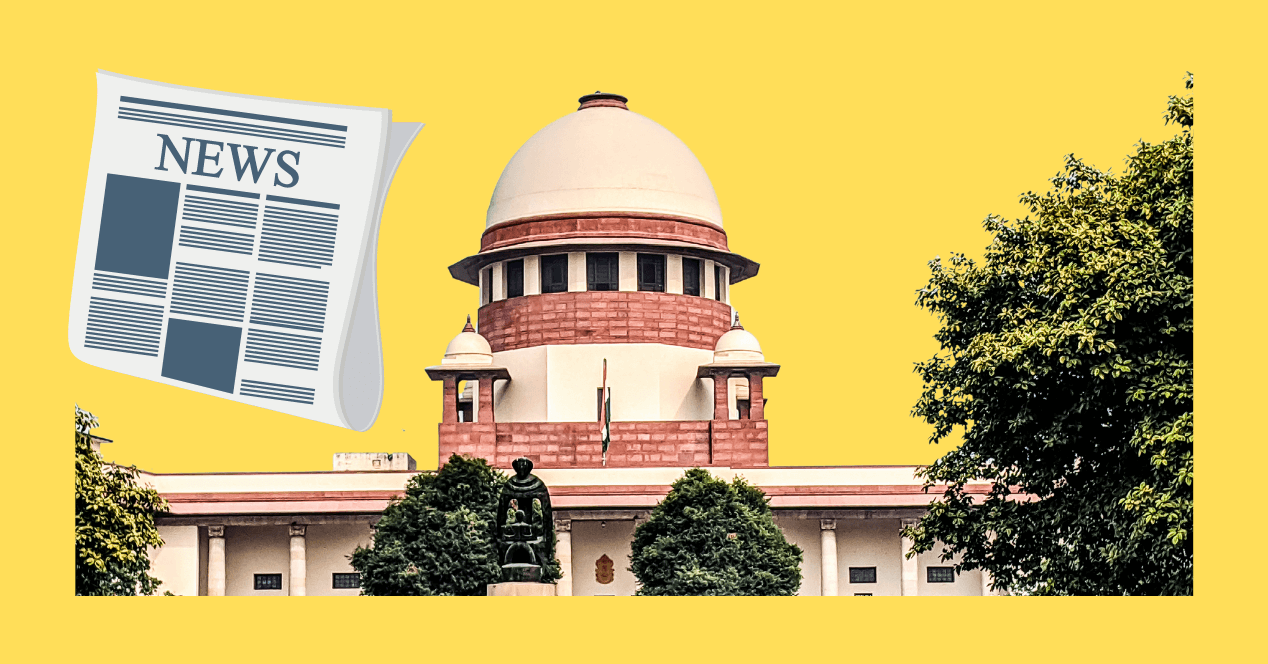
Suo Moto Powers in Writ Jurisdictions: A South Asian Innovation?
The Indian Courts seem to have pioneered the use of suo moto powers, inspiring other South Asian Courts, including Pakistan and Bangladesh.