


Analysis
SC examines feasibility of Inquiry Committee against Justice Varma
Counsel argued that admission by both Houses is mandatory and questioned powers of the Deputy Chairman
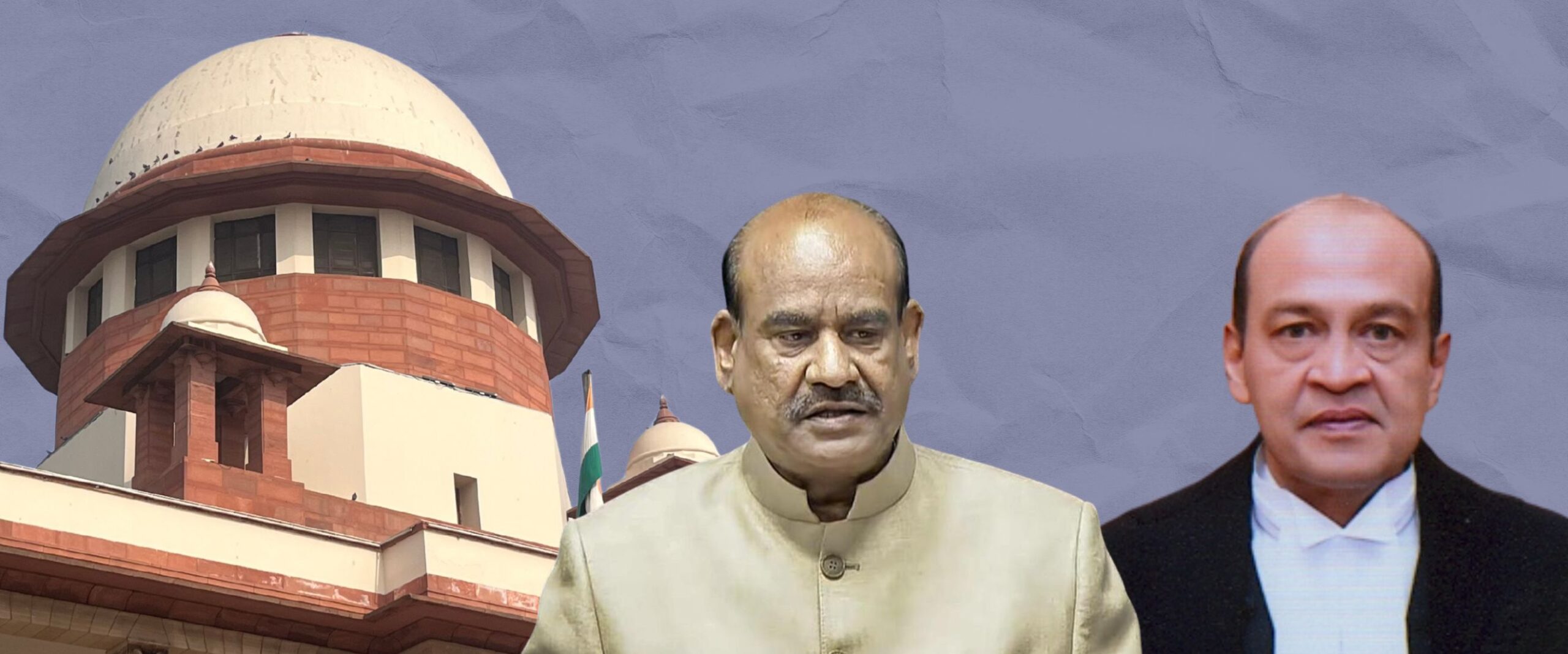
Today, a Bench of Justices Dipankar Datta and S.C. Sharma heard a petition filed by Justice Yashwant Varma which challenged the constitution of an Inquiry Committee in connection with impeachment proceedings against him. The Committee was set up by Om Birla, Speaker of the Lok Sabha.
Senior Advocate Mukul Rohatgi appeared for Justice Varma. Solicitor General Tushar Mehta appeared for the Speaker, Lok Sabha.
Rohatgi: Admission by both Houses mandatory under the Act
Rohatgi relied on a Lok Sabha’s affidavit and a Rajya Sabha letter placed on record. He explained that the statutory scheme was such that a motion for removal must be signed by 100 members of the Lok Sabha or 50 members of the Rajya Sabha. “Once the motion is admitted, the committee is formed and the inquiry proceeds like a departmental inquiry,” he submitted, adding that the House may thereafter debate the report.
Relying on the proviso to Section 3 of the Judges (Inquiry) Act, 1968 (the Act), Rohatgi argued that “where two motions are moved on the same day, no committee can be formed unless both motions are admitted.” He pointed out that impeachment motions were moved in both Houses on 21 July 2025.
When Justice Datta asked when the committee was formed, Rohatgi referred to a Lok Sabha affidavit to submit that it was constituted on 12 August 2025, a day after the motion was rejected by the Deputy Chairman of Rajya Sabha. “The proviso contemplates a joint committee,” Rohatgi told the Bench, “This motion is non est.”
Bench: Proviso cannot be read to defeat one House
Justice Datta questioned whether the proviso to Section 3 could be read to mean that rejection in one House automatically defeats the motion in the other. “Read the proviso again,” he told Rohatgi and pointed out that while it bars the constitution of a committee unless motions in both Houses are admitted, it does not say that rejection in one House invalidates the other. Justice Datta cautioned against the interpretation, referring to the consequences of potentially “nefarious” rejections.
Rohatgi responded that in the present case more than 50 members of the Rajya Sabha had signed the motion and coordination with the Lok Sabha had been directed by the then Chairperson of Rajya Sabha, Jagdeep Dhankar.
Justice Datta then referred to Section 3(2) and noted that the provision requires formal admission of a motion before a committee is constituted. He observed that the Chairman’s statement recorded receipt of the motion, not admission.
Rohatgi argued that admission could be implied. “When a legally trained authority says that Section 3 has kicked in, that amounts to admission,” he submitted.
Justice Datta disagreed. “Please show us where the Chairman recorded admission,” he said, reiterating that the Chairman’s statement only conveys receipt.
Rohatgi: Impeachment procedure under Article 124 excludes Deputy Chairman
Rohatgi then challenged the authority of the Deputy Chairman of the Rajya Sabha to reject the motion. He relied on Section 2(a), which defines “Chairman” using the word “means” and not “includes” to submit that the Act is a complete code enacted under Article 124.
He also relied on Section 7 and the rules framed thereunder, which require action by the Speaker and the Chairman in specified matters. “Wherever the law wanted the Deputy to step in, it has said so expressly,” Rohatgi argued. Distinguishing Articles 89 and 91, he submitted that those provisions apply to proceedings of the House and cannot override a special statutory procedure governing impeachment of judges.
Mehta: Deputy Chairman acts by constitutional mandate
Mehta responded that by operation of the Constitution, the Deputy Chairman discharges the functions of the Chairman when the office is vacant. Referring to Article 91, he submitted that no Presidential order is required in such a situation.
Justice Datta observed that ordinarily no Presidential order is issued and added that vacancy of office stands on a higher footing than temporary absence. “Here the Chairman is not there. Someone has to discharge the duty,” he said.
Rohatgi maintained that the Act consciously departs from the general constitutional scheme. “If the Act makes a distinction, Article 91 cannot be imported,” he argued.
Mehta submitted that on 21 July, the Chairman consciously refrained from either admitting or rejecting the motion and treated it as filed. He added that the Law Minister also clarified on the same day that the motion had not been admitted. Pointing out that formal notices of admission existed and were uploaded in previous impeachment proceedings, he said, “That does not exist here.”
Bench flags procedural infirmity
Justice Datta noted that material placed by the Secretary General appeared to show scrutiny of the motion before admission. “Prima facie, we found something under the Secretary General’s note that should not have been there,” he observed.
He clarified that the Court was not persuaded, at this stage, by the submission that the Deputy Chairman lacked authority to deal with the motion. Framing the issue narrowly, he asked whether denial of the benefit of a joint committee caused such prejudice as to warrant interference under Article 32.
When Rohatgi objected that he had not been supplied with the Rajya Sabha’s note rejecting the motion, Justice Datta asked, “What is the problem if we give him access?” Mehta agreed to provide a copy.
The Court will continue to hear the matter on 8 January.
Related articles
Analysis
Justice Yashwant Varma moves the Supreme Court
His petition not only challenges the findings of the in-house committee in his case, but also the very basis of the procedure
Analysis
Speaker admits motion for Justice Varma’s removal: What lies ahead?
The Speaker constituted a three-member committee under the Judges Inquiry Act. We explain the steps involved in the parliamentary process
Analysis
Justice Varma had ‘covert or active control’ of store room, finds committee
The in-house committee set up by CJI Khanna also found evidence of cash being removed from the store room in the early hours of 15 March