


Analysis
Tea at Tilak Marg
Can Parliament seek sitting judges’ views on a constitutional amendment they may later be called upon to decide?
|
The Joint Parliamentary Committee (JPC) examining the Constitution (129th Amendment) Bill, 2024 was scheduled for a “local study visit” to the Supreme Court on 6 October. The programme circulated to members included an “informal discussion” with Chief Justice Surya Kant and other sitting judges “on the issue of simultaneous elections”. The meeting was confirmed on 22 September and scheduled for 6 October at 4.30 pm. On 1 October, after senior judges considered the proposal, the Supreme Court Secretary General’s office informed the Lok Sabha Secretariat that it was not “expedient or desirable” to discuss the amendment as it might later face judicial review. The meeting was cancelled. BJP MP P.P. Chaudhary, who chairs the JPC, had described the visit as a study tour. The agenda, however, expressly provided for the discussion with judges. Senior Advocate Kapil Sibal had publicly objected. He questioned the propriety of discussing a proposed legislation with judges who could later decide its constitutional validity. He called the proposal “a joke on the Constitution”. Senior Advocate and DMK Rajya Sabha MP P. Wilson had proposed the interaction and saw no constitutional hurdle. In a seven-page written defence, he said the panel was not seeking the institutional views of the Supreme Court, but those of the Chief Justice and other judges in their individual capacity as “stakeholders in democracy”. Speaking to the Supreme Court Observer, Wilson said, “You cannot say that a thick wall should prevail always at all times.” He described the proposed meeting as “just an informal chat over tea”. Wilson’s letter is a spirited defence of the proposed interaction, but should it be read as a softening of the DMK’s position on the legislation itself? The party, under the leadership of M.K. Stalin, has consistently opposed one nation one election. Wilson pointed to earlier exchanges between Parliament and the judiciary. During the framing of the Constitution, in October 1948, Secretary of the Ministry of Home Affairs H.V.R. Iyengar had forwarded observations from the Chief Justice of the Federal Court and provincial Chief Justices on judicial salaries, retirement ages and service conditions. More recently, parliamentary panels have met sitting Supreme Court judges. In May 2022, the Standing Committee visited the Supreme Court and interacted with then CJI N.V. Ramana and Justice D.Y. Chandrachud on virtual courts. Justice Chandrachud later recalled that CJI Ramana attended the meeting and that he made a presentation of almost three hours, followed by “detailed discussions”. In March 2023, the Committee met CJI Chandrachud and Justices S.K. Kaul and Sanjiv Khanna on the functioning of NALSA and expanding access to legal aid. Wilson also pointed to the Committee’s consultations on the Mediation Bill, 2021, which involved sitting High Court judges, including Justice Dipankar Datta, then Chief Justice of the Bombay High Court. Ravi Nair, Executive Director of the South Asia Human Rights Documentation Centre, told SCO that those examples did not answer the objection to the ONOE meeting. The earlier Supreme Court interactions concerned the administration of justice, judicial infrastructure and legal aid. The proposed ONOE discussion was different: it would have placed a constitutional amendment before sitting Supreme Court judges who might later hear a challenge to it. “If the Court has to be insulated from the vagaries of political ebbs and flows, then the Court must not be consulted in this manner,” Nair told SCO. “You can’t have the committee and judges who may sit over a challenge to it, subsequent to its passing if it is done. It flies in the face of any attempt at judicial equity and fairness.” Nair pointed to Article 143. The Committee could seek the Court’s advisory opinion on the constitutional questions through the President, who can refer a question of law or fact of public importance to the Supreme Court. There have been 16 Presidential References so far, most recently the 2025 reference on the Governor’s and President’s powers under Articles 200 and 201. In In re: Special Courts Bill, 1978, the President had referred questions on the Bill’s constitutional validity before its enactment. A seven-judge Bench answered them and rejected the argument that doing so encroached on Parliament’s legislative functions. The ONOE Bill proposes a new Article 82A and amendments to Articles 83, 172 and 327 to align Lok Sabha and State Assembly elections. Assemblies elected after the appointed date would end with the Lok Sabha’s term, while one dissolved early would be elected only for the remainder of the cycle. The Election Commission could also recommend postponing a state election if simultaneous polling is not possible. Nair raised an Article 356 question: if a state government falls after the cycles are aligned and an election cannot immediately be held, what happens next? The Bill does not amend Article 356, but its proposed postponement mechanism raises questions about how long a state could remain without an elected Assembly. For now, the cups will stay dry. Even as the JPC goes on with its review, the lawmakers will finish their work on their side of the street, leaving the three kilometers down Mathura Road uncrossed, and the separation of powers safely intact. This article was first featured in SCO’s Weekly newsletter. Sign up now! |
Related articles
Analysis
From “Resolution” to “Statement”
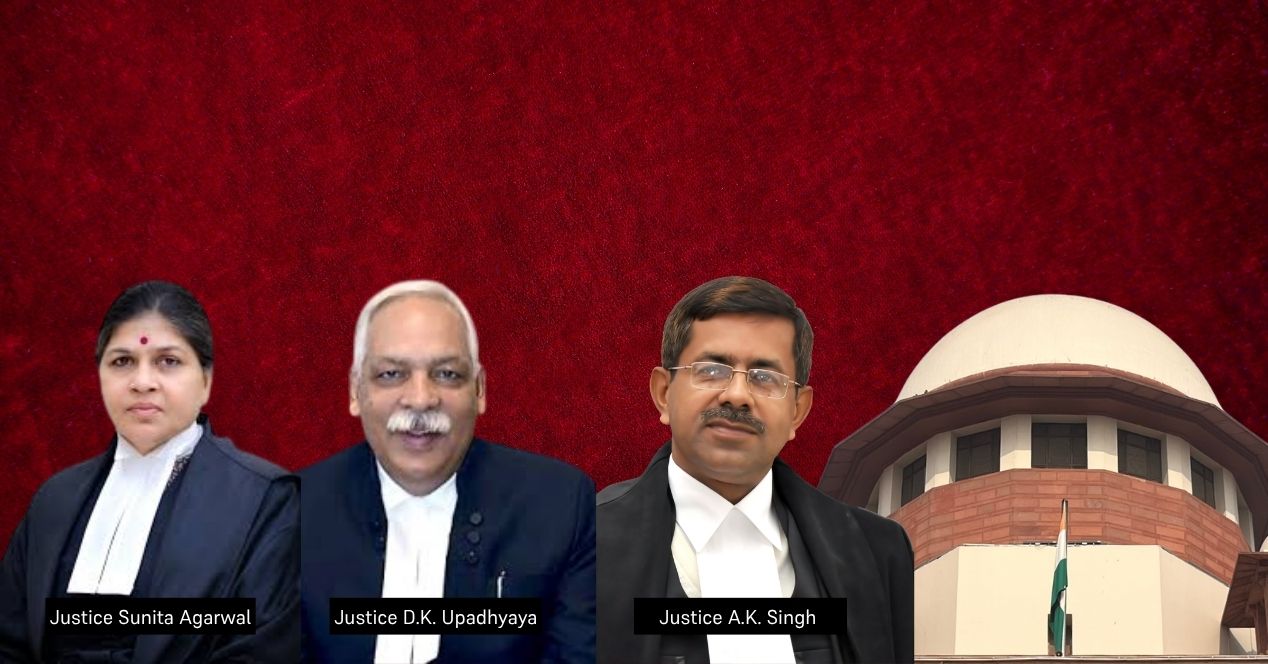
Three new judges were recommended to the Supreme Court. The Collegium said little about them. We asked practitioners.
Analysis
Split verdict, common order
All eyes are on the ECI but an aberration at the Supreme Court draws attention to larger bench references
Analysis
Clipped justice
An intervention asks whether open justice can survive prior permission for sharing courtroom videos online.
Analysis
Bench or bias?
From recusal pleas to judicial appointments, litigants and governments have reasons to care about who sits on the bench.