


Analysis
When relief stops short of accountability
The Court has protected protesters and evidence, but postponed the independent mechanism that its own prima facie findings appear to require
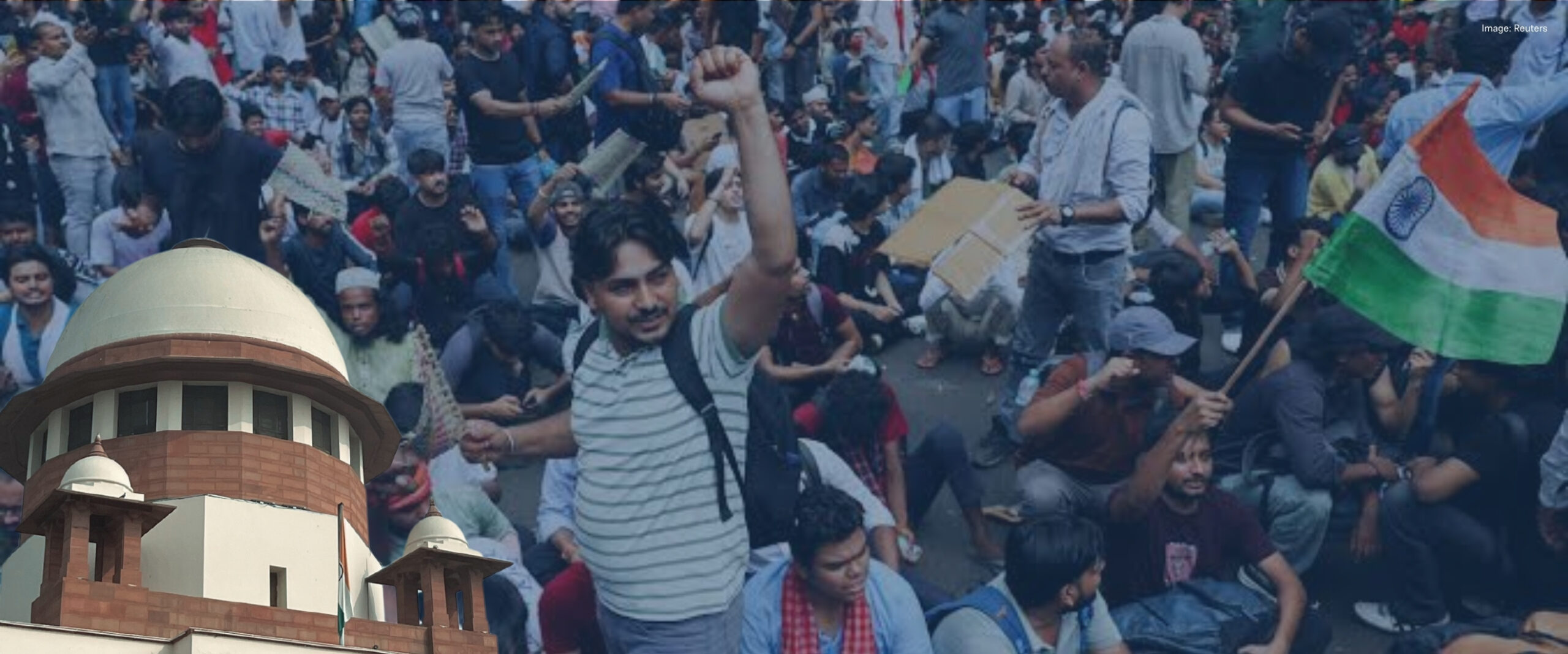
The Supreme Court’s interim order delivered on 28 July in Shailendra Mani Tripathi v Union of India records allegations involving pellet guns, rubber bullets, electronic batons, tear gas and lathis embedded with nails in the recent student protests crackdown. There are allegations that police personnel assaulted protesters while dressed both in uniform and civilian clothes. One student is said to have lost his eyesight. A journalist allegedly suffered serious injuries.
The interim order provides substantial relief. It has directed the preservation of CCTV footage, drone recordings, body-camera material, videography, wireless communications and police control-room records. It has restrained the public disclosure of protesters’ personal and digital data. FIR investigations may continue, but without coercive measures against protesting students. Children in detention must be released, on a simple bond where required. The last two protections exclude persons with “criminal antecedents”.
The Court concludes that the material establishes a prima facie “compelling case” for an independent and impartial investigation. In the same breath, it postpones that independent investigation until the Union and Delhi government file affidavits; and the seven States to whom notice has issued are heard.
That sequence creates the central puzzle. Why does an order that intervenes to protect evidence and protesters, postpone the independent mechanism required to determine responsibility?
Protection is not accountability
A court confronting alleged state violence must separate three tasks: protection by preventing further injury; fact-finding; and holding the responsible accountable.
The interim order acts substantially on protection by directing no coercive action. It begins fact-finding by seeking affidavits and supporting material. Accountability, however, remains deferred. While government affidavits are necessary accounts of contested events, they cannot substitute for a neutral inquiry.
The opposing account must be taken seriously. The order records allegations that protesters, or persons who infiltrated the gathering, threw stones and injured police personnel. Solicitor General Tushar Mehta denied police excesses and submitted that more than 280 officers had been injured. Violence against police officers can be investigated and prosecuted.
The two inquiries need not compete—Individual responsibility for violence by protesters can be investigated alongside individual and command responsibility for unlawful police force.
In the Ramlila Maidan Incident (2012), the Supreme Court treated peaceful assembly as a constitutional freedom while insisting that restrictions and police action must remain reasonable. Anita Thakur v Government of Jammu and Kashmir (2016) went further. Even where protesters had initially become violent, the police could not continue using force after the situation had been brought under control.
The Court’s judgments in Mazdoor Kisan Shakti Sangathan v Union of India (2018) and Amit Sahni v Commissioner of Police (2020) supply the two sides of the constitutional balance. The State cannot extinguish protest through blanket prohibitions. Protesters, in turn, cannot indefinitely occupy public ways. Together, these cases require regulation, differentiation and proportionality. They do not permit collective attribution of guilt.
Who holds the evidence?
The decision to hear the governments before settling the scope and composition of an inquiry is procedurally defensible. The incidents are alleged to have occurred in Delhi, Maharashtra, Bihar, Assam, Uttar Pradesh, Madhya Pradesh, West Bengal and Kerala.
The need to hear all states and gather affidavits does not require the postponing a neutral mechanism. Constituting an independent inquiry does not determine the finding of guilt. The inquiry’s final terms would remain open until the affidavits are filed. The delay carries a risk.
A direction to preserve evidentiary footage and material does not indicate whether every camera was functional, whether complete footage was identified, whether metadata was retained or whether forensic copies were made. Further, it does not determine who may access the material. Confidence depends on a verifiable chain of custody. The Order does not identify a custodian. Agencies accused of excessive force continue to control servers, wireless logs, body-camera systems and station records.
In Paramvir Singh Saini v Baljit Singh (2020), the Court treated audiovisual records and independent oversight as safeguards against police abuse. In Pooja Pal v Union of India (2016), it recognised that constitutional courts may entrust an investigation to an independent agency where fairness, effectiveness and public confidence require institutional separation.
Neutral control of evidence is the logical next step after the Court has already concluded, though tentatively, that an independent probe is warranted. Otherwise, the Court may eventually constitute an independent investigation whose first task is to verify whether the evidence it needs was adequately preserved by the very institutions under examination.
An investigation must therefore identify the weapon and ammunition used, the authority that approved deployment, the range and direction of discharge, warnings issued, persons targeted, medical assistance provided and command decisions taken.
FIRs and the antecedents exception
The order allows FIR investigations to proceed while restraining “coercive measures.” Protection against arrest is important. Yet, arrest is not the only manner in which an investigation can burden constitutional participation. The order does not define “coercive measures”. A later clarification could distinguish legitimate investigation from avoidable pressure. They would make investigative power answerable to relevance and proportionality.
Repeated summonses, prolonged questioning, visits to homes or campuses, copying of mobile phones, broad demands for messages and location histories, and investigations kept open without review can impose time, expense and reputational exposure. These measures may be lawful when connected to evidence and investigative necessity. They become punitive when imposed repetitively, disproportionately or without a defined connection to an alleged offence.
This is the concrete meaning of “process as punishment”. It describes a situation in which the burdens ordinarily associated with a penalty are produced through investigative procedures before responsibility has been established.
The exclusion of persons with “criminal antecedents” is more difficult. Does the phrase cover a previous conviction, a pending prosecution or merely an FIR? Those categories have different legal consequences. An accusation is not a finding of guilt. Nor does an unrelated case establish that a person acted violently during the protest.
Protection against unlawful state action should turn principally on present conduct. A previous record may be relevant to bail, flight risk or a particular investigative decision. It cannot operate as a general licence for excessive force, unlawful detention or indiscriminate digital searches. The exception risks converting a constitutional safeguard against state illegality into a benefit available only to persons who satisfy an undefined test of character.
Its application to children requires particular care. Sections 10 and 12 of the Juvenile Justice Act, 2015 create a child-specific process. A child alleged to have committed an offence cannot be placed in a police lock-up or jail. The child must be promptly produced before the Juvenile Justice Board and is ordinarily entitled to bail, subject to the statutory exceptions.
The Court’s release direction is therefore important. But an undefined “antecedents” proviso cannot displace safeguards that Parliament has conferred on every child in conflict with law. Nor should a previous FIR place a child outside the protective structure of juvenile justice.
The unanswered surveillance question
The digital-data directions prevent public disclosure. They do not answer who authorised the collection?
The order does not specify whether facial-recognition systems were used, which agencies may search the collected information, how long it may be retained, whether it may be combined with other databases, whether it may be shared between States or when it must be deleted.
Preserving evidence for litigation is legitimate. It is different from retaining an unrestricted intelligence archive on participants in a political protest.
In Justice K.S. Puttaswamy v Union of India (2017), the Court held that intrusions into informational privacy require legal authority, a legitimate state purpose, proportionality and safeguards against abuse. The inquiry is not exhausted by asking whether the information will be published. Internal collection, processing, retention and circulation can also interfere with privacy.
The next stage, when the matters return on 3 August, should therefore separate evidentiary preservation from surveillance entitlement. It should define the purpose of collection, authorised access, audit trails, inter-agency sharing, retention periods and deletion obligations. Public non-disclosure protects reputation. It does not fully protect privacy.
This remains an interim order. No police officer, protester or public authority has been found responsible. The allegations recorded by the Court remain allegations.
Yet the Court’s own prima facie conclusion has constitutional consequences. Once the material is considered sufficiently compelling to justify an independent and impartial investigation, the design and timing of that investigation become part of the remedy.
The ultimate constitutional value of these proceedings will depend on whether temporary protection is converted into independent fact-finding, individual and command accountability, enforceable crowd-control standards and meaningful limits on surveillance. Without that conversion, the order may preserve evidence and liberty while leaving responsibility suspended. With it, the Court can close the relief-accountability gap that its own order has revealed.
Related articles
Analysis
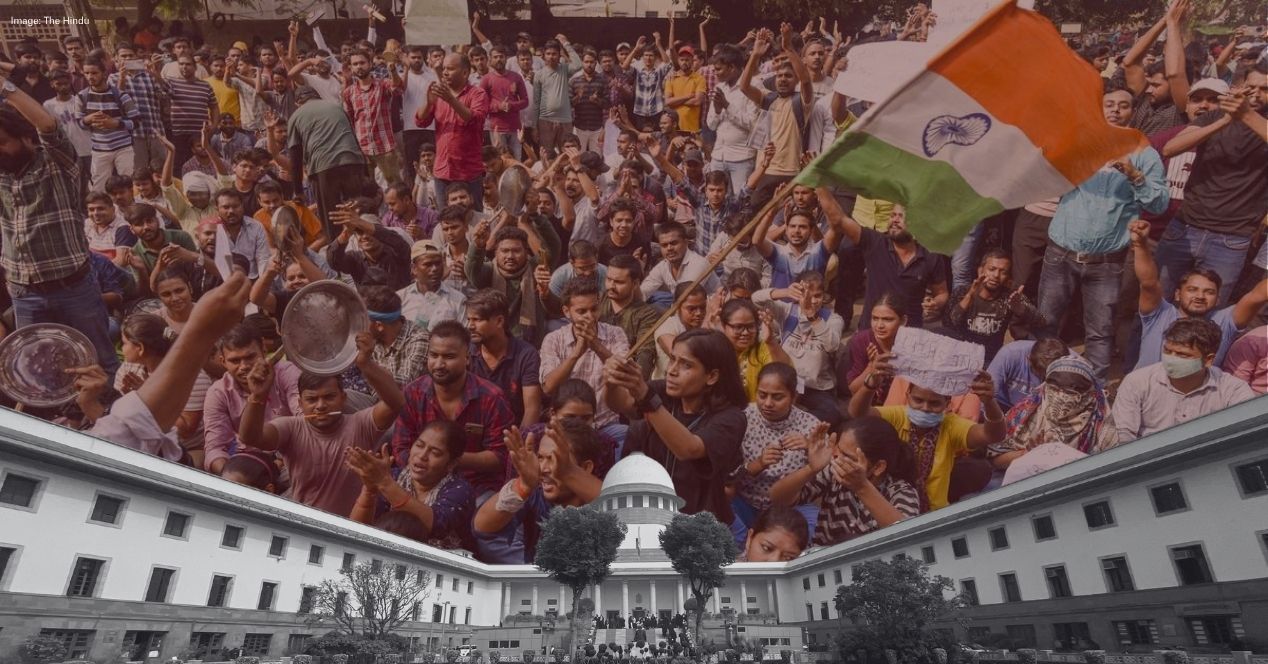
“Agitation cannot justify police excess”: SC on student protest crackdown
The Court said allegations of police excess must be independently examined and suggested a uniform protocol for handling public protests.
Analysis
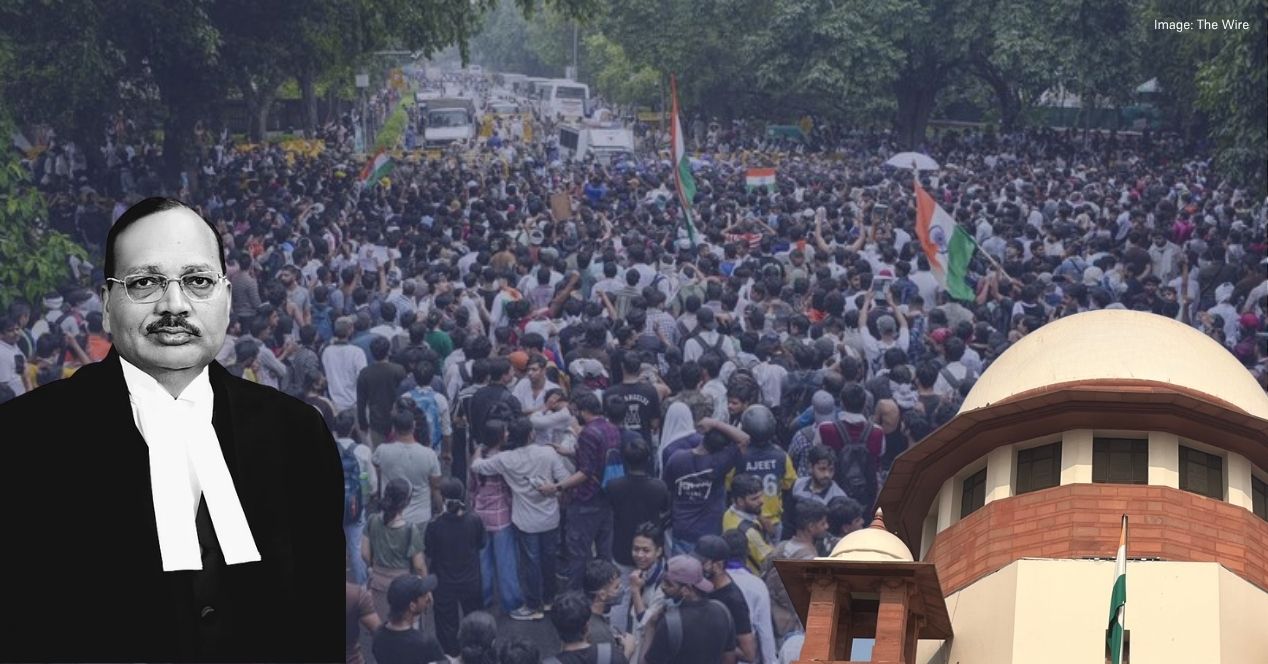
The week that was
While the Court’s not mandated to intervene in the protests, its response at the first instance shaped the public perception towards it
Analysis
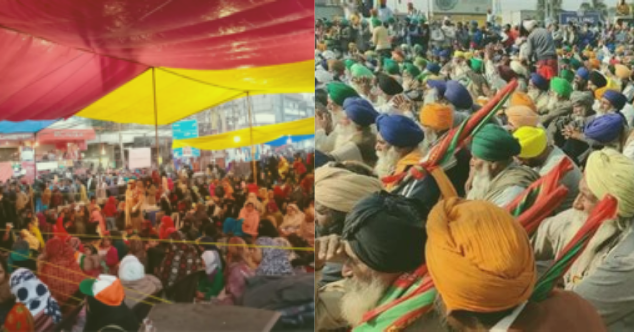
Recasting the Right to Protest: Shaheen Bagh to Lakhimpur Kheri
We discuss the Supreme Court's engagements with the farmers' right to protest in the context of the Heckler's Veto principle.
Analysis
Kolkata rape and murder case | No coercive action against protesting doctors who return to work, says Supreme Court
The bench also reviewed the CBI’s status report and directed the National Task Force to factor in concerns of doctors and other stakeholders