


K.V. Chandran
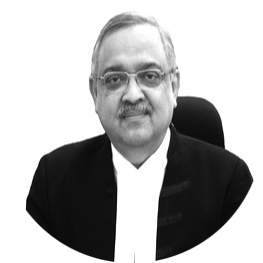
K.V. Chandran
Sitting judge of the Supreme Court of India
Assumed Office16th Jan, 2025
Retires On24th Apr, 2028
Previously
Chief Justice of the Patna High Court29 March 2023-15 January 2025
Permanent Judge of the Kerala High Court24 June 2013-28 March 2023
Additional Judge of the Kerala High Court8 November 2011-23 June 2013
Special Government Pleader (Taxes)2007-7 November 2011
Enrollment1991
Profile
Justice Krishna Vinod Chandran was born on 25 April 1963 in Thiruvananthapuram, Kerala. He is the 16th judge from Kerala to be elevated to the top court.
Justice Chandran completed his schooling at Raajgiri English School. He graduated with a degree in science in the year 1984. He took up a job at the State Bank of Travancore before resigning to study law at the Kerala Law Academy Law College, Thiruvananthapuram.
Career as an Advocate
Justice Chandran started his practice at Paravoor in 1991. He later shifted to the High Court of Kerala. During his practice, he served as a Special Government Pleader (Taxes) for the Government of Kerala from 2007 to 2011.
Career as a Judge
He was elevated as an Additional Judge of Kerala High Court on 8 November 2011 and was made permanent on 24 June 2013. Justice Chandran served for more than 11 years as a judge at the Kerala High Court.
On 28 September 2022, the Collegium recommended Justice Chandran’s transfer to the Bombay High Court. However, the recommendation was not cleared. On 13 December 2022, Justice Chandran was recommended as the Chief Justice of the Gauhati High Court. This recommendation was modified on 7 February proposing Justice Chandran as Chief Justice of the Patna High Court. He took oath as Chief Justice of the Patna High Court on 29 March 2023.
On 7 January 2025, the Collegium led by Chief Justice Sanjiv Khanna, recommended Justice Chandran to be elevated to the top court. The Collegium considered his parent High Court—Kerala to ensure regional diversity at the Court after Justice C.T. Ravikumar’s retirement on 5 January 2025. The recommendation also observed that he was the senior most judge in the Kerala High Court and was at SI No. 13 in the all India seniority of High Court judges.
On 16 January 2025, Justice Chandran assumed office as a Supreme Court judge. He will retire in April 2028 after a 3.25 year long tenure.
Figure 1 shows that Justice Nath has authored 116 judgements and has been a part of 202 benches so far.
According to Figure 2, Justice Chandran has majorly authored judgements in Criminal matters (36%). Additionally, he has authored judgements in Motor Vehicles (30%), Insurance (16%), Property (10%) and Service (7%) matters.
NOTABLE JUDGEMENTS
Supreme Court Judge
Since his elevation to the Supreme Court in January 2025, Justice K. V. Chandran has adjudicated a significant number of cases criminal in nature.
In In Re Summoning Advocates who give legal opinion or represent parties during investigation of cases and related issues (2025), a three-judge bench of Chief Justice B.R. Gavai, Justices Chandran and N.V. Anjaria, the Court held that an investigating officer cannot summon an advocate to extract details of the case. The Justice Chandran authored judgement held that the exemption is not applicable to in-house counsels.
In K. S. Dinachandran v Shyla Joseph (2025), Justice K. V. Chandran authored a judgement which held that leading questions are permissible in cross-examinations. Further, he wrote that the answers given in response to the leading questions carry probative value. was a part of a Division Bench in, where he authored the judgment holding that leading questions are permissible during cross-examination and that the answers given in response to them do not, merely for that reason, lose their probative value.
In Joyi Kitty Joseph v Union of India,(2025) the Bench held that before ordering preventive detention of a person enlarged on bail for the same allegations, the detaining authority must consider whether the bail conditions adequately prevent the person from committing the offence.
In Jothiragawan v State (2025), a breach of a promise to marry does not constitute rape unless fraudulent intent existed from the outset of the sexual relationship.Justice K. V. Chandran, as a part of a Division Bench with Justice Sudhanshu Dhulia, in the case of Subhash Aggarwal v The State of NCT of Delhi (2025) held that the mere absence of motive in a criminal case does not automatically result in an acquittal.
Authoring the judgement in the case of State of Telangana v Kalluri Naga Narasimha Abhiram (2025), as a part of Division Bench of the Chief Justice B.R. Gavai and Justice K.V. Chandran, held that the High Court could not interfere with or expand the definition of a ‘local candidate’ for medical admissions, as laid down by a subordinate legislation under Article 371D.
Justice K. V. Chandran was a part of a Division Bench in Dhannalal alias Dhanraj (Dead) through LRs v Nasir Khan (2025), authoring the judgment which holds that under the Motor Vehicles Act, 1988, even when the death is unrelated to the injuries caused, the right to seek compensation for injuries in a motor accident under the Act survives to the legal representative.
High Court Judge
In Youth for Equality v State of Bihar (2023), Patna High Court’s Division Bench comprising Chief Justice K. Vinod Chandran and Justice Partha Sarathy held that the Bihar caste survey was valid.
The bench reasoned that the state’s action was “initiated with due competence”, and did not violate the “rights of privacy of the individual especially since it is in the furtherance of a compelling public interest.’’ The High Court relied on Indra Sawhney v Union of India (1992), which recognised that there can be a reasonable method and procedure for the identification of backwardness in society. A petition challenging the Patna High Court’s decision is pending in the Supreme Court.
In Gaurav Kumar v State of Bihar, the Patna High Court dealt with the constitutionality of two amendments brought by the Bihar Legislative Assembly. On 9 November 2023, the Bihar Legislative Assembly passed the Bihar (In Admission in Educational Institutions) Reservation (Amendment) Act, 2023 and the Bihar Reservation Of Vacancies In Posts And Services (For Scheduled Castes, Scheduled Tribes And Other Backward Classes) (Amendment) Act, 2023. The Amendments increased reservations for EBC, OBC, SC, and ST communities from 50 to 65 percent in educational institutions and government jobs.
On 20 June 2024, the Patna High Court declared both Amendments unconstitutional. The Division Bench led by Justice Chandran highlighted that “adequate representation now exists and there is no valid ground for breach of 50 [percent] rule; which in any way is not permissible.” Relying on the Caste Survey report, the High Court noted that backward classes, including SC and ST communities, already occupied 68.52 percent of government employment posts. The High Court also noted that the Caste Survey report did not provide sufficient grounds for this breach and criticised the lack of analysis on the economic and social status of castes before extending reservations.