


Analysis
Life support
A recent case puts the Supreme Court’s 2018 passive euthanasia guidelines to their first real test
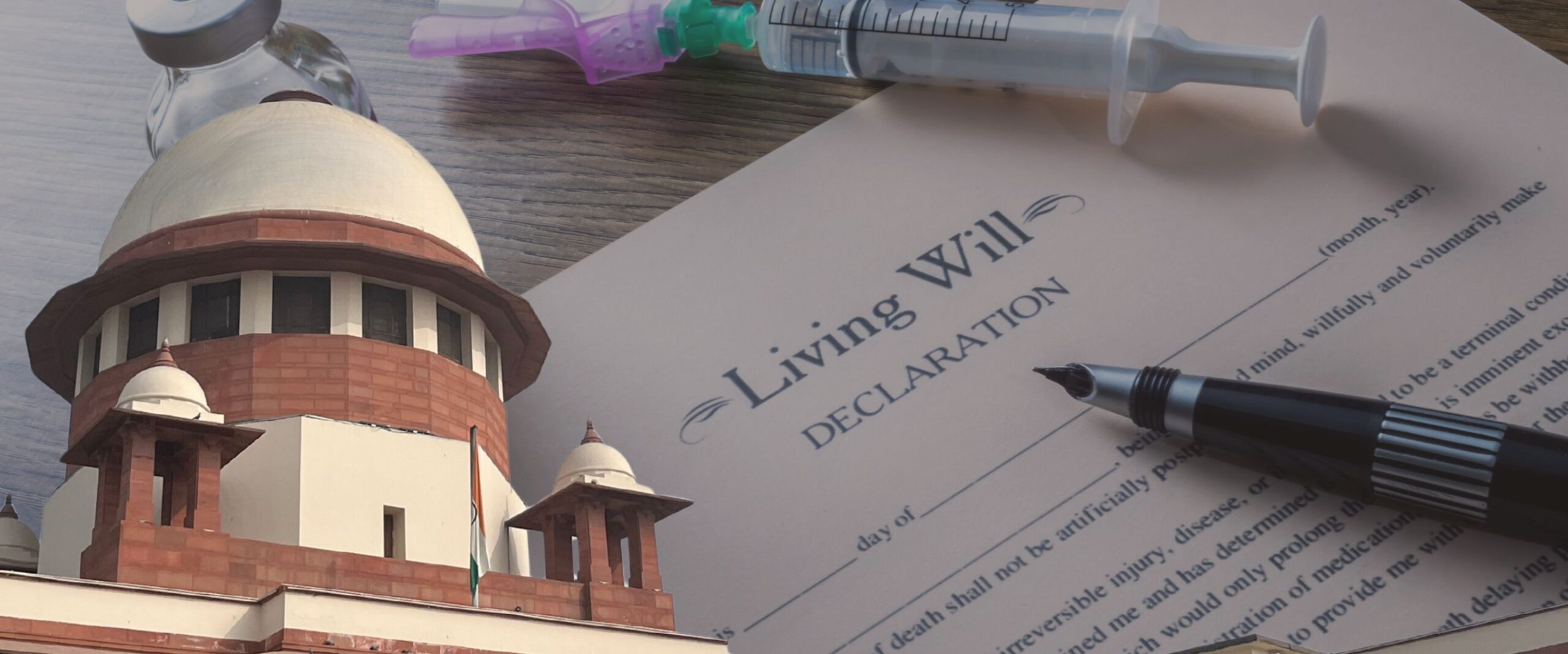
What constitutes ‘life-supporting treatment’ in the context of passive euthanasia? That’s the question before the Supreme Court in a case that has been making the headlines over the last few weeks.
Harish Rana was in his late teens when a fall from the fourth floor of a Chandigarh apartment left him with severe head injuries. For the last 13 years, Rana has remained in a permanent vegetative state, suffering from quadriplegia and 100 percent disability. This week, a Bench comprising Justices J.B. Pardiwala and K.V. Viswanathan continued hearing a plea from Rana’s parents seeking the withdrawal of medical facilities—a request for ‘passive euthanasia.’
Unlike active euthanasia, which remains illegal, passive euthanasia involves withdrawing medical treatment from a brain-dead patient or one in a permanent vegetative state to allow a natural death. This practice received legal sanction from a Constitution Bench in the landmark 2018 case, Common Cause v Union of India.
Common Cause laid down guidelines prescribing a two-tier medical review process. These guidelines were later streamlined in 2023. First, a Primary Medical Board decides whether to certify the withdrawal of treatment. This decision is then reviewed by a Secondary Medical Board. If permission is denied by the Medical Boards, the 2023 Order leaves it open to the patient’s relatives to approach the High Court, which was asked to keep in mind the “best interests of the patient.”
In Rana’s case, the Bench of Justices Pardiwala and Viswanathan reviewed a report prepared by the Secondary Medical Board constituted by the All India Institute of Medical Sciences (AIIMS), which led the Court to describe his condition as “very sad.” This followed a previous assessment by a Primary Board constituted by the Noida District Hospital, which characterised his state as “pathetic” with negligible chances of recovery.
The Court has maintained a close watch on Rana’s case. In November 2024, on his final working day, then-Chief Justice D.Y. Chandrachud directed the Uttar Pradesh government to explore ways to cover Rana’s medical expenses, acknowledging the overwhelming financial and emotional burden on his parents.
The path to this point has been fraught. In July 2024, the Delhi High Court rejected Rana’s petition for euthanasia, a decision later upheld by a Bench led by CJI Chandrachud. At the time, the High Court reasoned that withdrawing treatment would necessitate removing the Ryles tube used for feeding, which would cause the patient to starve to death. Because Rana was not being kept alive by mechanical ventilators, the Court viewed the removal of feeding tubes as active euthanasia rather than the withdrawal of life support.
In this latest approach to the Supreme Court, the counsel for Rana’s parents argued that his condition has deteriorated and that he is being kept “artificially alive” with no hope of improvement. Rana’s parents have requested a fresh declaration: clinically assisted nutrition and hydration—including nasogastric and gastrostomy tubes—should be classified as “life-sustaining medical treatment.” By bringing these tubes under the scope of life support, the petitioners hope to bring Rana’s situation within the permissible bounds of passive euthanasia.
The AIIMS report has convinced the Bench that it must now make a “final call.” Justice Pardiwala noted that the Court cannot “keep the boy like this for all time to come.” This remark is particularly poignant given that the 2018 Common Cause ruling was centered on the ‘right to die with dignity’ as a facet of Article 21. Justice Pardiwala’s comments suggest that Rana’s current state represents the very type of prolonged suffering the Constitution Bench sought to address. The Bench has scheduled final arguments for January and intends to meet with Rana’s parents personally before rendering a decision.
Since the legal recognition of the right to die with dignity, there has been no reported instance of the Supreme Court allowing passive euthanasia for a terminally ill patient. As the case reaches its conclusion, the Court’s commitment to balancing the scope of life support with the “best interests of the patient” will come under the scanner.
This article was first featured in SCO’s Weekly newsletter. Sign up now!
Related articles
Analysis
Lifting the veil
A habeas plea concerning five missing Rohingyas has led to concerns on the safeguards owed to non-citizens.
Analysis
Belated scrutiny
As the Supreme Court scrutinises the Special Intensive Revision, the question is whether justice delayed can still protect the franchise
Analysis
The CJI Surya Kant era begins
CJI Surya Kant’s first week sets the tone for his 14-month long tenure
Analysis
Tribunal tribulations
The Bench asked the Union pointed questions during the hearings but does it suggest that the judiciary will win this round of the turf war?