


Analysis
The Justice Yashwant Varma report answers its absent Judge
A statutory inquiry, once seized of definite charges, survives the resignation and boycott of the judge it examines.
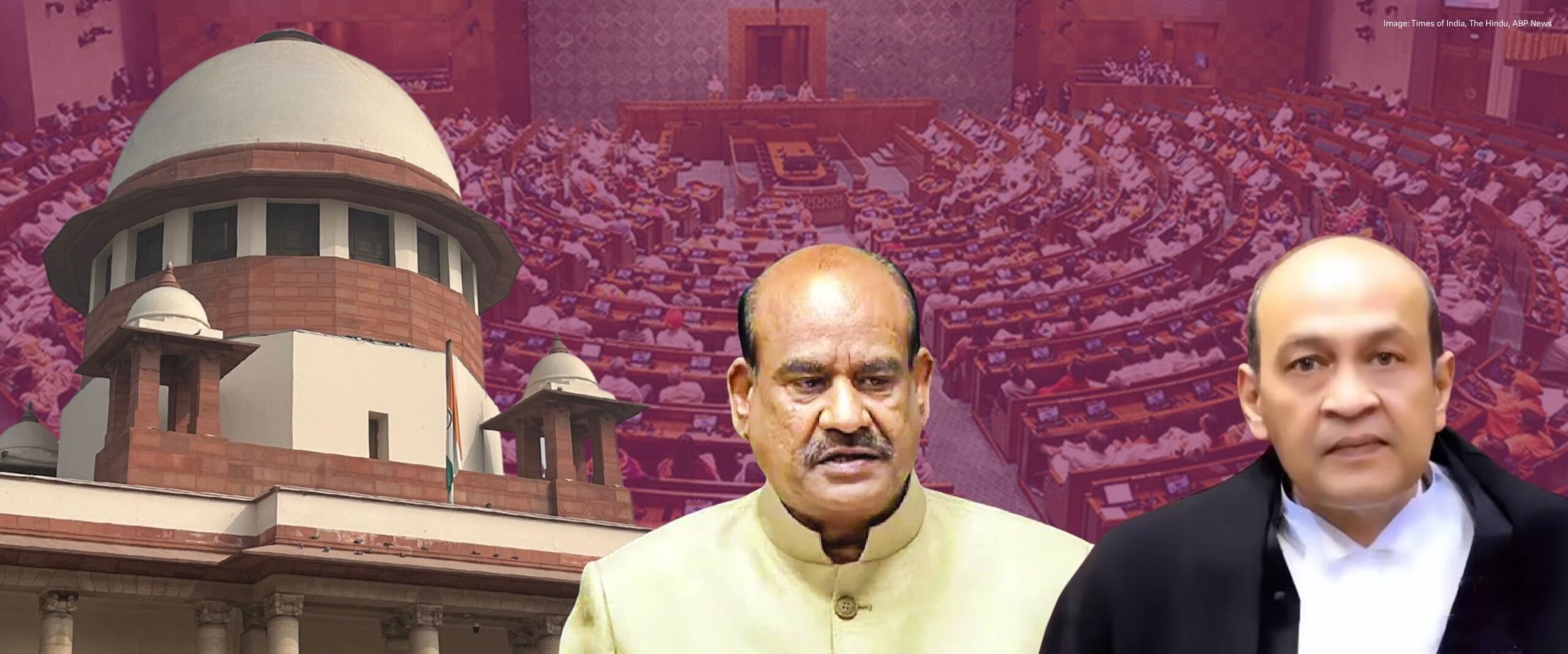
On 12 August, the Secretaries General of the Houses of Parliament laid the report of the Judges Inquiry Committee probing the Justice Yashwant Varma cash-in-house controversy before Parliament. The two volumes landed exactly a year after Speaker Om Birla constituted the Committee on 12 August 2025. The conclusion is stark: all three Articles of Charge against Justice Yashwant Varma stand proved.
The Committee comprised Justice Aravind Kumar of the Supreme Court as Presiding Officer, Justice Shree Chandrashekhar and Senior Advocate B.V. Acharya. Justice Chandrashekhar, then Chief Justice of the Bombay High Court, joined on 6 March. He replaced Justice Manindra Mohan Shrivastava, who retired as Chief Justice of the Madras High Court the previous day.
The report’s own introduction traces the route. On 14 March 2025, a police control room call reported a fire at 30, Tughlaq Crescent, then the official residence of Justice Varma in Delhi. While dousing it, officials noticed what appeared to be currency notes in burnt, half-burnt and wet condition. The matter then moved—in the Committee’s phrase—“through institutional communications and constitutional channels”. Notices of motion for removal were submitted on 21 July 2025, and the Speaker admitted the motion on 12 August 2025.
The events
The inquiry moved quickly. The Articles of Charge, under the Judges (Inquiry) Act, 1968, were served on 27 November 2025. The Supreme Court dismissed the Judge’s challenge to the Committee’s constitution on 16 January. Nine witnesses deposed and faced full cross-examination. The record carries 221 exhibits and rulings on 11 interlocutory applications filed for the Judge. The Speaker granted an extension after the original three-month period under the Judges (Inquiry) Rules, 1969 ran out.
On 9 April, when Justice Varma’s defence evidence was due, he wrote to the Committee withdrawing from the proceedings. He addressed parallel letters to the President and the Chief Justice of India, and resigned. His advocates sought discharge on 21 April and the Committee released them. Eight days later, on 29 April, the Speaker asked the Committee to complete the investigation and submit its report. The report reached the Speaker on 18 May. The Committee clarified that its findings rest only on material already taken on record.
The process and the charges
Before the findings comes the procedure. The report is unusually deliberate about it. Acting under Section 4(1) of the Act, the Committee framed its own procedure. Proceedings ran in camera. Examination-in-chief came by affidavit, with the right of cross-examination expressly preserved. Justice Varma’s applications tested this design at every joint. He sought the Committee’s internal minutes, a mirror image of the entire electronic dataset and access to all material beyond the relied-upon documents. Each application was refused. The refusals carry the report’s most quotable jurisprudence.
The Act, the Committee held, secures fairness through disclosure of the case required to be met, not through unrestricted disclosure. The unrelied material came from the devices of individuals never charged, whose privacy the Committee was bound to protect. Acceptance of the wider demand would transform the inquiry into open-ended discovery and “fishing for evidence”. Transplanting criminal-trial disclosure principles into the proceeding would amount to “a category error”. In the Committee’s description, the inquiry was not a prosecution but a sui generis, constitutionally anchored investigative process.
The Committee refused a separate application seeking a preliminary hearing on the validity and sufficiency of the charges before evidence began. It held that the Act contemplates no intermediate stage of adjudication upon the charges once the statement of defence is received. The inquiry is neither a criminal trial with a discharge stage nor a civil suit with settlement of issues.
The three charges rise from one connected sequence. It begins with the fire and the currency the first responders saw. It ends with everything the Judge did, and did not do, afterwards.
Article I alleged possession of substantial unexplained currency within official premises. Article II alleged failure to preserve and interference with material evidence. Article III alleged evasive and misleading explanations.
Article I
On Article I, the finding rests on the mutually corroborative evidence of officials of the Delhi Fire Services and Delhi Police. They reached the premises on duty that night and saw ₹500 notes in burnt, half-burnt, wet or scattered condition inside the storeroom. Photographs and electronic material corroborated the oral testimony without becoming the foundation of the finding.
The obvious objection is that nothing was ever counted. The Committee acknowledges it. No seizure, panchanama, inventory, weighing or sampling was undertaken. The report, therefore, declines to record any figure. It calls the failure to preserve a material lapse. However, the lapse affects quantification and not the core fact of presence of material. The evidence establishes “substantial presence, not stray or insignificant material”.
Possession, likewise, is construed for a misbehaviour inquiry, not for penal law. The storeroom, though physically apart, lay within the premises allotted to and occupied by Justice Varma. His own statement that a locked liquor cabinet, which he had access to, weakened the plea that the premises were outside of his effective control. With presence and control established, the unexplained source and ownership completed the proof.
Article II
Article II is the report’s analytical core, and its most carefully limited finding. A day after the fire, the money was removed from the premises. The Committee does not find that the Judge personally removed it. It rests the charge instead on three circumstances: failure to preserve, “acquiescence in disturbance through the establishment attached to the premises”, and the resulting loss of material evidence.
The chain is circumstantial. The report assembles it link by link. The storeroom was never sealed. Cleaning activity followed once the first responders left. PW-9, C.G. Rawat of the CRPF, placed Rajinder Singh Karki and Mohd. Rahil near the storeroom, engaged in cleaning work. When he offered help, Rahil asked him to go and do his duty. The Judge admitted he was in touch with both men on the night of the fire. These circumstances, taken together, lead the Committee to conclude that the Judge caused interference with material evidence. He took no step to secure it while the premises remained under his control. The report calls this dereliction of duty. The later non-availability of the currency remains unexplained on the record.
Article III
On Article III, the report tracks the Judge’s explanations across a year and finds them shifting. The earliest, dated 22 March 2025, was broad denial: no knowledge, no placement by him or his family, no removal by staff. Later, as reflected in a writ petition before the Supreme Court, he no longer denied the discovery. It shifted emphasis to non-seizure, the absence of a panchanama, lack of quantification and want of proof connecting the currency to him. A response of 6 May 2025 expressed the inability to voluntarily retire since it could imply acquiescence in an unjust process. It offered no account of the source, ownership or later disappearance of the notes. The Committee finds that the explanations lacked the candour, transparency and institutional responsibility the circumstances demanded.
The report acquires an edge when it answers the withdrawal. Bodies of this kind, it records, speak through proceedings, orders and final reports, not through competing narratives. Yet silence, it reasons, may permit “a partial account to assume the character of the whole”. Justice Varma’s letter withdrawing from the proceedings alleged procedural unfairness, misuse of in-house material, reversal of the burden of proof and institutional passivity. The Committee states that the record shows the opposite. Extensions were granted and inspection of documents permitted. Official records were summoned from Delhi Police, the CRPF and the fire stations at the Judge’s own instance. Every witness produced was fully cross-examined on his behalf.
The Committee sharply holds that a statutory proceeding “cannot be entered into in stages and judged in fragments”. To invoke the process, test it through applications and cross-examination, and then brand it fundamentally infirm presented “a dissonance which the Committee could not ignore”. The withdrawal is not treated as proof of any charge. Its significance is confined to the stage at which it came. What remained unanswered was precisely what the Judge, and witnesses from his side, were best placed to explain. He had pleaded planting, conspiracy, fake notes and removal by first responders. No defence witness list, affidavit or household member ever came.
The report’s afterlife now belongs to Parliament. There is no judge left to remove; the resignation of 9 April foreclosed that. What the tabling settles is narrower and more durable. A statutory inquiry, once seized of definite charges, survives the resignation and the boycott of its subject. The two volumes now before both Houses show that it can.
Related articles
Analysis
Inquiry Committee submits report on Justice Yashwant Varma to Speaker Om Birla
The Lok Sabha speaker set a precedent by directing the committee to complete its work despite Justice Varma's resignation
Analysis
Quit before the verdict: The judicial accountability gap
Justice Yashwant Varma's exit revives a constitutional lacuna that has remained unresolved for 15 years
Analysis
Justice Yashwant Varma inquiry: The witnesses the Committee did not hear
Three specific evidentiary failings of the Justice Varma inquiry stand out from his withdrawal letter

Analysis
Judge inquiry: The opacity of the in-house process
The CJI’s power to recommend removal of a judge on the basis of an in-house committee’s report may be diluting the separation of powers