


Court Data
Why do special courts remain ordinary?
The Supreme Court’s push for exclusive NIA and NDPS courts shows why designating a court is not the same as creating judicial capacity.
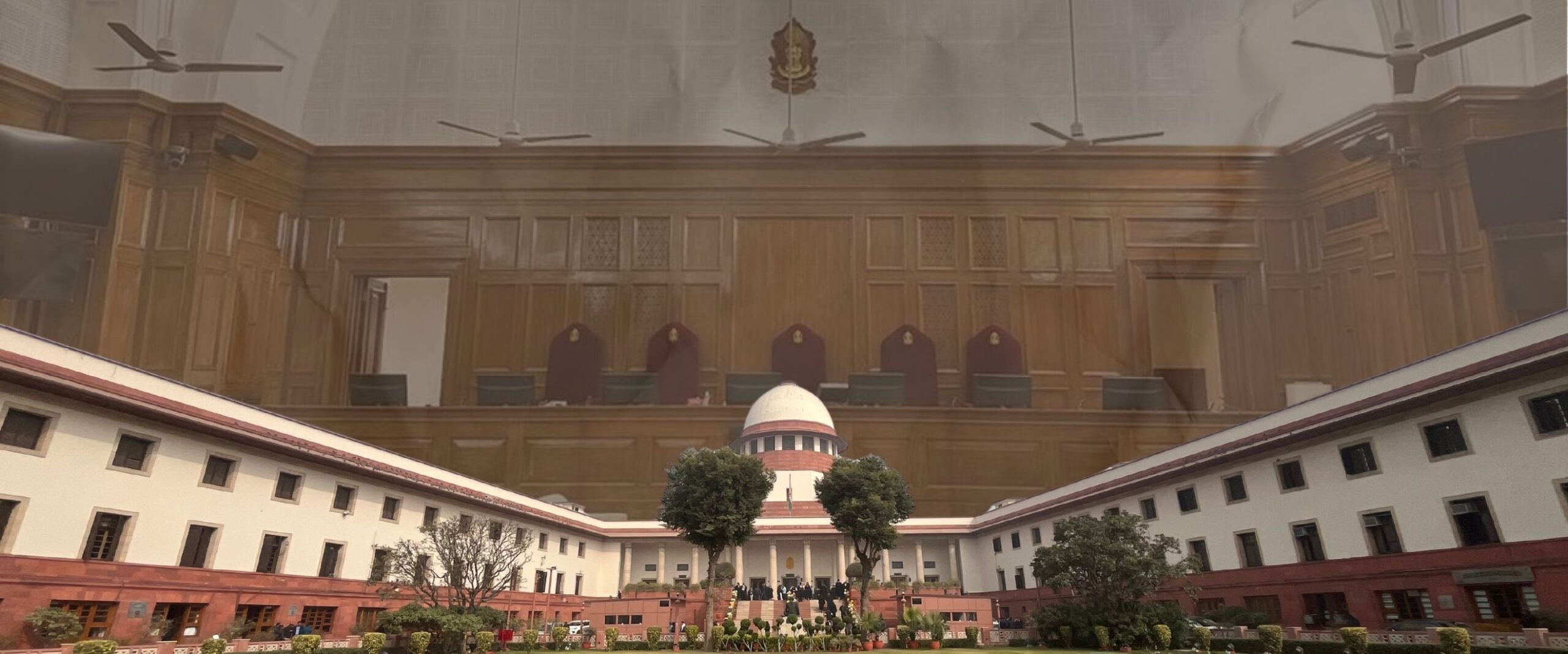
On 3 August, Chief Justice Surya Kant inaugurated 16 special courts at Delhi’s Rouse Avenue Court Complex. Thirteen were dedicated to cases involving anti-terror, narcotics and organised-crime laws. At the inauguration, the Chief Justice described Delhi as the country’s “laboratory for judicial innovation”. He pointed to the costs of delay: prolonged uncertainty for victims, extended pre-trial incarceration and evidence that weakens as memories fade.
The ceremony was one visible outcome of a Supreme Court exercise that had begun months earlier. In In Re: Creation of Special Exclusive Courts (2026), the Court has been monitoring the creation and operationalisation of dedicated courts for cases investigated by the National Investigation Agency (NIA), and more recently for offences under the Narcotic Drugs and Psychotropic Substances Act, 1985.
On 20 July, a status review presented a less even national picture. A Bench of CJI Surya Kant and Justices Joymalya Bagchi and V. Mohana recorded that some States had taken “no effective steps” towards establishing exclusive NIA courts. The Bench said that a single court in Jammu and Kashmir and Ladakh was ex facie inadequate for 47 pending trials.
From special to exclusive
Section 11 of the National Investigation Agency Act, 2008 allows the Union government to designate one or more Courts of Session as Special Courts for offences investigated by the NIA, after consultation with the Chief Justice of the concerned High Court. Section 22 separately permits state governments to designate Special Courts for Scheduled Offences investigated by state agencies.
There is therefore an important distinction between a Special Court and an exclusive Special Court. The NIA’s State-wise list contains Special Courts across the country. The present Supreme Court exercise is narrower. It seeks courts whose judges are not simultaneously carrying an ordinary criminal roster.
That distinction goes to the problem the Court is trying to solve. A Sessions Court may have statutory authority to try an NIA prosecution while also hearing murder trials, bail applications and other criminal matters. A complex NIA case may itself involve several accused, large numbers of witnesses, protected testimony, electronic evidence and extensive forensic material. Giving it legal priority does not, by itself, create additional judicial time.
The Court directly addressed this in its 8 May order. As a working norm, it contemplated one exclusive court for every 10 to 15 pending trials, at least two courts where pendency exceeded 15, and at least three where it exceeded 25. It also required consideration of case complexity, the number of accused and witnesses, and available infrastructure.
Judges posted to these courts were not to be assigned unrelated cases. The Court also called for dedicated staff, courtrooms, record space, security, video-conferencing facilities and arrangements for producing accused persons. Ripe trials were to be taken up in continuous blocks, with day-to-day hearings as far as practicable. The exercise attempts to move from legal designation to protected judicial capacity.
What the July numbers show
The 20 July order recorded the position across 17 State and Union Territory groupings. In all, the table listed 398 NIA matters at various stages, including pre-charge-sheet matters, against 17 exclusive courts. The Court found that some States had not taken effective steps and granted the Union another four weeks after it said the necessary NIA courts would be established.
The distribution was uneven. Delhi had 50 matters and no notified exclusive Section 11 court. Jammu and Kashmir had 47 matters and one court. Punjab, Haryana and Chandigarh had 32 matters and one court. Tamil Nadu had 28 and none, while Karnataka had 27 and none. Jharkhand, with 27 matters, had three exclusive courts; Gujarat, with 13, also had three.
Figure 1 | Pending NIA matters and exclusive courts recorded by the Supreme Court on 20 July 2026
These numbers are a pressure indicator, not a complete workload measure. A multi-accused prosecution with protected witnesses and contested forensic evidence can demand far more court time than several smaller cases. The Court’s own 8 May formula was expressly qualified by complexity, accused strength, witness load and infrastructure. Even so, the table reveals where legal specialisation has, and has not, been matched by additional capacity.
The consent chain
The status table also explains why court creation can move slowly. No single institution controls the full process. For Section 11 NIA courts, the Union issues the designation after consultation with the High Court. High Courts control judicial postings and much of the subordinate judiciary’s administration. States and Union Territories must provide courtrooms, support staff, security and operational infrastructure. Prosecutors and investigating agencies function through separate administrative chains.
By 20 July, Karnataka and Tamil Nadu were still awaiting consent from both the State government and the High Court. Kerala had High Court consent on record but awaited State consent. In West Bengal, the Calcutta High Court had approved an exclusive NIA court at Bichar Bhawan as a temporary arrangement and favoured another in North Bengal. Posts, support staff and suitable space still required State action.
Delhi illustrates the same chain moving more quickly. The Delhi High Court consented to three Rouse Avenue courts on 29 May. The Lieutenant Governor approved them on 16 July. The Union’s formal action was still pending on 20 July, which is why the Supreme Court table recorded zero exclusive courts for Delhi. They were notified four days later.
A proposed court can pass through several institutional stages: recommended, approved, notified, staffed, operational and genuinely exclusive. Treating all of these as the single category of “court established” can obscure where delay actually lies.
The Court has tried to shorten this chain through continuing supervision. Its 24 March order directed financial assistance for the designated States and asked that presiding officers should not be burdened with unrelated work. The 20 April order widened the focus to UAPA and NDPS cases. By 8 May, the Court had converted the exercise into a more detailed operational framework covering workload, infrastructure, staff, prosecutors and trial scheduling.
The NDPS deficit
The 20 July hearing placed a second, larger court-capacity problem inside the same proceeding. Additional Solicitor General Aishwarya Bhati told the Court that States and Union Territories had assessed a requirement of 394 exclusive Special Courts for NDPS cases. Only 113 had been established. On the figures before the Court, the gap was 281 courts. The Bench sought an updated status report because some additional courts may have been created after the assessment.
Figure 2 | Assessed requirement and reported availability of exclusive NDPS courts
NDPS Special Courts operate under a different statutory route. Section 36 of the NDPS Act, 1985 permits State governments to constitute as many Special Courts as necessary for speedy trial, with the concurrence of the Chief Justice of the High Court. The NIA and NDPS systems place the formal power of court creation in different hands. Their practical difficulty is similar: legislation can confer special jurisdiction, but functioning capacity still depends on judges, courtrooms, staff, prosecutors, forensic support and coordination.
Why exclusivity matters
The capacity question is especially important in prosecutions under stringent criminal statutes. NIA cases often involve offences under the Unlawful Activities (Prevention) Act, 1967. NDPS prosecutions are governed by restrictive bail provisions. If a trial moves slowly, a person may remain in custody for a substantial period before guilt is finally determined. Delay affects victims and witnesses, and can weaken the prosecution when memories fade, witnesses become unavailable or evidentiary chains become harder to prove.
An exclusive docket is intended to reduce one source of that delay: competition with ordinary criminal work. But exclusivity cannot remove every bottleneck. A dedicated judge can still lose hearing days because an accused is not produced, a forensic report has not arrived, a prosecutor seeks time or a witness cannot attend.
Experience with other specialised courts points in the same direction. The Department of Justice’s evaluations of Fast Track Special Courts identified the need to strengthen investigation agencies and forensic laboratories, ensure timely DNA reports, provide an adequate number of public prosecutors and vulnerable-witness facilities, and improve data reporting. The underlying offences differ, but the institutional lesson is relevant: specialisation is effective only when the support system around the court is also capable of keeping pace.
Measuring capacity
The Court’s numerical norm is better understood as a starting point than as a complete performance measure. The next stage is to distinguish formal compliance from operational capacity. A useful status report would show whether sanctioned judicial and staff posts are filled, how old each trial is, how many accused remain in custody, how many witnesses remain to be examined, how often effective hearings take place, and why hearings are adjourned.
Such data would also answer a question that raw notification counts cannot: whether a new exclusive court actually adds capacity to the system or merely reallocates an existing judge from another docket. The latter may accelerate one category of cases while shifting delay elsewhere.
Continuing judicial supervision can bring the Union, States, High Courts and investigative agencies onto a common timetable. It can expose administrative drift and force the different stages of court creation into the record. It cannot, however, substitute permanently for court administration. The operational work of filling posts, managing rosters, producing prisoners, securing witnesses and obtaining forensic reports remains distributed across institutions.
Delhi’s Rouse Avenue expansion shows what happens when these institutional steps converge. The national status table shows how often they do not. A Special Court becomes meaningfully special only when designation is followed by a judge, staff, infrastructure and an exclusive docket that produces regular effective hearings. Until then, the legal label changes faster than the institution beneath it.