

Court Data
September 2026: Pendency increases by 380 cases
Pendency marginally increased by 380 cases in September 2026 after observing a decline in August
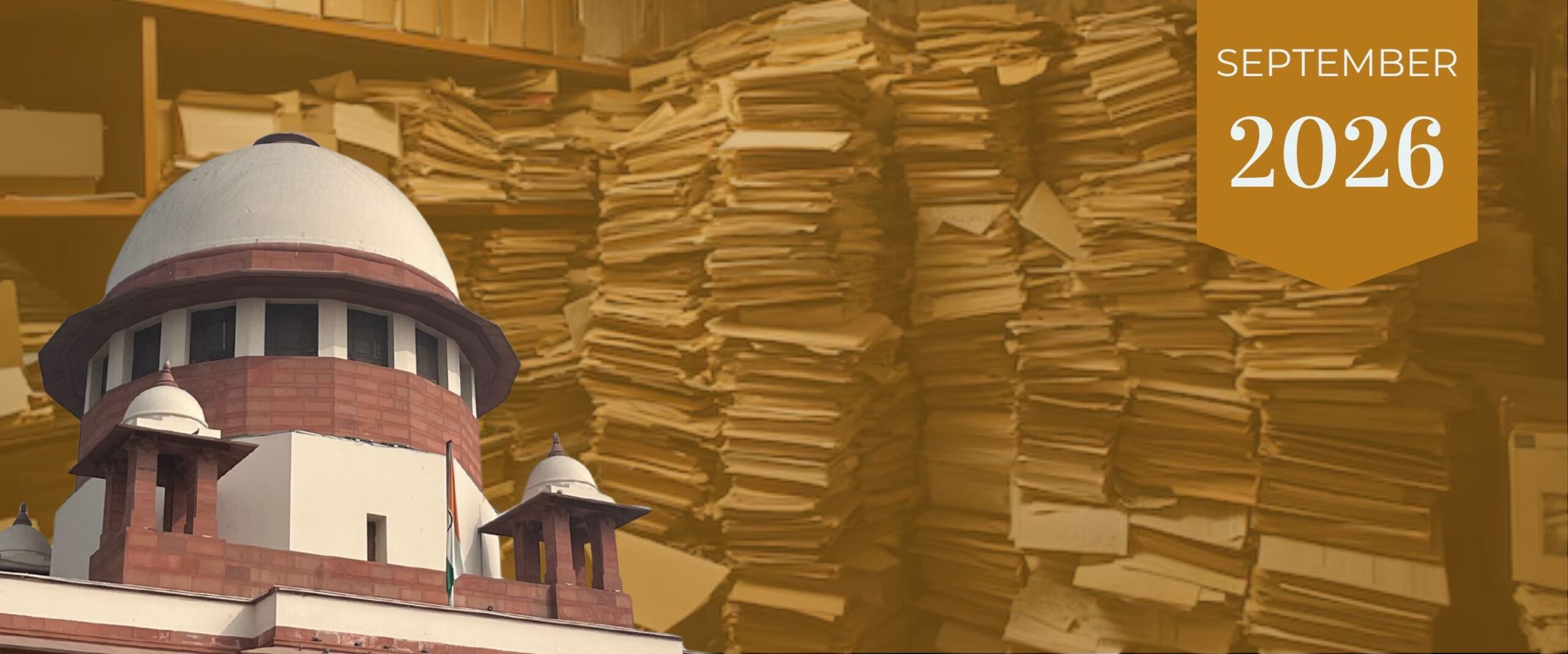
By the end of September, pendency at the Supreme Court increased marginally by 380 cases, after a significant decline in August. On 1 October, the pendency curve crossed the 95,000 mark for the second time since July, standing at 95,019.
Pendency took the sharpest dip in August, reducing by 1079 cases as disposal of cases soared over institutions. The mild but otherwise steady pendency in September could be attributed to the Court’s functioning over 17 working days and continued holding of special benches for speedy disposal of cases.
Pendency since January 2026
Figure 1 illustrates the pendency in the Supreme Court since January 2026.
The pendency curve had a sharp climb between May and July, a result of the partial working days of the Supreme Court during which institutions exceeded disposals. During that period, pendency increased by 3289 cases before taking a sharp plunge in August.
The minimal climb in pendency figures in September can be attributed to regular court days and special benches which were set up to hear and dispose of legacy matters.
September Pendency since 2020
Figure 2 illustrates pendency between September 2020 and 2026.
The number of pending cases between September 2025 and 2026 has gone up by 11,919 counts—the steepest yearly increase since 2020. Taken annually, it is only second to the steep climb of the curve to 10,000 counts between 2024 and 2025.
Between September 2020 and 2023, pendency went up by 10,127 cases before declining by 461 cases in September 2024.
Constitution Bench Pendency
Figure 3 illustrates the pendency in regard to constitution benches.
Data taken from the National Judicial Data Grid (NJDG) on 13 October reflects a change in the number of seven-judge constitution bench matters while five and nine-judge bench pendencies remain the same. The pending nine-judge matters show the Sabrimala Reference and the Industry matter. Interestingly, the industry judgement was decided earlier this month. This is yet to reflect on the portal.
In September, the Court reserved judgement on the constitutionality of the State’s power to impose taxes based on annual turnover in Arjun Floor Mills v State of Orissa.
The disposal of a seven-judge bench was recorded in the first week of October, when the Bench disposed of the 23-year old matter, on the question of whether legislative privilege under Article 194 could prevail over the freedom of speech guaranteed by Article 19(1)(a), in 14 minutes.
Institution and Disposal of cases in 2026
Note: For purposes of tracking pendency of constitution benches, we consider figures from the 1st of each month from the National Judicial Data Grid (NJDG). Due to NJDG being non-functional on that day, we referred to the Constitution Bench pendency as on 13 October.
Figure 4 shows the total number of cases instituted (filed) and disposed of by the Court during the first nine months of 2026.
While disposals soared over institutions in February, April and May, they remained low in the months of June and July. August saw an increase in disposals over institutions. In September, institutions exceeded disposals by 1313 cases.
Note: For our pendency, institution and disposal articles, we primarily rely on the data provided on the National Judicial Data Grid (NJDG). We cross-check institution and disposal numbers with the Justice Clock. Typically, on the fifth of each month, the institution and disposal numbers on both portals match. Owing to the NJGD website remaining non-functional during the start of October, we have considered Justice Clock figures for recording pendency and institution and disposal of cases in September. We have taken 13 October figures from NJDG to record constitution bench pendency.
Related articles
Court Data
August 2026: Pendency decreases by 1079 cases
In August, the Court made a dent in its pendency, after significant spikes in June and July
Court Data
July 2026: Pendency increases after partial break
The Court resumed regular sittings in July, but fresh filings continued to outpace disposals, keeping pendency above 95,000 cases.
Court Data
Pendency in the Supreme Court: A mid-year review of 2026
Pendency expectedly increased despite the Court recording its highest number of disposals during a partial break since 2022
Court Data
May 2026: Pendency falls for the second consecutive month
The Court ended May with 92, 429 cases, continuing the decline recorded in April