


Analysis
Hum Do, Hamare Do?
The top court was asked about a birth certificate and has now reopened its 2003 ruling on the two-child rule
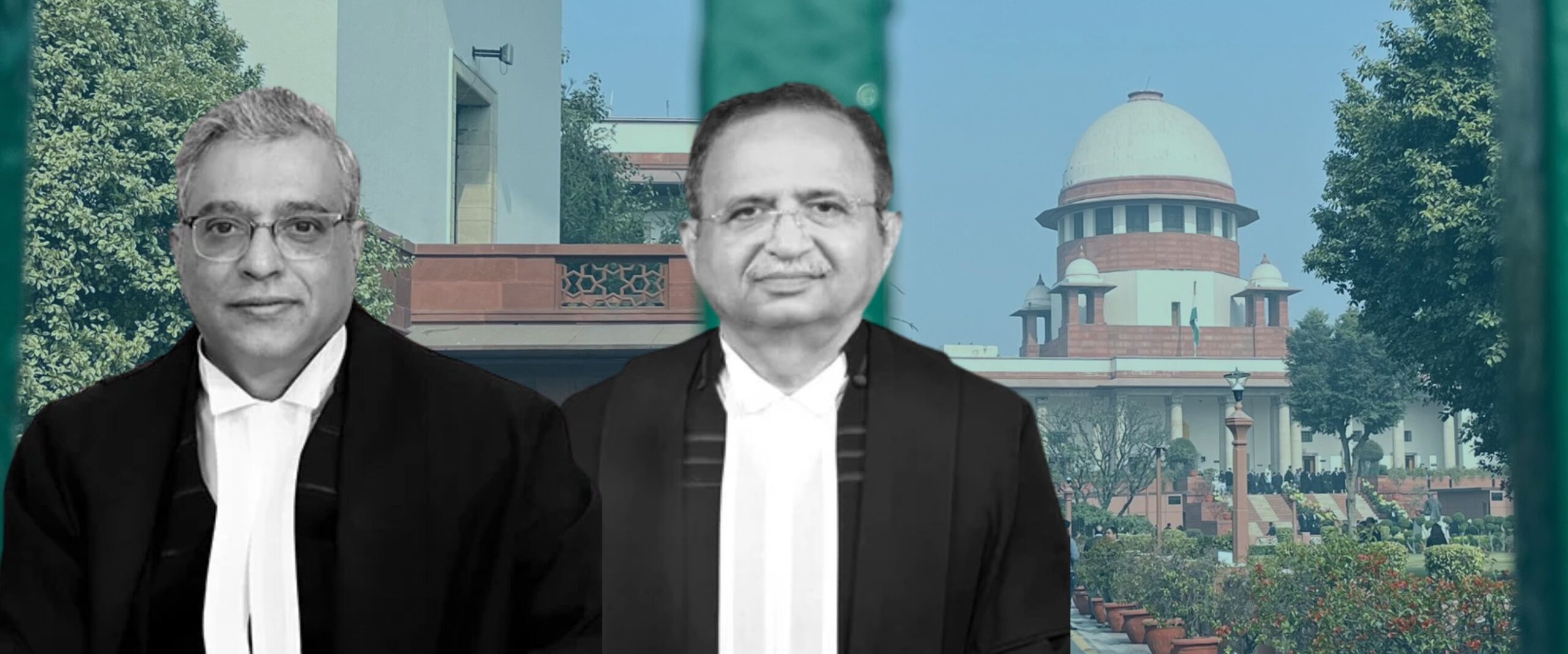
“Hum Do, Hamare Do” (We two, Our two), the family-planning slogan once made the size of an Indian family a matter of national concern. Two decades after the Supreme Court upheld a two-child limit for elected representatives for local bodies, it questioned whether the rule still holds and if it requires reconsideration.
On 4 November a Division Bench of Justices P.S. Narasimha and Alok Aradhe referred Javed v State of Haryana (2003) to a larger Bench. Javed upheld Haryana’s law disqualifying individuals with more than two living children from contesting local body elections. The reconsideration of Javed came in Mangala Bhimrao Ingle’s appeal when her election as sarpanch of Kakoda, Maharashtra, was set aside because she had a third child in 2014. Section 14(1)(j-1) of the Maharashtra Village Panchayats Act, 1959 states that a person will be disqualified from local office for having more than two children. Her disqualification was subsequently upheld by the Bombay High Court on 5 August 2025. Ingle’s lawyer told the Court that the birth certificate showing her third child was issued from an allegedly invalid place and proved nothing conclusive. That was her only argument according to the judgement. The Bench still referred Javed to a larger bench, despite it and the Maharashtra law not being under challenge.
The Court’s decision to reconsider is easily explained by a change in population dynamics. The 5th National Family Health Survey (NFHS-5) puts India’s total fertility rate at 1.9 and Maharashtra’s at 1.7—below the replacement level of 2.1. The Court’s concern goes beyond population growth. It observes that the restriction excludes citizens from political representation on grounds that have little relation with their capacity to hold office. Further, it forces women to choose between reproductive decisions and democratic participation.
Javed’s nexus between reproductive choices and fitness for public office was tenuous from the outset. The Court never explained how having more than two children made a person less capable of holding elected office, or how disqualifying them would advance population control. In Ingle’s case, the Supreme Court draws a distinction between a precedent that was wrongly decided and one that has lost relevance over time i.e. the judgement was good law when delivered. The judgment states that Javed belongs to the latter as “the rule of law must change” with the circumstances.
The Supreme Court justifies the reference on the basis of precedent. In State of Punjab v Devans Modern Breweries (2003), Justice S.B. Sinha’s dissent recognised that a decision could cease to be law because of changed conditions, even if it had never been reversed or overruled. Union of India v Raghubir Singh (1989) held that a binding precedent must accommodate changing social circumstances and evolving understandings of law.
Javed’s reasoning was later relied on in Rajbala v State of Haryana (2015), which upheld educational and other disqualifications for panchayat candidates. In Rajbala, the petitioners had argued that the disqualifications introduced by the Haryana Panchayati Raj (Amendment) Act, 2015 created an unreasonable classification among otherwise eligible candidates. The restrictions covered outstanding dues to specified cooperative institutions, electricity arrears, prescribed educational qualifications and the absence of a functional toilet at home. While the Court acknowledged the right to contest Panchayat elections, it held that Article 243F empowered State Legislatures to prescribe disqualifications. The Supreme Court held that education would improve the administration of panchayats, financial defaults could justify restrictions on candidates and that elected representatives should set an example on sanitation. This was despite the Court noting that 68 per cent of Schedule Caste women and 41 per cent of Schedule Caste men would be ineligible to contest and that such disqualification grounds were not applicable to members of the state assembly and Parliament.
In Sukanya Shantha v Union of India (2024), the Court questioned Rajbala’s failure to account for the disproportionate exclusion of Scheduled Caste persons and recognised concerns of indirect discrimination, without directly reconsidering either ruling. In Ingle’s case, the Supreme Court considers the consequence of Javed on women who are forced to choose between reproductive autonomy and political participation. Its larger point is that precedent cannot freeze the law in the circumstances of an earlier generation. The two-child rule came from a fear that India’s population was growing too fast. Fertility has since fallen below the replacement level, but the disqualification remains. The larger Bench will decide whether the law has outlived its purpose. The present Bench has already given its view of Javed: “We cannot ride into the future on a horse that is dead.”
This article was first featured in SCO’s Weekly newsletter. Sign up now!