


Analysis
Closed by retreat
The Court’s disposal of a challenge to a BCI Circular revives questions about its approach to cases rendered moot.
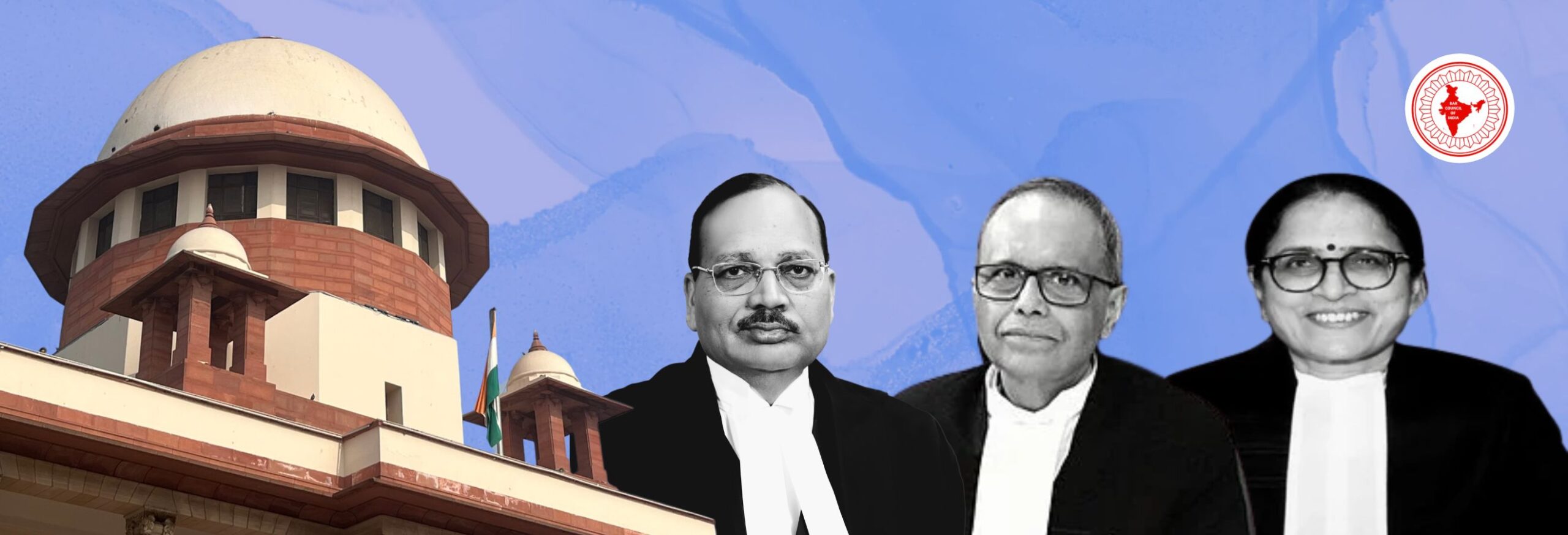
In Rishabh Duggal v Bar Council of India, the Supreme Court of India heard a challenge to the Bar Council of India’s 2016 Circular, which prescribed an upper age limit for admission to law courses. Last week, the BCI reversed that resolution a day before the challenge was listed before the Supreme Court. The Bench of Chief Justice Surya Kant and Justices Joymalya Bagchi and V. Mohana disposed of the ten-year-old case in a three-paragraph order noting that the challenge was now infructuous.
The 2016 Circular restored Clause 28 of the Rules of Legal Education, 2008. It capped the age of admission at 20 years for the five-year course and 30 years for the three-year course. The criteria were relaxed for reserved categories. The Clause was withdrawn by the BCI in 2013. In the meantime, High Courts responded differently. The Madras High Court which had upheld the limit in 2009, later quashed its withdrawal in 2015. The Punjab and Haryana High Court had struck down the Clause in 2011.
Interestingly, the Supreme Court dismissed an appeal against the Madras High Court’s decision quashing the withdrawal. The BCI then revived the age limit, which the Supreme Court later stayed. Senior Advocate Zoheb Hossain, appearing for the petitioner, told the Supreme Court Observer: “What tilted the scales against the age-limit was my submission to the 2016 SC Bench, giving data about the ages of Judges of the Court when they qualified for their law degrees, adding that most of them would not have been Judges, had the age-restriction been in force earlier. The Court immediately stayed the BCI’s circular, without hearing us further.” The BCI was permitted to reconsider the limit in 2019.
The question before the Court was significant: Can the BCI, when framing the standards of legal education under the Advocates Act, 1961, prescribe a maximum age for studying law? The disposal leaves this question unanswered.
The Court has tackled similar questions before. In Indian Council of Legal Aid and Advice v Bar Council of India (1995), it held that the BCI’s rule barring those above 45 years from enrolling as advocates was discriminatory and beyond its powers, noting that there was “no reliable statistical or other material” to demonstrate that late entrants lowered professional standards. In Bar Council of India v Bonnie FOI Law College (2023), a Constitution Bench upheld the All India Bar Examination, reading the BCI’s pre-enrolment powers more broadly. Rishabh Duggal was an opportunity for the Court to clarify the age-limit question for admission to law colleges.
Rishabh Duggal’s disposal comes after two long-pending matters were closed as the issues were rendered infructuous. A seven-judge Bench disposed of N. Ravi v Speaker, Legislative Assembly Chennai (2026) on 6 October as the facts that triggered the case had been settled before the Court took up the challenge. It was pending for 23 years. Notably, the substantive questions involved were left open to be decided at a later stage. Similarly, Arjun Flour Mills v State of Orissa (2026) was also disposed of unceremoniously as it concerned a tax regime that is no longer in place. It did, however, provide a reasoned judgement clarifying the governing precedent.
All three cases—Rishabh Duggal, N. Ravi and Arjun Flour Mills—concerned questions that have become moot. India has no test to guide decisions on such moot points, leaving it to the Bench’s discretion. In Vivek Narayan Sharma v Union of India (2023), a Constitution Bench settled the constitutionality of demonetisation, notwithstanding the Union’s stand that the issue had become academic.
American courts have a long-standing rule for this situation. In Friends of the Earth v Laidlaw Environmental Services (2000), Justice Ruth Bader Ginsburg, writing for the United States Supreme Court, held that a defendant’s voluntary change of course ends a case only if it is “absolutely clear” that the conduct will remain abandoned.
In Rishabh Duggal, the Order does not mention that the BCI’s decision to withdraw was “conscious and final”, as the resolution claimed. Petitioners had urged the Bench to record it as the BCI had previously reversed its own decision. The Order’s silence on this would surely make one think that the Court missed an opportunity to adopt a small practice in such instances: If a case ends with a respondent withdrawing the challenged measure, the order should reflect whether the legal issue remains open and whether the petitioner can return.
This article was first featured in SCO’s Weekly newsletter. Sign up now!
Related articles
Analysis
Hum Do, Hamare Do?
The top court was asked about a birth certificate and has now reopened its 2003 ruling on the two-child rule
Analysis
Memories from the Collegium
Justice S.K. Kaul’s memoir offers a glimpse into the Collegium, but our data reveals that there is more to the story
Analysis
Bar as informant
The SCBA’s contempt petition tests how the Court distinguishes institutional criticism from threats to the administration of justice
Analysis
Sequel Season
Recent challenges to the ECI’s exercise of plenary powers has left onlookers anticipating a legal sequel