


Analysis
Bar as informant
The SCBA’s contempt petition tests how the Court distinguishes institutional criticism from threats to the administration of justice
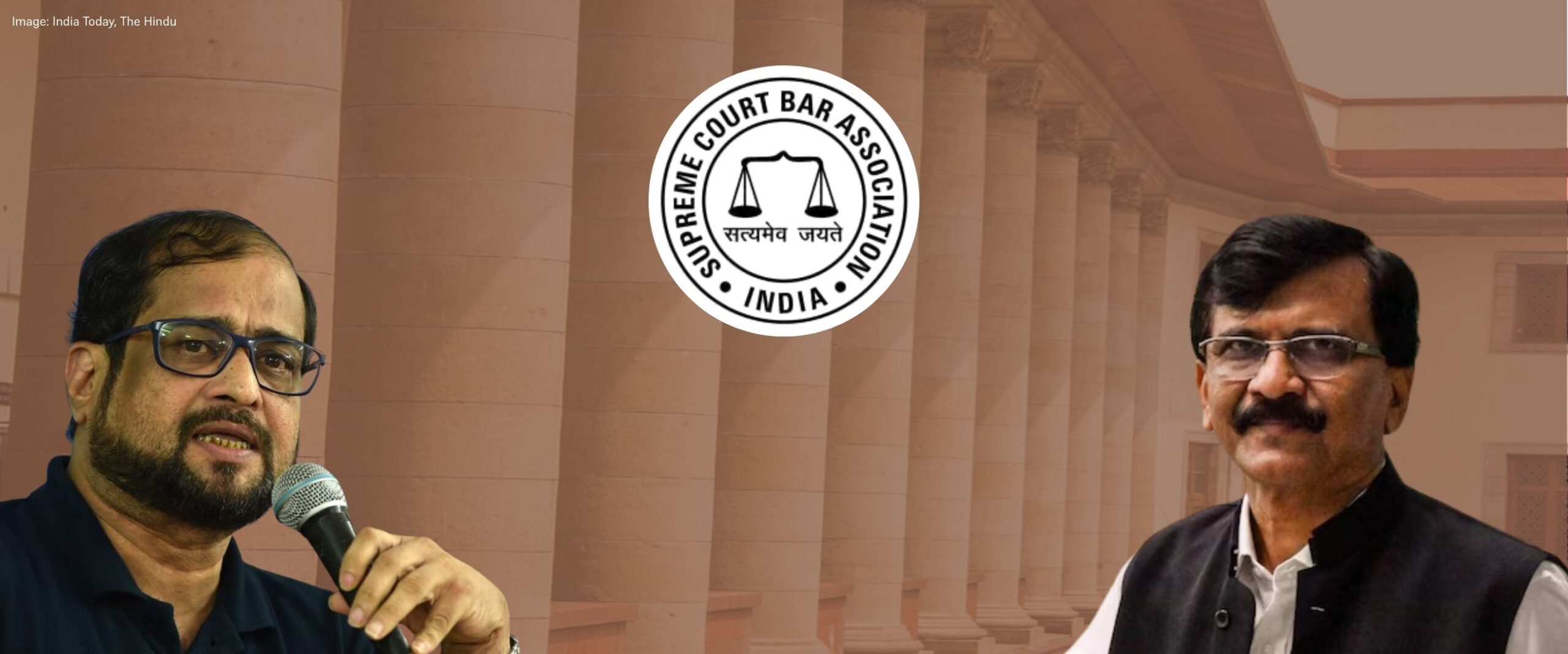
Criminal contempt proceedings allow the alleged contemnor to question how their remarks, which allegedly scandalised judges, threaten public justice. The Supreme Court Bar Association’s (SCBA) contempt petition against journalist Nikhil Wagle and Shiv Sena (UBT) MP Sanjay Raut has brought the distinction between criticism of the institution and the threat to the administration of justice to the forefront.
The SCBA filed its petition on 15 October with the consent of Attorney General R. Venkataramani. The next day, a Bench of Chief Justice Surya Kant and Justices Joymalya Bagchi issued show-cause notices to Wagle and Raut, exempting them from appearing in person before the Court.
Wagle had posted an abusive remark on X (formerly Twitter) after CJI Surya Kant refused to meet the INDIA Bloc, which wanted to submit a memorandum on the Election Commission’s functioning. The CJI had justified his refusal by pointing out that some of the issues in the memorandum concerned pending matters. Wagle subsequently deleted his post and apologised publicly.
Raut contrasted the refusal to meet Opposition leaders with allegations that judges attended the ruling party’s events in BJP-ruled States. He recalled how former CJI D.Y. Chandrachud hosted Prime Minister Narendra Modi for Ganesh worship, and referred to photographs purportedly showing judges playing badminton with political leaders in London.
The SCBA fact-checked the account by citing a Delhi High Court Order that revealed photographs of CJI Surya Kant and Justice Vikram Nath playing an inaugural match with Union ministers Arjun Ram Meghwal and Kiren Rijiju at Delhi’s Thyagaraj Stadium in November 2025. On 17 October, Raut acknowledged
The SCBA alleged the remarks “go beyond fair criticism and are capable of scandalising” the Supreme Court, thereby “diminishing” its authority by false statements. Venkataramani’s consent letter described the posts as “prima facie scandalous, intended to lower the esteem of the Supreme Court of India and particularly the CJI”. The consent letter, mandated under Section 15 of the Contempt of Courts Act, 1971, enabled the SCBA to bring the contempt petition to the Supreme Court.
Section 2(c) makes publications that scandalise courts or lower their authority liable for contempt. For punishment, Section 13 requires substantial interference, or a substantial tendency to interfere, with the due course of justice. The Court must assess that threshold alongside the explanations and apologies.
The proceedings may trigger the Court’s institutional memory of relevant previous cases.
In 1978, the Court dropped contempt proceedings against S. Mulgaokar, then Editor-in-chief of the Indian Express, for penning an article claiming the Government had packed the court with pliant and submissive judges. Justice Krishna Iyer, in his concurring judgement, had advised Judges not to turn hypersensitive.
In P.N. Duda v. P. Shiv Shankar (1988), the Supreme Court considered Union minister P. Shiv Shankar’s allegation that its judges had “unconcealed sympathy for the haves” and that bride burners and other anti-social elements had “found their heaven in the Supreme Court”. The Court held that “the speech… read in its proper perspective, did not bring the administration of justice into disrepute”.
In 1995, five advocates sought contempt against Senior Advocate Kapil Sibal over his message in a lawyers’ souvenir. Sibal wrote that the judiciary had failed to eradicate corruption. Sibal added that, as a phenomenon, corruption included receiving monetary benefits for judicial pronouncements, kow-towing to political personalities, and favouring the Government. The Court, however, found that Sibal’s message did not target a particular judge, and added that fair and reasonable criticism must be encouraged.
In September 2022, Attorney-General K.K. Venugopal refused to consent to contempt proceedings against Sibal over his remark that he had “no hope left” in the Court in the context of certain rulings. Venugopal termed his remarks “fair comment”, which Section 5 of the Act protects. Last year, CJI Sanjiv Khanna declined a contempt plea against BJP MP Nishikant Dubey, who blamed him for “all the civil wars”, in the context of the Court’s decision to hear the challenges to the Waqf (Amendment) Act, 2025. CJI Khanna had famously remarked then that “courts are not as fragile as flowers”.
More recently, in Wikimedia Foundation v ANI Media (2025), the Court set aside an order removing online discussion about pending proceedings. Drawing on Justice V.R. Krishna Iyer’s reasoning, it distinguished protecting a judge’s personal reputation from preventing obstruction of public justice, while preserving contempt action against sufficiently serious attacks.
Consistent with the Court’s reasoning in a 1998 case, the SCBA’s role ends once it informs the Court. What remains lies between the Court and the two men.
Related articles
Analysis
Sequel Season
Recent challenges to the ECI’s exercise of plenary powers has left onlookers anticipating a legal sequel
Analysis
Tea at Tilak Marg
Can Parliament seek sitting judges’ views on a constitutional amendment they may later be called upon to decide?
Analysis
From “Resolution” to “Statement”
Three new judges were recommended to the Supreme Court. The Collegium said little about them. We asked practitioners.
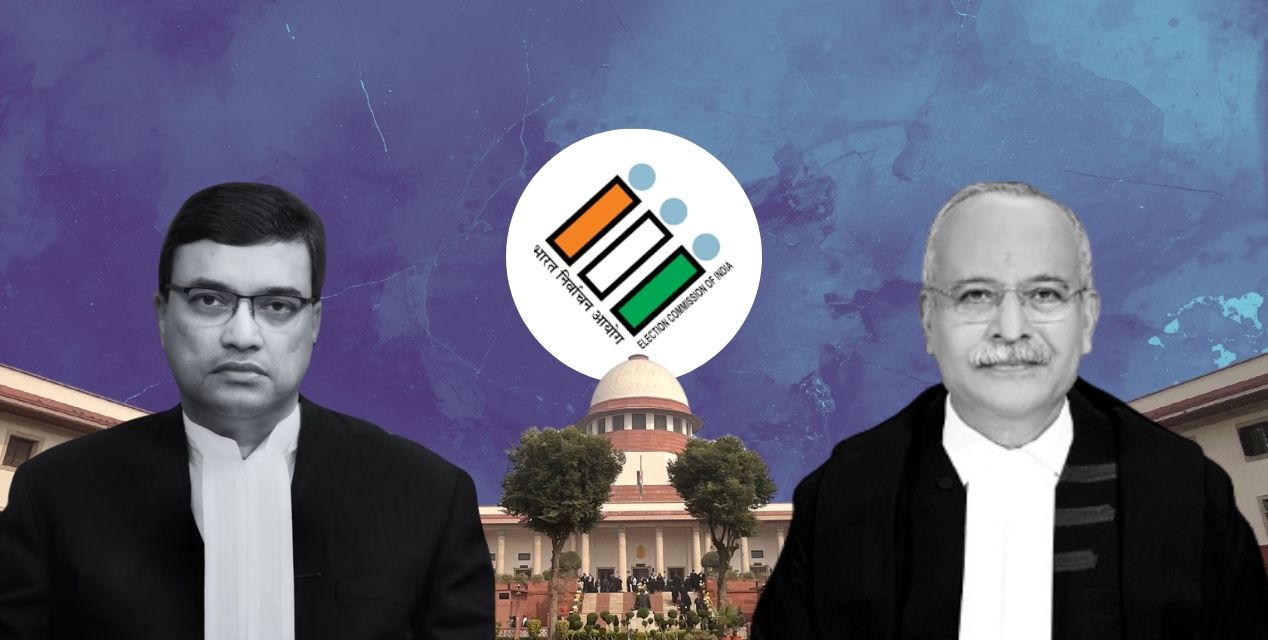
Analysis
Split verdict, common order
All eyes are on the ECI but an aberration at the Supreme Court draws attention to larger bench references