


Analysis
How reasonable is ‘reasonable’?
This Constitution Day, we revisit the making of Article 19 and the constitutional limits on the State’s power to restrict protests.
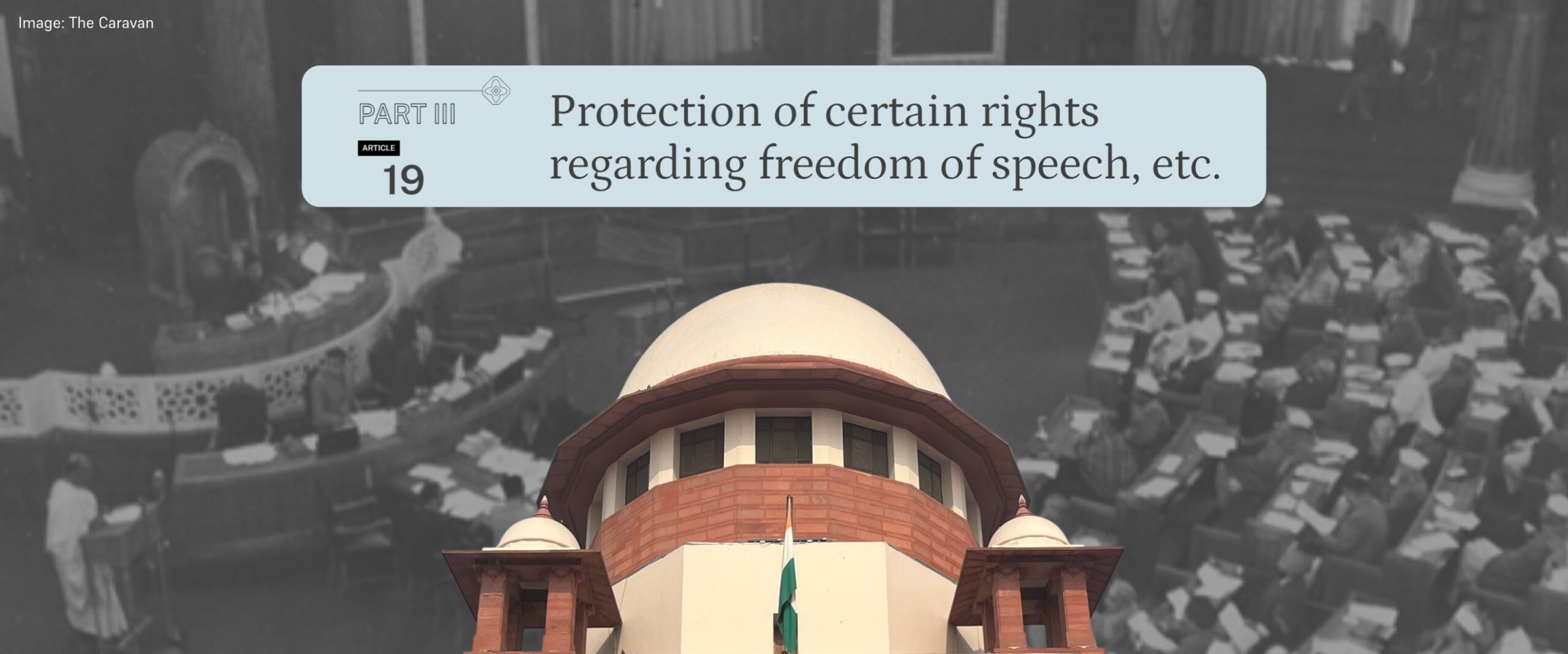
“Life would be meaningless”, wrote Hansa Mehta in May 1945, if the individual did not enjoy, among other freedoms, the right to speak, associate and convene public meetings. Mehta, who had been imprisoned during the Civil Disobedience and Quit India movements, was writing a booklet titled Civil Liberties. As Rohit De and Ornit Shani recount in Assembling India’s Constitution: A New Democratic History, she wanted Indians to be “placed on their guard against any encroachment” on their fundamental rights. Within two years, Mehta would be sitting on the Constituent Assembly’s Sub-committee on Fundamental Rights.
Today marks 77 years since the adoption of the Constitution of India. It has been a year of protests, with Indians taking to the streets over examination paper leaks, industrial wages, displacement from ancestral lands and electoral discrepancies. In July, demonstrations spearheaded by the Cockroach Janta Party culminated in the resignation of Union Education Minister Dharmendra Pradhan. Three months later, as protestors demanded the resignation of Chief Election Commissioner Gyanesh Kumar, the Delhi Police denotified Jantar Mantar as a protest venue.
Freedom on paper?
Curiously, a Constitution born out of decades of political agitation makes no express mention of the right to protest. The right derives principally from Article 19, clause (1)(a) and (b), which guarantee freedom of speech and expression as well as the right to assemble peaceably, without arms.
As early as April 1947, an Interim Report of the Sub-committee on Fundamental Rights contained a provision to clause (b), which granted the right to assemble peacefully without arms, allowing prevention and control of meetings “likely to cause a breach of the peace,” or “nuisance to public”, and meetings held near legislative chambers.
Vallabhbhai Patel, Chairman of the Advisory Committee, moved an amendment to delete the proviso, which was adopted by the Constituent Assembly on 30 April 1947. Clause (3) of Draft Article 13, however, authorised restrictions on peaceful assembly in the interests of public order without any caveat requiring them to be reasonable. On 1 December 1948, Syamanandan Sahaya proposed that restrictive legislation operate only “for a defined period”. On the same day, Pandit Thakur Dass Bhargava moved an amendment seeking the insertion of “reasonable” before “restrictions” in Clauses (3) to (6) of Draft Article 13. While Sahaya’s proposal did not find favour with the Assembly, Bhargava’s amendment was adopted the following day, with Dr. B.R. Ambedkar’s acceptance.
The following day, H.J. Khandekar questioned whether workers would be free to organise public meetings to demand a bonus, noting that “Section 144 has been constantly reigning in the big cities of this country.” His intervention makes for interesting reading in light of the labour unrest in Noida this April. Thousands of factory workers demonstrated for higher wages and better working conditions. The Uttar Pradesh government revised minimum wages, but the agitation also led to widespread arrests. As per reports, the average period of incarceration among 106 arrested persons whose cases it examined was 53 days. Similar strikes took place in Madhya Pradesh, Jharkhand, Gujarat, Haryana, Bihar and Uttarakhand.
Freedom in Court
Outside the Assembly, citizens were demanding stronger constitutional safeguards. “The public, in other words, began to hold the government accountable to the Constitution ahead of its enactment,” write De and Shani. In 1949, the Bombay Provincial Civil Liberties Conference demanded the deletion of the “restrictive qualifications” in Article 13 of the Draft Constitution. At the Indian Civil Liberties Conference in Madras, retired Patna High Court judge P.R. Das warned that the provision could enable governments to suppress political parties and imprison citizens without trial.
In Kameshwar Prasad v State of Bihar (1962), a Constitution Bench recognised peaceful demonstrations as constitutionally protected and struck down a prohibition on participation by government employees. However, it upheld the prohibition on strikes as there is no fundamental right to strike.
Following the forcible dispersal of Baba Ramdev’s anti-corruption agitation in 2011, the Court examined the State’s obligations towards protesters. In its Ramlila Maidan judgement in 2012, it found the police action disproportionate. Drawing on this judgement in Anuradha Bhasin v Union of India (2020), the Court held that restrictions under Section 144 of the Code of Criminal Procedure, 1973 must satisfy the test of proportionality. Repetitive orders constitute an abuse of power.
In Mazdoor Kisan Shakti Sangathan v Union of India (2018), the Court recognised the importance of demonstrations for sections of society that lack adequate political representation. While reconciling the protesters’ freedoms under Article 19 with the rights of those residing near Jantar Mantar under Article 21, the Court questioned the adequacy of Ramlila Maidan as an alternative protest venue.
Freedom on trial
Eight years later, following Jantar Mantar’s denotification, traders around Ramlila Maidan have themselves approached the Court, invoking their freedom to carry on business under Article 19(1)(g). The proceedings in October have brought into focus the freedoms of those who are not themselves protesting. On 9 October, the Court invoked the principle of proportionality to distinguish between the regulation and prohibition of public transport. At a special Sunday sitting two days later, lawyers questioned the restrictions on their movement and the detention of colleagues. Senior Advocate Sanjay Hegde argued that access to justice necessarily included access to lawyers. The Court directed that advocates and journalists not be prevented from discharging their professional duties and that prohibitory boards around the Supreme Court be removed. Interestingly, the Fourth U.P. Lawyers’ Conference in 1948 had proposed two constitutional safeguards: an unrestricted right of access to courts and immediate access to counsel upon arrest or detention.
On 5 January, the Supreme Court denied bail to Umar Khalid and Sharjeel Imam in the alleged conspiracy behind the February 2020 Delhi riots. Prosecuted under the Unlawful Activities (Prevention) Act, 1967, both have spent over six years in prison without a determination of their guilt. For people who wish to exercise their right to protest, this case looms as an unspoken threat of how trial can be turned into punishment.
The right to public assembly has gained further constitutional significance in light of the farmer agitations for a statutory guarantee of minimum support prices, Adivasi resistance to coal mining in Chhattisgarh’s Hasdeo Arand forests, and demonstrations by those facing displacement by the Ken-Betwa river-linking project.
In her 1945 booklet, Mehta advocated the establishment of legal aid societies to assist victims of the abuse of power. She was writing at a time when the struggle for independence was still being fought on the streets. Her concern was already with a question that would outlive British rule: how freely would Indians be able to agitate against a government of their own choosing?
Related articles
Analysis
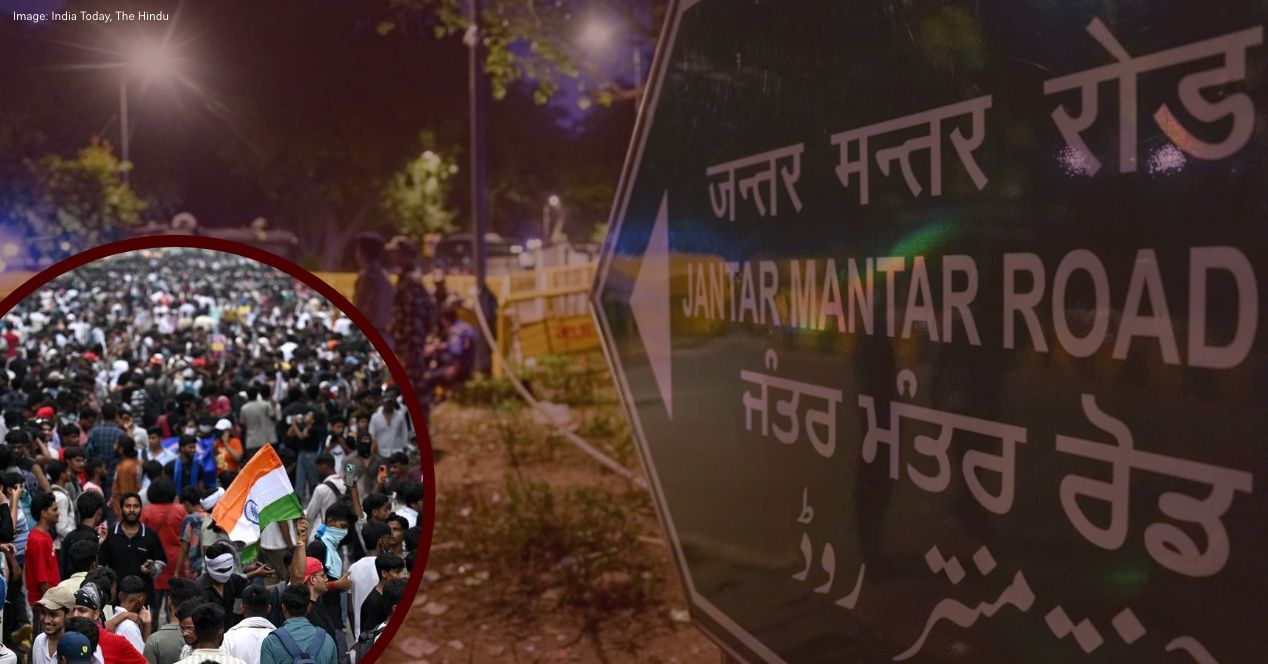
‘Out of Sight, Out of Mind’: Jantar Mantar and Democracy
Does the designation of protests to remote and invisible locations amount to regulation or prohibition?

Analysis
The CJP Order and the limits of Article 142
The quashing of FIRs reads less like an adjudication and more like a settlement agreement that received a judicial stamp.
75 Years of SC Articles
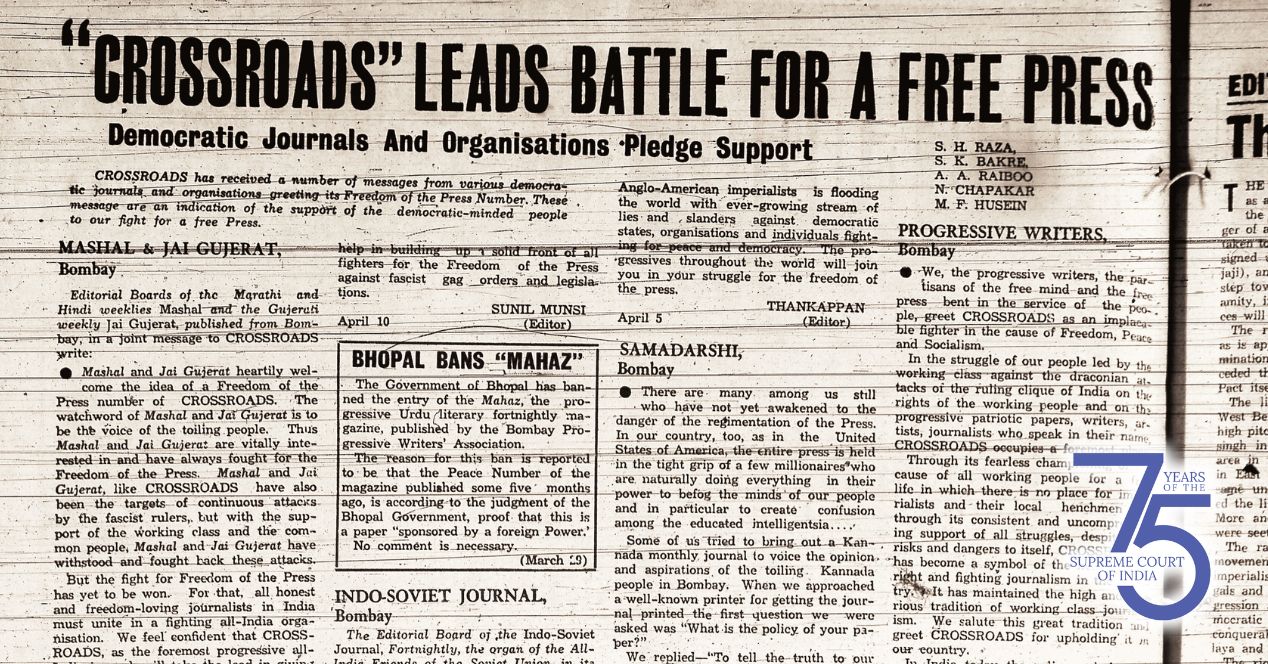
Freedom of Speech and Constitutional Nostalgia
A look at one of the SC’s earliest landmark decisions and its fallout warns against an uncritical veneration of our constitutional past
Channel
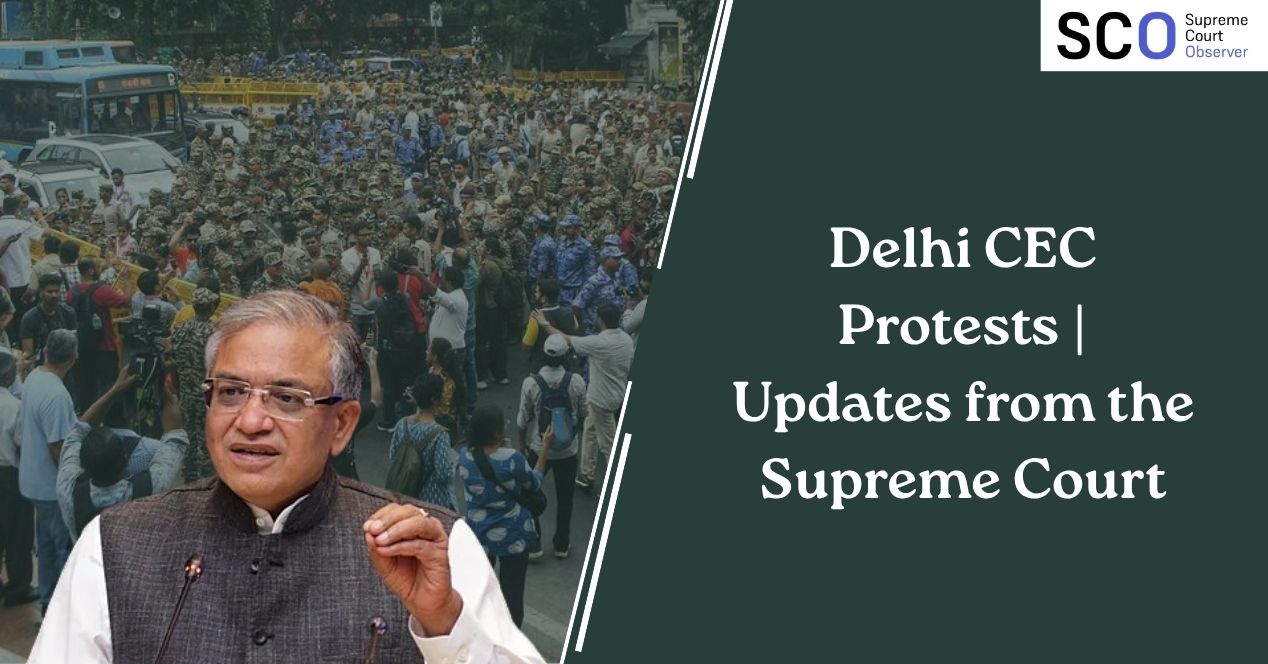
Protests against the Chief Election Commissioner
In the recent weeks, protests have swept India on the demand for resignation of the Chief Election Commissioner Gyanesh Kumar