


Analysis
Branching out
The petition challenging mode of ECI appointments is a critical opportunity for the Court to engage with fourth branch institutions
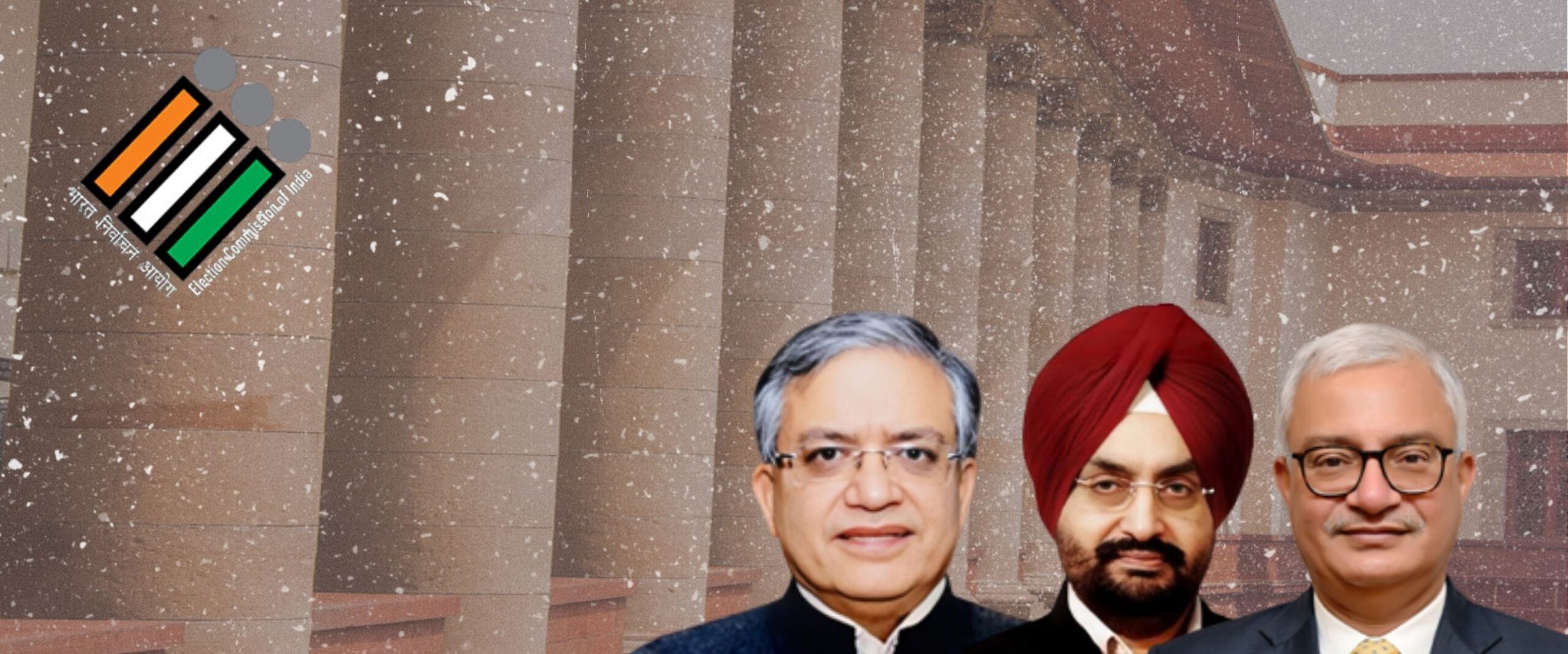
This week, a Division Bench of Justices Dipankar Datta and S.C. Sharma began hearing arguments against the Chief Election Commissioner and other Election Commissioners (Appointment, Conditions of Service and Term of Office) Act, 2023. Petitioners focused on Sections 7 and 8 which create a “Selection Committee” to make appointments to the ECI, comprising the Prime Minister (PM), the Leader of Opposition (LoP) and a Union Cabinet Member nominated by the PM. They argued that this composition increases the risk of biased appointments.
Bodies such as the ECI are called “fourth branch institutions”, a term that reflects their intended independence from legislative, executive and judicial control. They perform the role of checks and balances. There are two notable institutions established by the Constitution; the ECI and the Office of the Comptroller and Auditor General of India (CAG).
While Article 324 defines the role and functions of the ECI, the Constitution grants Parliament the power to frame a mechanism for appointments. Interestingly, ruling governments were reluctant to exercise this power. In March 2023, Anoop Baranwal v Union of India changed the status quo, recommending a Selection Committee comprising the PM, the LoP and the Chief Justice of India (CJI) to operate until enactment of a law. Nine months later, the 2023 Act materialised, replacing the CJI with a Union Cabinet Minister.
Parliament had moved swiftly and two appointments were made under the new Act, days before the Court took up petitions seeking an interim stay on its operation. The plea was ultimately rejected. Meanwhile, the interim committee constituted in Anoop Baranwal never came to be and its workability was never tested.
Members of the Constituent Assembly knew the risks involved with fourth branch institutions. On 15 June 1949, Dr. B.R. Ambedkar stated that the “superintendence, direction and control” of “election machinery should be “outside control of the Executive government.” Both Shibban Lal Saxena and Pandit Hriday Nath Kunzru expressed concerns that appointment by the President would naturally mean “appointment by the PM”. “The conduct of elections should be entrusted to people who are free from political bias,” cautioned Kunzru.
Seventy-seven years down the line, the question before the Court concerns executive influence rather than control. Two points of contention raised by the petitioners open broader concerns regarding fourth branch institutions.
First, the petitioners contend that the ECI should be insulated from executive influence. A petition filed by the Centre for Public Interest Litigation raises a similar concern about the CAG. Envisioned under Article 148, the CAG oversees Union government accounts and is appointed by the President. The CPIL contends that the PM’s role in recommending names for appointment is unconstitutional and seeks judicial intervention similar to the interim arrangement provided by Anoop Baranwal.
Second, the petitioners argue that the 2023 Act is part of a larger pattern of judgements being nullified by subsequent legislation. They cite the example of Vineet Narain v Union of India (1997) which struck down a provision mandating government permission for investigation of public officers. The provision was brought back in a subsequent legislation and was struck down again in Subramanian Swamy v Union of India (2014). Other examples cited were the five rounds of back and forth over tribunal administration and the enactment of the National Judicial Appointment Commission (NJAC) Act, 2014 which was struck down by the Court in 2015.
The current challenge offers the Supreme Court an opportunity to define the limits of executive involvement over all fourth branch institutions. It must decide how these institutions should operate, particularly when the Constitution is silent on the implementation of the constitutional provisions which built these institutions into its scheme.
This article was first featured in SCO’s Weekly newsletter. Sign up now!
Related articles
Analysis
Trusting the Election Commission
In a hearing on electoral roll revision, the SC reiterated its inclination to trust the ECI, but not before offering friendly advice
Analysis
Union Bill Seeks to Nullify Another Supreme Court Judgement
DESK BRIEF: New Bill proposes a three-member committee with two members of the ruling party to nominate members of the Election Commission.
Analysis
Beyond ‘Special’: How the 2025 Bihar SIR marks a break from the past
As the SC considers its verdict in the roll revision case following 29 hearing days, it must confront the history of electoral safeguards
Analysis
From Swamy to ADR: Nine VVPAT related cases decided by the Supreme Court
SCO lists key cases filed before the top court in the past decade seeking more transparency in the EVM-VVPAT system in India