

Analysis
Six years later, Delhi riots bail hearing hinges on whether speeches justify UAPA charges
Petitioners challenged detention, citing prolonged investigation and repeated supplementary chargesheets
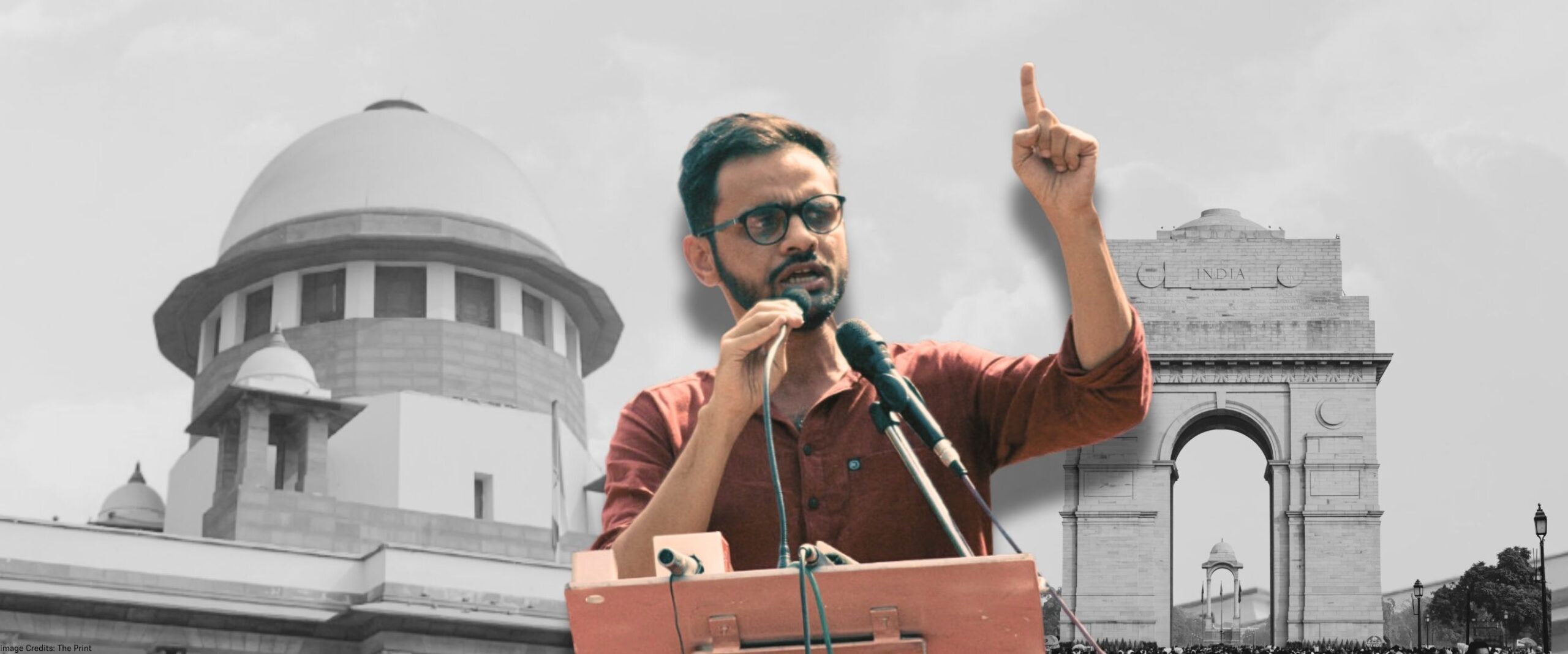
A Bench of Justices Aravind Kumar and N.V. Anjaria continued hearing the batch of bail petitions in the 2020 Delhi riots case today.
At the outset, counsel informed the Court that Umar Khalid had sought interim bail before the Trial Court to attend his sister’s wedding. They stated that a similar relief was granted to Khalid before as well.
Dave: Six years in custody and no riot FIR despite multiple speeches
Senior Advocate Siddhartha Dave resumed arguments for Sharjeel Imam. In his opening statement, he submitted, “This January I will complete six years in custody,” submitting that prolonged incarceration without any allegation of participation in the riots must be considered. He reminded the Court that persons “who were actually involved or even in conspiracy” have been enlarged on bail, while Imam remains in prison. Dave said that Imam’s speeches have already resulted in multiple FIRs and added, “I am being prosecuted not twice, not thrice, but maybe eight to ten times for the speeches I have given.”
Turning to the statutes, Dave said Section 15 of the Unlawful Activities (Prevention) Act, 1967 (UAPA) has not been invoked in any of the 750 riot FIRs, and noted that Imam is not named in any FIR relating to the riots. He read the trial court’s earlier order highlighting that Imam did not incite people to “pick up weapons.” Referencing the counter affidavit, he read the headline of the Facebook post reproduced there: “Sharjeel Imam under the tutelage of top conspirator Umar Khalid.” Dave then read the post itself, which speaks of non-violent protest and says the protest had been “hijacked by political parties.”
Dave acknowledged that “some of his speeches are unpalatable” but submitted that none of them place Imam at the scene of violence or connect him to any overt act.
On Court’s request, Dave played the recordings of 22 and 23 January 2020, highlighting both the conciliatory and the controversial parts. While some speeches asked protestors to “not pick up stones”, others made a direct reference to an organised nationwide blockade in the form of chakka jam.
Dave reasoned that if Iman’s speeches “led to the riots”, he would have been prosecuted under one of the multiple FIRs. However, he was not. He emphasised that Imam was already in custody before the riots and that he was not part of the alleged WhatsApp group conspiracy. He said a conspiracy under Sections 18 and 18A of the UAPA requires a clear act done in pursuance of an agreement.
Khurshid: No overt act, no antecedents and no factual basis
Senior Advocate Salman Khurshid appeared for Shifa Ur Rehman. He reiterated, “The essence of conspiracy is the agreement to do an illegal act,” and submitted that such an agreement cannot be inferred in the absence of an overt act. Citing antecedents, Khurshid noted that there is no FIR against Rehman in Delhi, including in Jamia. He also refuted the allegation that Rehman was “financing” the protest site.
Khurshid clarified that Rehman was not part of the WhatsApp groups as alleged by the prosecution. Responding to the State’s reliance on Section 10 of the Evidence Act,1872, he contended that treating all protestors as conspirators by virtue of their participation would be “very unfortunate.” In his concluding statement, he remarked, “Defiance does not mean violence,” and that there must be both intent and causation to attract liability for conspiracy.
Agarwal: Haider absent from alleged meetings
Senior Advocate Siddharth Agarwal appeared for Meeran Haider. He said Haider is alleged to have attended two conspiratorial meetings despite a convincing alibi. Haider was out of Delhi on the corresponding dates of the meeting. Agarwal stated that train tickets and supporting documents have been placed on record.
Turning to delay, Agarwal read from the prosecution’s timeline: The FIR was registered on 6 March 2020, while the final supplementary chargesheet was filed on 7 June 2023–a delay of more than three years. The argument on charge only began on the conclusion of the investigation. Aggarwal attributed the delay to the prosecution’s own conduct and added that arguments have been addressed on eighty hearing dates. Agarwal also disputed the State’s submission that parity is unavailable, reminding that the High Court did consider the merits while granting bail to Asif Tanha, Devangana Kalita and Natasha Narwal.
Luthra: Call records contradict the presence
Senior Advocate Siddharth Luthra appeared for Shadab Ahmed. He submitted that the call detail record places Ahmed away from the relevant location. He mentioned that the police changed their position one and a half years later, “by bringing oral evidence,” arguing that neither the High Court nor the trial court examined this shift. He noted that Ahmed has already been granted bail in previous FIRs and submitted that Ahmed is in custody only in the present conspiracy FIR, which invokes Sections 18 and 18B of the UAPA.
Khazanchi: Delay should weigh in favour of bail, comparing the situation to TADA
Advocate Gautam Khazanchi compared the position of the petitioners to the approach taken under the Terrorist and Disruptive Activities (Prevention) Act, 1987 (TADA), where undertrials were grouped according to the seriousness of their alleged role rather than treated uniformly. He said that only those posing a grave threat would be denied bail for long periods, while individuals drawn in through lesser or associative roles could be considered more leniently. He submitted that his client is “not a menace to society”, arguing that prolonged custody must account for both delay and the limited role attributed to him.
When asked if he is suggesting that the Court “evaluate the evidence at this stage”, Khazanch responded saying that, while considering delay, courts have looked to statutes with similar structures, such as TADA.
In reference to the proviso to Section 43D(5) of the UAPA, Khazanchi responded that such assessments ordinarily occur once charges are framed, “but here the charges have not been framed.”
The petitioners concluded their arguments today. The Court is scheduled to hear the Delhi Police tomorrow.
Related articles
Analysis
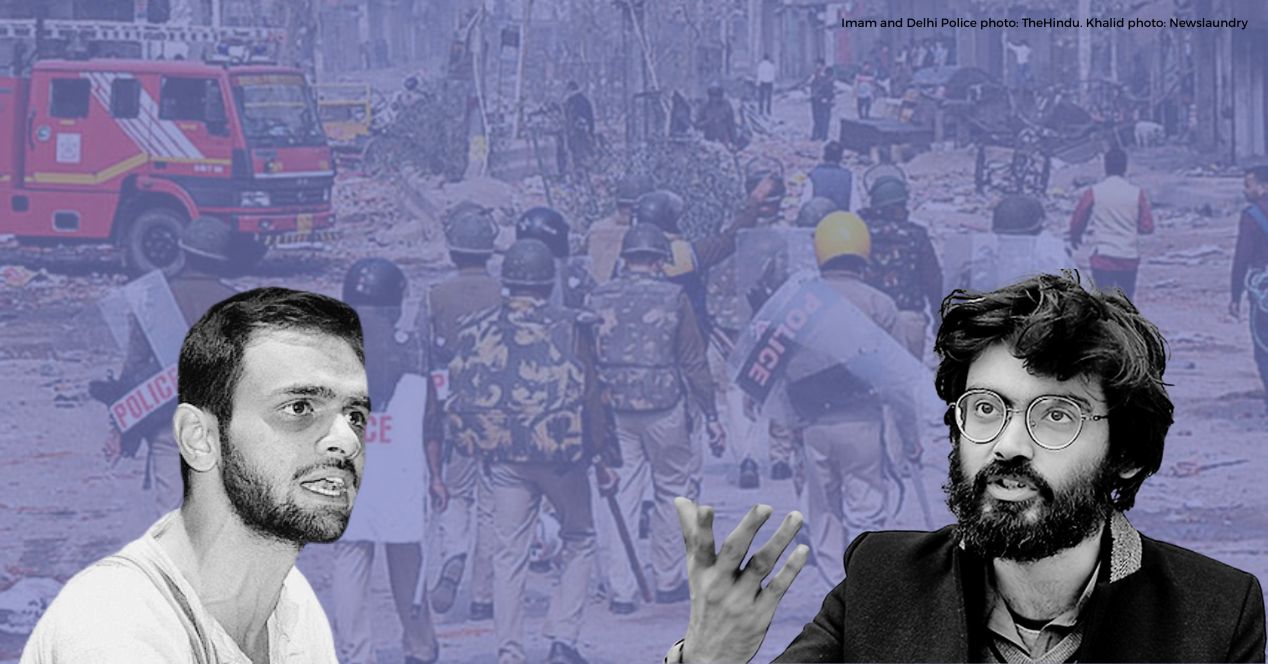
ASG Raju zeroes in on Umar Khalid’s role as prime conspirator of the 2020 Delhi riots
The prosecution pressed applicability of UAPA’s bar on bail and alleged that the accused were supported by a funding network
Analysis
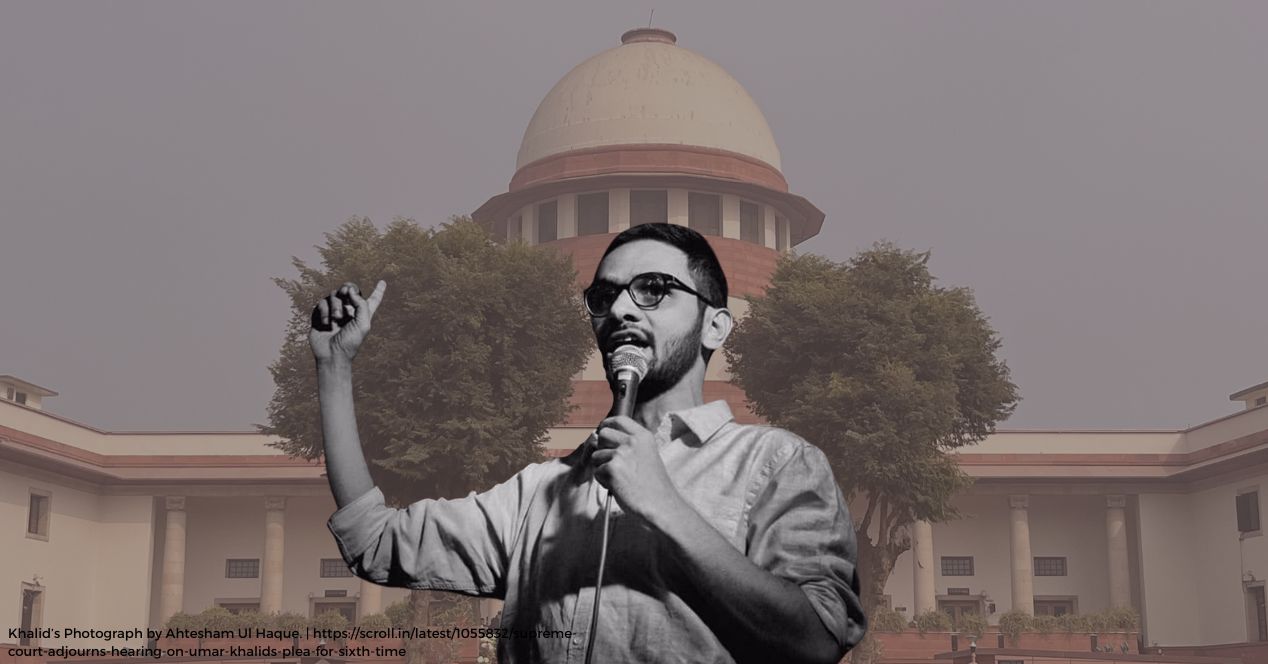
“Organisers, not instigators”: Accused tell SC as it hears UAPA bail pleas linked to Delhi Riots
It was argued that with no evidence linked to violence and no overt act alleged, Umar Khalid and others cannot be jailed indefinitely
Analysis
Umar Khalid’s Bail Application Tracker
Tracking activist Umar Khalid's bail applications in the Delhi High Court and the Supreme Court of India
Analysis
“Where is the weapon, the violence?” Sibal asks in Umar Khalid’s bail hearing at the Supreme Court
It was argued that Khalid and others remain jailed without recovery or proof of violence, as charge-sheets pile up yearly