

Analysis
Umar Khalid’s bail application | Supreme Court reserves judgement
The Delhi police relied on chats, speeches, secret meetings and location data to argue Khalid’s involvement in the Delhi Riots conspiracy
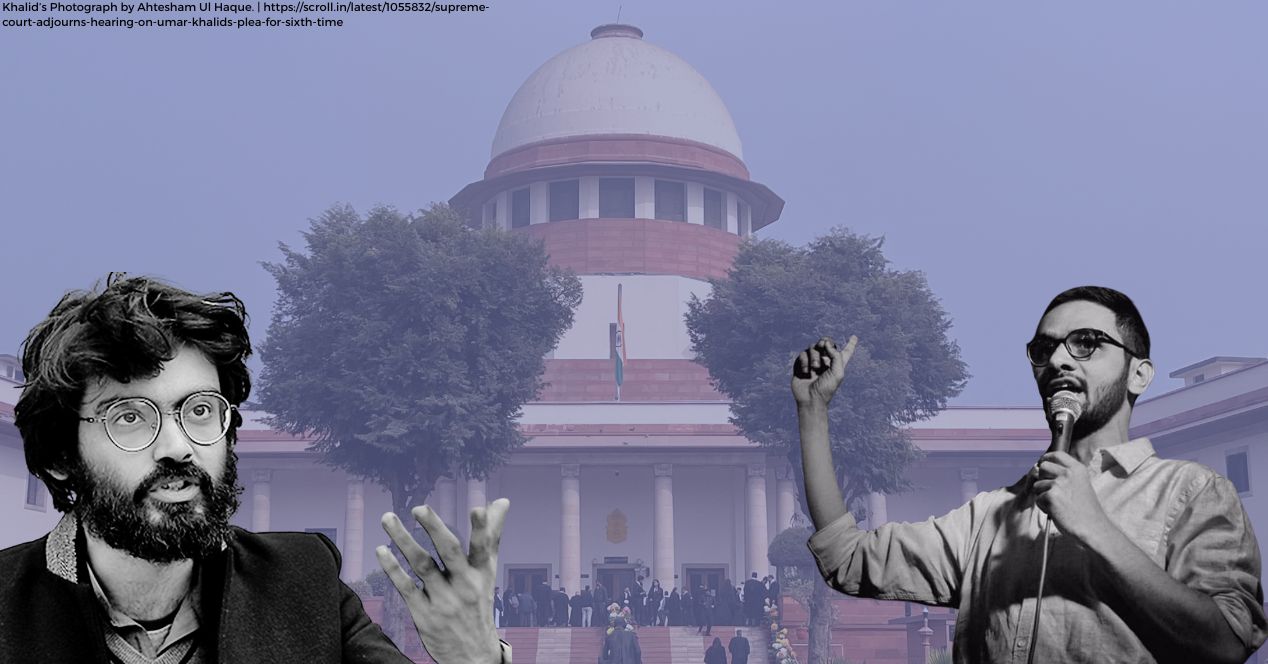
Today, the Bench of Justices Aravind Kumar and N.V. Anjaria concluded arguments and reserved judgement in the bail applications of Umar Khalid and others arrested in connection with the 2020 Delhi Riots. The Delhi Police, represented by Additional Solicitor General S.V. Raju, provided detailed accounts of Khalid’s involvement in the alleged conspiracy preceding the Delhi riots.
Raju: Conspiracy was pre-planned
Raju began by directly refuting the petitioner’s argument that repeated chargesheets had prolonged the trial. He asserted that the prosecution was prepared to argue at every stage.
Raju then detailed Khalid’s alleged role in the Delhi riots, presenting a chronological account of events since December 2019, when public opposition to the Citizenship Amendment Act, 2019 was escalating in the capital. He relied on speeches and witness statements recorded under Section 164 of the Code of Criminal Procedure, 1973. His submissions included an First Information Report (FIR) alleging that Khalid violated the order against unlawful assembly under Section 144 of the Indian Penal Code, 1860, in December 2019. Further, Raju cited evidence of secret meetings and text messages from that period, which allegedly demonstrated an involvement in organising chakka jams (road blockades). He contended that Khalid was constantly updated about developments by co-conspirators during the riots, using these instances to argue that the Delhi riots conspiracy was planned months before the incident. Moreover, he refuted arguments about Khalid’s absence from specific locations, stating that call detail records (CDR) placed him at key sites. Raju also stated that Khalid had attempted to flee during that period by relying on flight ticket details.
Justice Kumar focused on Section 15 of the Unlawful Activities (Prevention) Act, 1967 (UAPA), which defines “Terrorist Acts.” He questioned Raju on whether the act of delivering speeches falls under this definition and pressed Raju to link the speeches directly to the riots allegedly planned by Khalid and the co-accused. Raju countered that the meetings and speeches provided insight into the plans. Justice Kumar then noted that Senior Advocate Siddharth Dave, appearing for Sharjeel Imam, had argued that speeches would, at most, constitute “unlawful activities” defined under Section 13. Raju quickly responded that the speeches should indeed be deemed terrorist acts under Section 15, as the resulting riots had led to the blockade of several areas and, consequently, had affected the “economic security” of the country, a criterion that falls under the definition of a terrorist act.
Related articles
Analysis
Six years later, Delhi riots bail hearing hinges on whether speeches justify UAPA charges
Petitioners challenged detention, citing prolonged investigation and repeated supplementary chargesheets
Analysis
Umar Khalid’s Bail Application Tracker
Tracking activist Umar Khalid's bail applications in the Delhi High Court and the Supreme Court of India
Court Data
The SC on bail under UAPA and PMLA: a dataset from 2024 and 2025
As the Supreme Court considers the bail plea of Umar Khalid, here’s a ready-reckoner of relevant verdicts from the last couple of years
Analysis
“What public interest are you protecting by keeping her in jail?” Singhvi asks in Delhi riots bail hearing
Petitioners attacked “speeches-as-conspiracy” and asked why UAPA custody continues without a single overt act