


Analysis
All Nine-Yards: A Brief History of Nine-Judge Benches
A brief history of all nine-judge Bench judgements of the top court
10 May 1963
In Re: The Bill to Amend S. 20 of The Sea Customs Act, 1878 and S. 3 of The Central Excises and Salt Act | 5:4 ratio
Bench: Chief Justice B.P. Sinha, Justices S.K. Das, P.B. Gajendragadkar, A.K. Sarkar, K.N. Wanchoo. M. Hidayatullah, K.C. Das Gupta, J.C. Shah, and N. Rajagopala Ayyangar
Facts: The Parliament introduced a Bill to amend Section 20 of the Sea Customs Act, 1878 and Section 3 of the Central Excise and Salt Act 1944. Doubts arose as to whether the amendments violate Article 289. The President referred questions pertaining to its constitutionality by invoking the Supreme Court’s advisory jurisdiction under Article 143.
Held: The Court upheld the proposed amendments, noting that Article 289 exempts the Union from imposing direct taxes. Indirect taxes, such as custom or excise duty, can be imposed by the Union under Article 289

26 July 1963
The State Trading Corporation of India v The Commercial Tax Officer, Visakhapatnam | 7:2 Ratio
Bench: Chief Justice B. P. Sinha, Justices S.K. Das, P.B. Gajendragadkar, A.K. Sarkar, K.N. Wanchoo, M. Hidayatullah, K.C. Das Gupta, J.C. Shah, and N. Rajagopala Ayyangar
Facts: The State Trading Corporation of India, a private limited company registered under the Indian Companies Act 1956, filed petitions under Article 32 claiming to be an Indian citizen. The corporation claimed that its assessment by Sales Tax Authorities violated its rights under Articles 19(1)(f) and (g).
Held: The State Trading Corporation is not a citizen and cannot enforce fundamental rights. The Court rejected the claim that citizenship can be attributed to a company based on the citizenship status of its shareholders.
3 March 1966
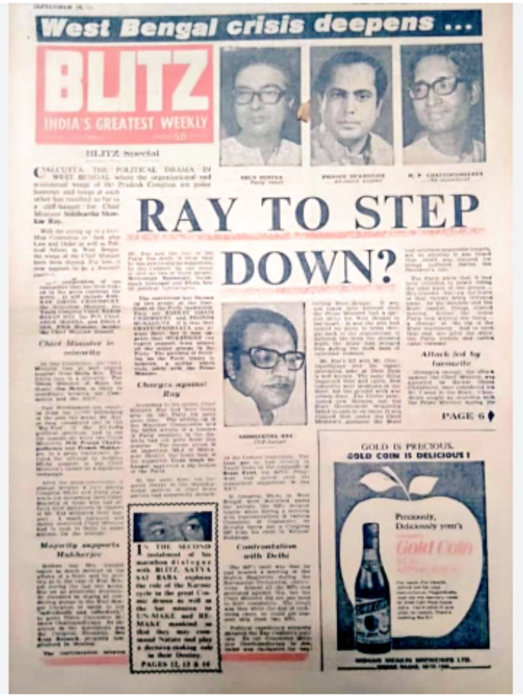
Naresh Shridhar Mirajkar v State of Maharashtra | 8:1 Ratio
Bench: Chief Justice P. B. Gajendragadkar, Justices A. K. Sarkar, K. N. Wanchoo, M. Hidayatullah, J.C. Shah, J. R. Mudholkar, S. M. Sikri, R. S. Bachawat, and V. Ramaswami
Facts: Journalists associated with the Blitz newspaper challenged an Order of the Bombay High Court under Article 32 which prohibited the publication of a witness testimony, claiming it violated their rights under Article 19(1)(a).
Held: The High Court order was passed to uphold the administration of justice and did not violate the petitioners’ rights under Article 19(1)(a). The Court held that an order passed by a court on merits of a dispute cannot be said to violate fundamental rights. Further, a High Court order can only be challenged through an appeal and not through a writ under Article 32.
7 December 1966
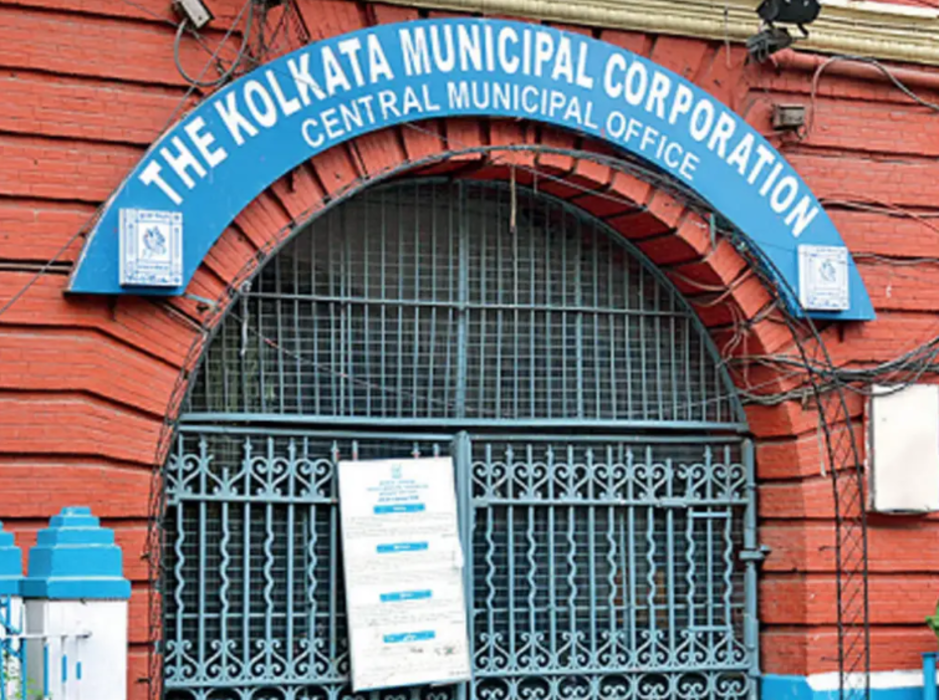
Superintendent and Legal Remembrancer, State of West Bengal v Corporation of Calcutta | 8:1 Ratio
Bench: Chief Justice K. Subba Rao, Justices K.N. Wanchoo, J.C. Shah, S.M. Sikri, R.S. Bachawat, V. Ramaswami, J.M. Shelat, Vishishtha Bhargava, and C.A. Vaidyialingam
Facts: The Corporation of Calcutta filed a complaint against the State of West Bengal for carrying on a trade without obtaining a license, required under the Calcutta Municipal Corporation Act, 1980. The Calcutta High Court rejected the state’s argument that as a sovereign entity, it is not bound by the statute.
Held: The nine-judge Bench upheld the High Court decision, holding that the common law rule of construction—where the Crown is not bound by a statute unless clearly intended—was never imported into India.
26 April 1974
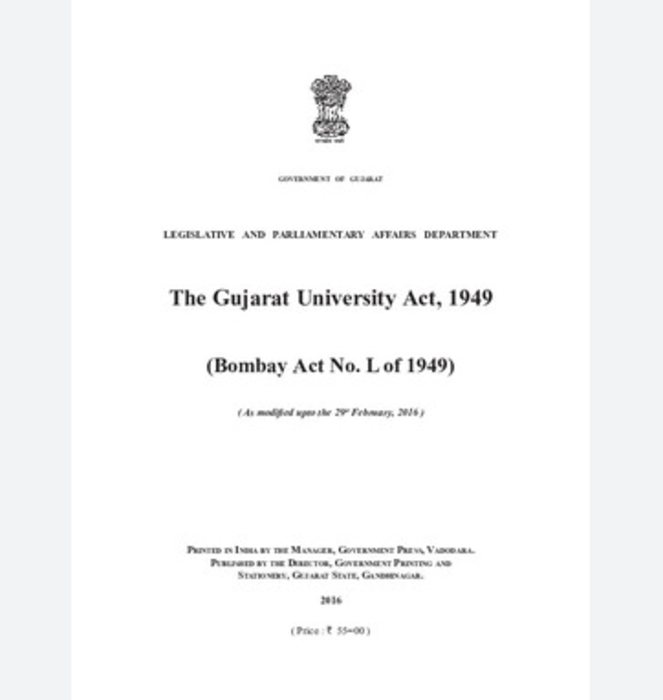
The Ahmedabad St. Xaviers College v State Of Gujarat | 7:2 Ratio
Bench: Chief Justice A.N. Ray, Justices D.G. Palekar, P. Jaganmohan Reddy, H.R. Khanna, K.K. Mathew, M.H. Beg, S.N. Dwivedi, Y.V. Chandrachud, and A. Alagiriswami
Facts: The petitioner, a religious denomination running a college for Christian students, challenged the 1972 amendment of the Gujarat University Act, 1949, alleging that the Act eroded the autonomy of the minority institution in its administration.
Held: The Bench struck down several provisions of the Gujarat University Act as being violative of the Constitution. While affirming the validity of reasonable regulations for affiliation and recognition of minority institutions, the Court reiterated that they cannot violate the fundamental rights of minority institutions under Article 30(1).
16 November 1992
Indra Sawhney v Union of India | 6:3 Ratio
Bench: Chief Justice M.H. Kania, Justices M.N. Venkatachaliah, S. Ratnavel Pandian, Dr. T.K Thommen, A.M. Ahmadi, Kuldip Singh, P.B. Sawant, R.M. Sahai, and B.P. Jeevan Reddy
Facts: After an Office Memorandum (OM) dated 13 August 1990 implemented a 27 per cent reservation for Socially and Educationally Backward Classes (SEBC), the petitioners challenged the OM on the ground that it violated the right to equal opportunities under Article 16(1).
Held: The 27 per cent reservation for SEBCs was held to be constitutionally valid as long as it does not breach the 50 per cent ceiling on total reservations.
6 October 1993
Supreme Court Advocates-on-Record Association v Union of India | 7:2 Ratio
Bench: Chief Justices S. R. Pandian, Justices A.M. Ahmadi, Kuldip Singh, J.S. Verma, M.M. Punchhi, Yogeshwar Dayal, G.N Ray, Dr. A.S. Anand, and S.P. Bharucha
Facts: The President, under Article 143, referred questions for the opinion of the Supreme Court to clarify the law on the primacy of the opinion of the Chief Justice of India in appointments and transfers of other Judges in the Supreme Court and High Courts.
Held: The Bench held that the Chief Justice of India does not have primacy in appointments of recommendee Judges, and the appointment of recommendees has to be made in consultation with the collegium.
11 March 1994
S.R. Bommai v Union of India – | Unanimous
Bench: Chief Justice S. Ratnavel Pandian, Justices A.M. Ahmadi, Kuldip Singh, J.S. Verma, P.B. Sawant, K. Ramaswamy, S.C. Agrawal, Yogeshwar Dayal, and B.P. Jeevan Reddy
Facts: In April 1989, the Governor of Karnataka dismissed the Janata Dal government in Karnataka after 19 MLAs withdrew their support from the Ministry. After the Governor reported that the Government had lost the confidence of the House, the President proclaimed an emergency under Article Article 356 . The question before the Bench was whether the President had unfettered powers to proclaim an emergency and whether such power is amenable to judicial review.
Held: The Court held that the power of the President to proclaim an emergency under Article 356 is not absolute and is subject to judicial review.
12 May 1994
Attorney General for India v Amratlal Prajivandas | 7:2 Ratio
Bench: Chief Justice A.M. Ahmadi, Justices P.B. Sawant, K. Ramaswamy, K. Jayachandra Reddy, S.C. Agrawal, S. Mohan, B.P. Jeevan Reddy, G.N. Ray, and N. Venkatachala
Facts: During India’s Emergency, several individuals were detained under the Conservation of Foreign Exchange and Prevention of Smuggling Activities Act, 1974 (COFEPOSA). Upon their release, notices under Smugglers and Foreign Exchange Manipulators (Forfeiture of Property) Act 1976 (SAFEMA) were sent to them to show cause why their property should not be declared “illegally acquired” or seized. The Attorney General of India challenged various provisions of COFEPOSA and SAFEMA.
Held: The Court upheld the Parliament’s competence to enact both COFEPOSA and SAFEMA under its residuary power. The Court refused to express any opinion on the 39th and 40th Amendment Acts which placed COFEPOSA and SAFEMA in the Ninth Schedule.
19 December 1996
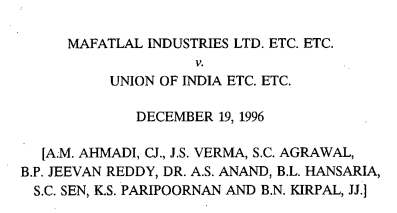
Mafatlal Industries v Union of India | 8:1 Ratio
Bench: Chief Justice A.M. Ahmadi, Justices J.S. Verma, S.C. Agrawal, B.P. Jeevan Reddy, Dr. A.S. Anand, B.L. Hansaria, S.C. Sen, K.S. Paripoornan, and B.N. Kirpal
Facts: The appellant, a textile mill, requested a refund of excise duty paid, relying on a judgement of the Gujarat High Court which declared that excise duty on blended yarn prior to 1972 was ultra vires. Following the Revenue’s refusal, the appellant moved the Supreme Court. The issue before the nine-judge Bench was whether a person claiming a refund of excise duty under a mistake of law must establish loss or injury with reliance on Section 72 of the Indian Contract Act, 1872.
Held: An assessee is not entitled to restitution or a refund of excise duty paid under a mistake of law if the burden of duty has been passed on to the buyers or any other person.
19 December 1996
New Delhi Municipal Committee v State of Punjab | 5:4 Ratio
Bench: Chief Justices A.M. Ahmadi, Justices J.S. Verma, S.C. Agrawal, B.P. Jeevan Reddy, Dr. A.S. Anand, B.L. Hansaria, S.C. Sen, K.S. Paripoornan, and B.N. Kirpal
Facts: The New Delhi Municipal Committee appealed against a Delhi High Court judgement which quashed provisions under the Punjab Municipal Act, 1911, which levied tax on immovable properties in the Union Territory of Delhi. The issue was whether the exemption from “Union Taxation” under Article 289(1) was restricted to taxes levied by Parliament under List I or any tax imposed by Law.
Held: The property taxes levied by municipal corporations within the territory of Delhi is covered under “Union Taxation” within the meaning of Article 289. Therefore, any property belonging to a State in the National Capital Territory of Delhi is exempt from tax under Article 289.
28 October 1998
In Re: Appointment and Transfer of Judges | Unanimous
Bench: Chief Justice S.P. Bharucha, Justices M.K. Mukherjee, S.B. Majmudar, Sujata V. Manohar, G. T. Nanavati, S. Saghir Ahmad, K. Venkateswami, B.N. Kirpal, and G.B. Pattanaik
Facts: The President of India referred 6 questions concerning the appointment of judges of the Supreme Court and High Court under Article 143 of the Constitution. The questions considered whether “consultation” under Articles 124, 217 and 222 implies the unilateral decision of the Chief Justice of India and whether the transfer of judges is judicially reviewable.
Held: The Bench held that consultation with the Chief Justice of India requires consultation with the plurality of judges and the sole opinion of the CJI does not constitute consultation. Further, the Court held that the appointment and transfer of judges is not justiciable except on limited grounds.
11 January 2007
I.R. Coelho (Dead) v. State of Tamil Nadu | Unanimous
Bench: Chief Justice Y.K. Sabharwal, Justices Ashok Bhan, Dr. Arijit Pasayat, B.P. Singh, S.H. Kapadia, C.K. Thakker, P.K. Balasubramanyan, Altamas Kabir, and D.K. Jain
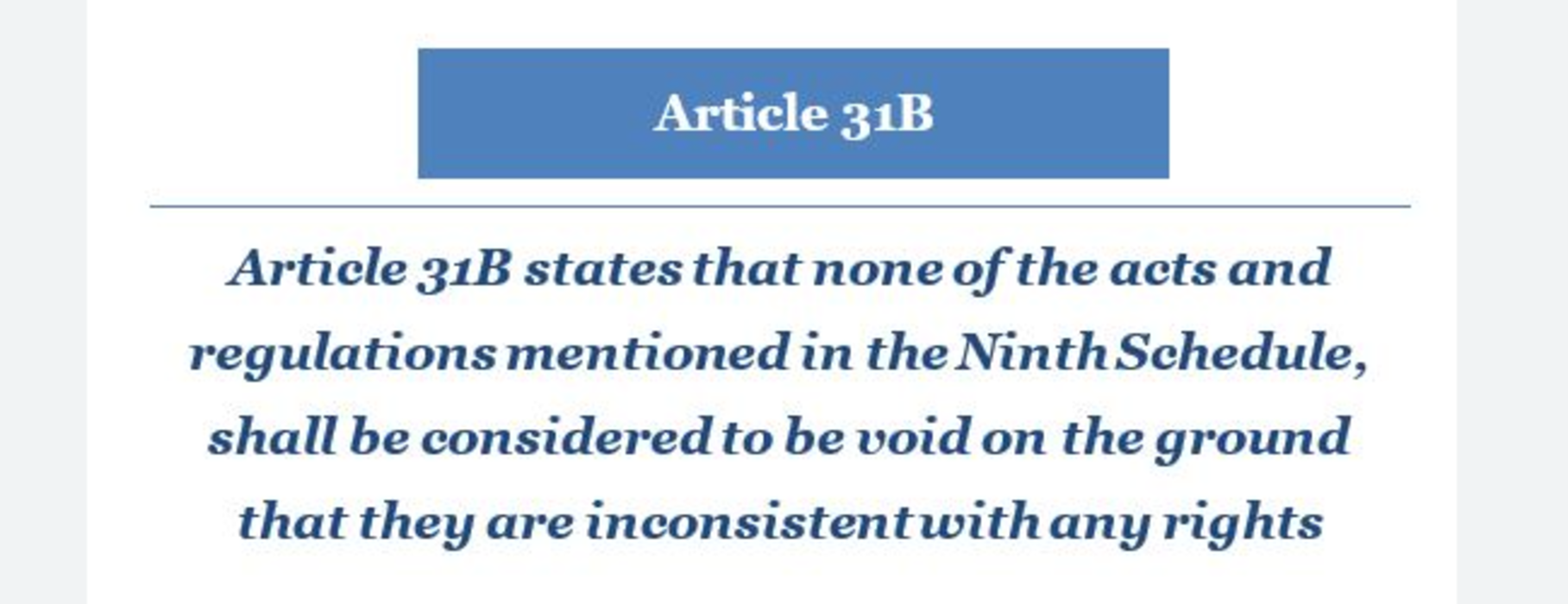
Facts: The reference sought to answer whether the inclusion of a legislation into the Ninth Schedule, if violative of one or more fundamental rights, can be open to judicial review.
Held: The Bench unanimously held that laws inserted in the NinthSchedule are not beyond the reach of judicial review. The Bench held that any law placed in the Ninth Schedule after 24 April 1973 can be struck down if it violates fundamental rights that form a part of the basic structure of the Constitution.
11 November 2016
Jindal Stainless Ltd v State of Haryana | 7:2 Ratio
Bench: Chief Justice T. S. Thakur, Justices A. K. Sikri, S. A. Bobde, S.K. Singh, N. V. Ramana, R. Banumathi, A. M. Khanwilkar, Dr. D. Y. Chandrachud, and Ashok Bhushan
Facts: Several States enacted laws under Entry 52 of List II under the Seventh Schedule which allowed the levy of taxes on the “entry of goods into local areas comprising the States.” Such enactments were challenged as violative of Article 301. Since such levies were also considered discriminatory, they were challenged under Article 304(a).
Held: The nine-judge Bench held that taxes are not a restriction on free trade. “Free” under Article 301 does not provide freedom from taxation but only from trade barriers and discrimination.
24 August 2017
Justice K.S. Puttaswamy v Union of India | Unanimous
Bench: Chief Justice J.S. Khehar, Justices J. Chelameswar, S. A. Bobde, R. K. Agrawal, R. F Nariman, A.M. Sapre, Dr. D. Y. Chandrachud, S.K. Kaul, and S.A. Nazeer
Facts: A retired judge of the Karnataka High Court, Justice K.S. Puttaswamy, mounted a challenge to the constitutionality of the Aadhaar (Targeted Delivery of Financial and Other Subsidies, Benefits and Services) Act, 2016. The question before the Bench was whether the right to privacy under Article 21 is an absolute right.
Held: The Bench held that privacy is a fundamental right under Article 21. Any valid restriction on the right to privacy must satisfy the test of legality, legitimate aim, and proportionality.
10 February 2020
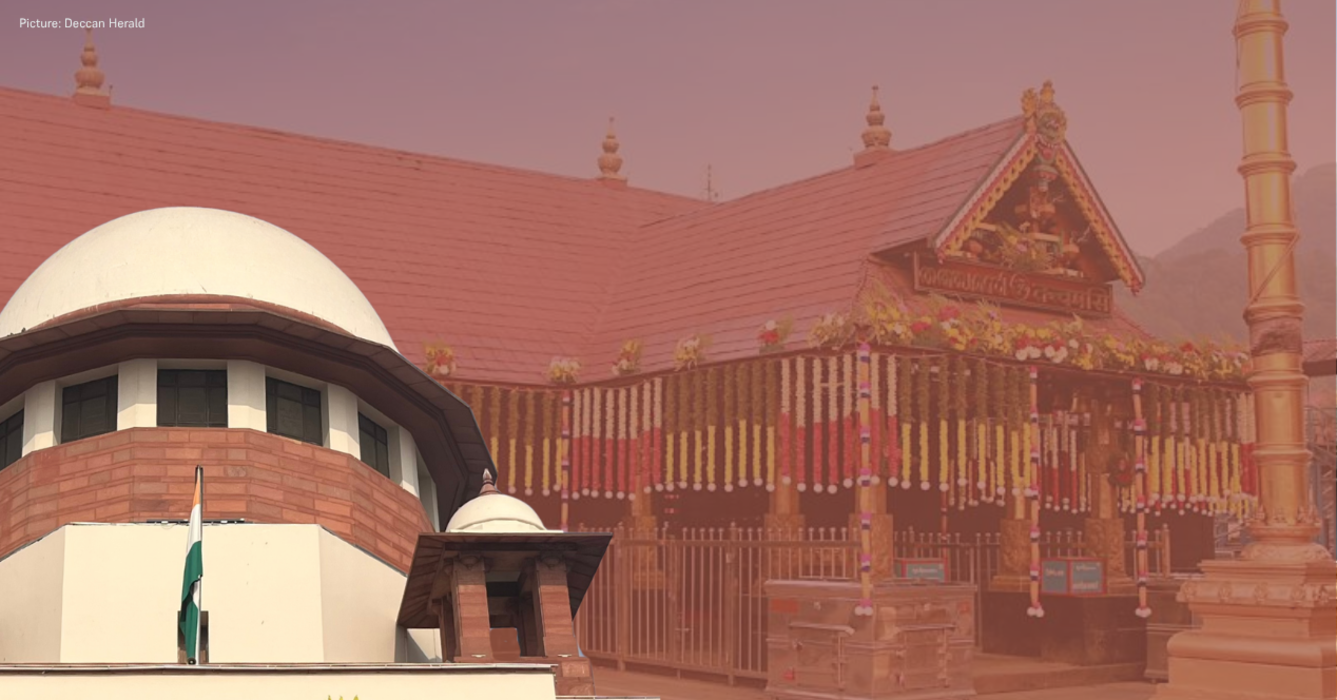
Kantaru Rajeevaru v Indian Young Lawyers Association | Unanimous
Bench: Chief Justice S.A. Bobde, Justices R. Banumathi, Ashok Bhushan, L.N. Rao, M.M. Shantanagoudar, S.A. Nazeer, R.S. Reddy, B.R. Gavai, Surya Kant
Facts: After a 5-judge Bench declared the bar on the entry of women between the ages of 10 and 50 into the Sabarimala Temple unconstitutional, review petitions were filed seeking an authoritative pronouncement on constitutional questions by a larger bench. A Bench of nine-judges was constituted to hear the maintainability of the reference.
Held: The Bench upheld the maintainability of the reference, noting that there is no fetter to seeking a reference to a large bench in matters arising from judgements in writ petitions under Article 32.
25 July 2024
Mineral Area Development Authority v Steel Authority of India | 4:1 Ratio
Bench: Chief Justice D.Y. Chandrachud , Justices Hrishikesh Roy, A.S. Oka, B.V. Nagarathna, J.B. Pardiwala, Manoj Misra, Ujjal Bhuyan, S.C. Sharma, and A.G. Masih
Facts: The central question was whether “royalty” under Section 9 and 15(3) of the Mines and Minerals (Development and Regulation) Act, 1957 is in the nature of tax. Further, the Bench deliberated upon whether state governments can tax mines and minerals under Entry 50 of List II.
Held: The nine-judge Bench held that “royalty” is not in the nature of tax. The Bench further held that States have legislative competence to tax mineral rights under Entry 50. Justice Nagarathna penned a dissenting opinion, holding that royalty is a compulsory statutory extraction under Section 9 of the MMDR Act.
23 October 2024
State of Uttar Pradesh v Lalta Prasad Vaish | 8:1 Ratio
Bench: Chief Justice D.Y. Chandrachud, Justices Hrishikesh Roy, A.S. Oka, B.V. Nagarathna, J.B. Pardiwala, Manoj Misra, Ujjal Bhuyan, S.C. Sharma, and A.G. Masih
Facts: The Bench considered the correctness of a 7-judge Bench decision in Synthetics and Chemicals Ltd. v State of UP (1989), where it was held that states cannot levy excise duty on industrial alcohol. The question was whether the State has jurisdiction to govern “industrial alcohol” when a Central law occupies the field.
Held: The State has the power to legislate under Entry 8 of List II of the Seventh Schedule over industrial and non-industrial alcohol. Further, the Bench held that the State’s competence to legislate is denuded to the extent of the field covered by the Central law.
23 October 2024
Property Owners Association v State of Maharashtra | 8:1 Ratio
Bench: Chief Justice D.Y. Chandrachud , Justices Hrishikesh Roy, B.V. Nagarathna, Sudhanshu Dhulia, J.B. Pardiwala, Manoj Misra, Rajesh Bindal, S.C. Sharma, and A.G. Masih
Facts: The central question was whether “material resources of the community” under Article 39(b) includes private properties. Further, the Bench decided on the validity of Article 31C in the post- Minerva Mills legal landscape.
Held: Not all privately owned properties constitute “material resources of the community” under Article 39(b). The Bench revived Article 31C to the extent that was upheld in the Keshvananda Bharti judgement.
Related articles

Analysis
Court in Review: Death Penalty
We trace key SC Judgments on the death penalty over the years.
Analysis
Bail Under UAPA: Court in Review
Section 43D(5) of the Unlawful Activities (Prevention) Act, 1967 lays down stringent provisions for the grant of bail.
Analysis
Creamy Layer: Court in Review
SC/ST/OBC individuals belonging to the 'creamy layer' are not eligible for certain types of reservations.
Analysis
Essential Religious Practices: Court in Review
The evolution of Supreme Court jurisprudence on the essential religious practices (ERP) doctrine over 19 cases