


Analysis
“Agitation cannot justify police excess”: SC on student protest crackdown
The Court said allegations of police excess must be independently examined and suggested a uniform protocol for handling public protests.
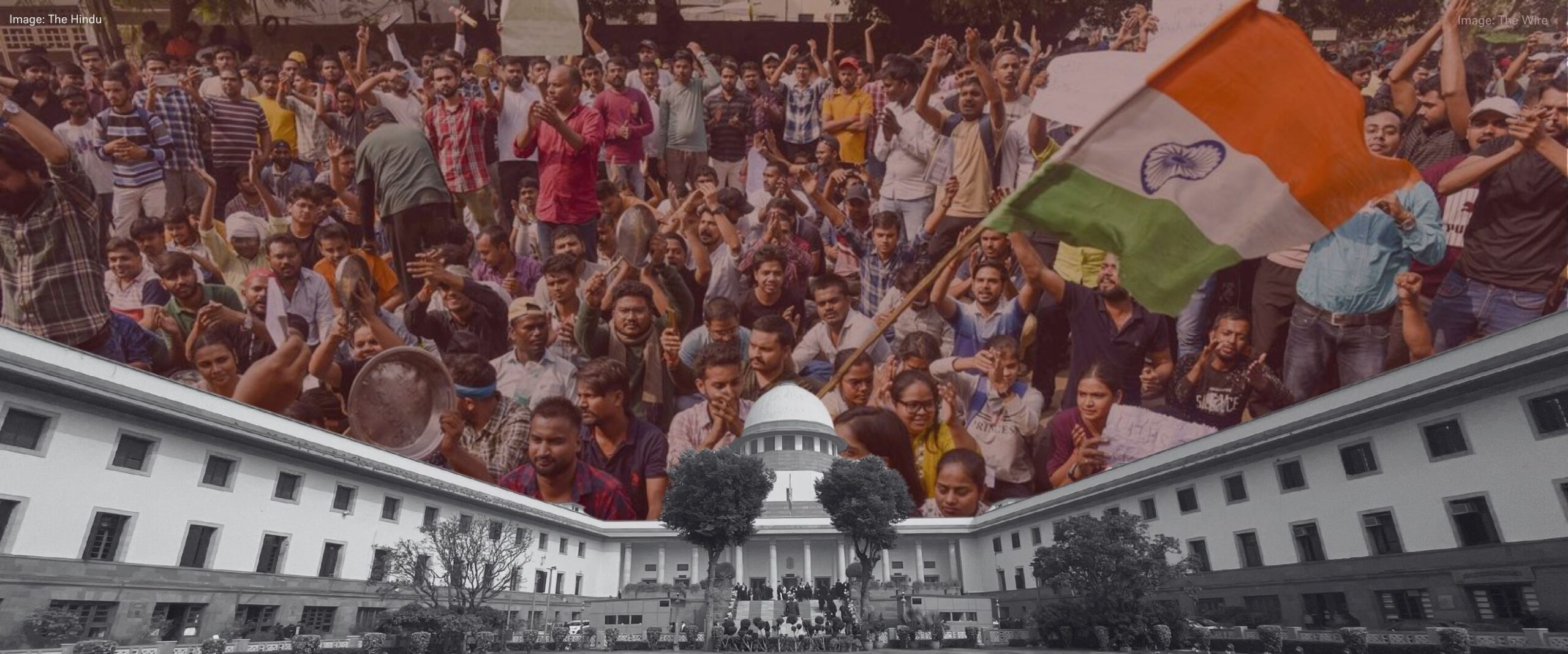
Today, the Supreme Court said the constitutional right to peaceful protest could not be denied merely because demonstrations were taking place. A Bench of Chief Justice Surya Kant and Justices Joymalya Bagchi and V. Mohana made the observation while hearing mentions in a batch of petitions alleging police brutality during the recent student protests.
Petitioners seek common hearing
Advocate Fauzia Shakil, appearing for Rajya Sabha MP Manoj Jha, submitted that the petition had comprehensive material demonstrating the alleged use of force against protestors. She submitted that “AK-47 and C1” was used in an incident in Siwan, Bihar. Shakil urged the Court to hear the matter along with the petitions already listed. Other counsel informed the Bench that several writ petitions and applications had been filed on behalf of students who were allegedly assaulted during the protests. Senior Advocate Vikas Singh submitted that Bihar had also witnessed attacks on students and argued that the matter required a pan-India response.
The Bench also heard counsel appearing for the families of police personnel allegedly injured during the protests. They sought permission to participate in the proceedings. Counsel submitted that police officers had been “kicked and lynched”.
Court suggests uniform protocol
The CJI responded: “Right to peaceful, lawful protest is absolutely guaranteed under the Constitution. So long as it is peaceful agitation…merely because there is agitation, there cannot be police excess,” he said. Justice Bagchi said the Court’s concern extended equally to police personnel and protestors. After counsel reiterated that police officers had been lynched, he replied, “Life of every individual irrespective of who they are is important.”
The CJI said the issue was not confined to Delhi and suggested that authorities evolve a common protocol for handling demonstrations across the country. He said that there should be proper space for peaceful protests without unnecessary restrictions, adding that anti-social elements could be dealt with separately. “This is not a question of Delhi only. Uniformity of protocol is needed,” he observed.
He further said that any allegation of police excess should be independently examined. “Just because there is agitation does not mean there is lathi-charge,” he added, observing that self-discipline was “essential to the democratic process.”
Solicitor General Tushar Mehta submitted that the Union would assist the Court “dispassionately”. The Bench directed that all connected petitions be listed together for hearing tomorrow.
Related articles
Analysis
Farm Laws Repealed – What Now for the ‘Right to Protest’?
DESK BRIEF: After the farm laws repeal, will the SC make it harder for protests to make a significant impact?
Analysis
Court Lays Down Restrictions on the Right to Protest
Protests anodize democracy from arbitrary action, however the Court held that there is a need to balance this right with other concerns.