


Analysis
Bones, belief and the burden of proof
Revisiting the Nithari killings and the Supreme Court’s curative turn
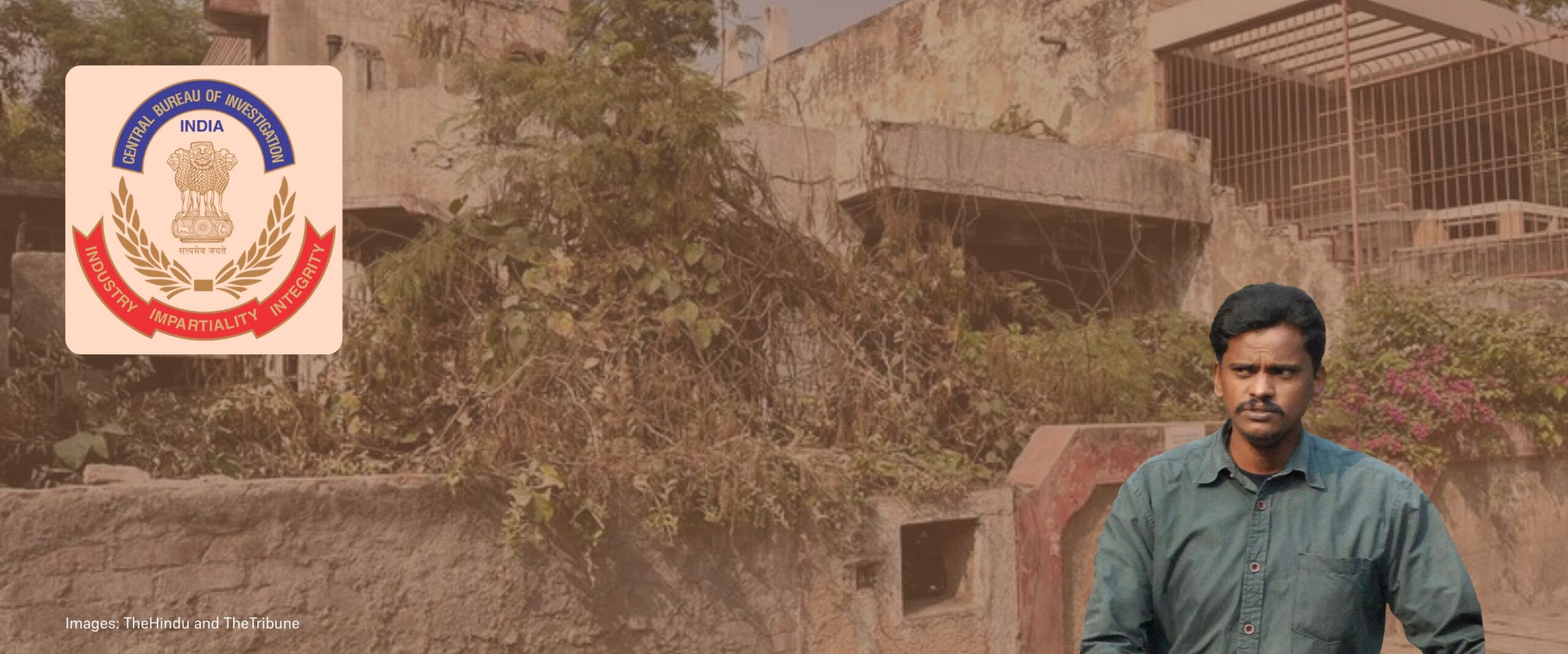
Classic crime stories often begin with a house and a brutal killing, and end with an acquittal for want of proof. In 2006, the drains and backyard of House D5 in Noida’s Nithari village yielded skeletal remains of young girls and children. A strong narrative of guilt soon developed against the accused, appearing unassailable to the public for decades. Trial proceedings, however, gradually revealed a different story, peeling away a fragile edifice to expose the distance between horror and fact.
On 11 November 2025, the Supreme Court acquitted the prime accused, Surendra Koli, in the last of the 13 cases linked to the killings. This was a rare curative intervention aimed at restoring consistency to the judicial process. What remains is not closure, but a question posed through the final scene of Bong Joon-ho’s Memories of Murder (2003): if the institution can no longer convict the accused with certainty, where is the real murderer lurking?
House D5 and the Hannibal
From early 2005, residents of Nithari began to report instances of children and young women going missing. Parents filed complaints and local police stations made diary entries, but little followed. These early reports would later haunt the prosecution, not because they disproved the crimes but because they exposed how long the investigative machinery remained unconcerned.
The inertia persisted in December 2006 when skeletal remains, clothing, and footwear were discovered during routine drain cleaning in the lane behind House D5. The investigation accelerated overnight. FIRs were registered in bulk. What was once treated as isolated absences was reconstituted as a series of murders orbiting a single address. Instead of moving forward as a single proceeding, however, these cases fractured into two separate trials, each necessitating the independent establishment of guilt beyond reasonable doubt.

The evidence recovered was found long after the alleged crimes, raising questions about continuity of possession. Forensic testing, including DNA analysis, identified victims in some cases, but did not establish when or how the remains were placed where they were found.
Yet, at the trial stage, the Sessions Courts appeared confident with an answer. It relied heavily on a confession made voluntarily by Koli before the Magistrate under Section 164 of the Code of Criminal Procedure, 1973. This confession contained a clear admission that Koli had lured the victims; immobilised them; attempted to rape or raped the victims, and then killed them by strangulation. He also admitted to cutting the dead bodies in the upper floor of House D5, eating some parts, and throwing the skulls and clothes into the enclosed space behind the house as well as the drain flowing in front of it.
The cannibalism allegations, it bears emphasis, rested entirely on Koli’s confession. They functioned rhetorically: not as independently proved facts, but as a narrative device that amplified moral certainty where evidentiary gaps remained. This shaped perceptions of the accused in media, visual entertainment, and society at large. It shifted attention away from corroboration, justified the harshest sentence, and reinforced the public imagination of a Hannibal-like serial predator.
In 2011, the Supreme Court affirmed Koli’s conviction and death sentence in one case on the grounds that the confession was voluntary and sufficiently corroborated with a complete circumstantial chain. It did not interrogate the more lurid aspects of the narrative. Subsequently, the Review and Writ Petitions also failed.
The shift occurred not through new facts, but through repetition and scrutiny. As the 12 remaining cases reached the Allahabad High Court, judges were confronted with the same confession, the same recoveries and the same forensic reports. Twelve years after the Supreme Court’s acquittal in the first case, the High Court read the record in contrast.
The High Court’s reversal hinged on five foundational failures in the prosecution’s case. First, the confession was extracted during sixty days of police custody unmarked by any contemporaneous medical examination. The court found this period sufficient to “stamp” any confession involuntary under settled precedent. It took note of the fact that torture allegations by Koli, including claims of genital burns and electrical shocks, were never investigated despite his written offer to submit to medical examination. The single medical report produced merely noted the “absence of fresh injuries,” obliquely suggesting the existence of older wounds.
Second, the alleged disclosure statement—information gathered from Koli under Section 27 of the Indian Evidence Act, 1872 which led to recovery of remains—was never formally recorded or produced in evidence. Even its contents remained disputed, with police witnesses offering contradictory accounts of where and when the disclosure occurred, thereby severing the connection between Koli’s information and the recovered remains.
Third, no forensic evidence corroborated the narrative: a seven-member Forensic Science Laboratory team found no human remains, blood stains or biological material within House D5 despite claims of multiple strangulations and dismemberments occurring there, and DNA analysis identified victims but not perpetrators.
Fourth, the court found the circumstantial evidence chain incomplete under the Sharad Birdhichand Sarda test. The organ trade hypothesis—supported by an expert report by the Ministry of Women and Child Development noting surgical precision of dismemberment and the conspicuous absence of torsos from all bodies—was never investigated, leaving viable alternative theories unexplored.
Fifth, basic procedural safeguards crumbled: the confession letter employed formal legal terminology beyond a seventh-standard servant’s literacy, suggesting dictation by police; the magistrate recorded only that the confession “seems” voluntary rather than expressly “believing” it voluntary as mandated by Section 164(2) CrPC; and Koli was returned to police custody at the end of each day during the recording process, allowing continued influence on what was meant to be an independent judicial examination.
This left the Supreme Court with an institutional contradiction. The same evidentiary substratum had produced death sentences in some cases and acquittals in others, decisively shifting the focus from narrative to procedure. By the time it decided to acquit Koli in the last surviving case, the figure of “Hannibal” had disappeared from judicial language.
A critical omission
Curative jurisdiction is invoked rarely and reluctantly after appeals and reviews have been exhausted. As the Supreme Court has repeatedly stated, it is not a technical preference but a constitutional necessity.
In their curative judgment, the Bench led by then Chief Justice B.R. Gavai framed the issue with unusual candour. The problem was not inaccuracy of the previous decision but rather the fact that two irreconcilable outcomes had been produced on identical evidentiary foundation. This imperilled the integrity of judicial procedure.
While the curative bench ultimately corrected the inconsistency, its decision exposed an unresolved asymmetry in approach. If the law cannot speak in contradictory voices on the same evidentiary record, it must also explain which voice it chooses to silence, and why. Neither did the Bench examine the correctness of the High Court’s decision, nor did it explain why the confession suddenly lost probative force in its own eyes.
This omission matters. The confession had already travelled the full judicial arc: from trial to High Court, from appeal to review, and even survived a writ stage. The Bench failed to answer a question that goes straight to the heart of judicial finality: was the law being clarified or displaced? Curative jurisdiction demands coherence but in the absence of reasoning, it leaves the method of its correction opaque, merely substituting one silence for another.
Guilty, but not proven?
For the parents of Nithari’s missing children, the acquittal does not answer the question that mattered most: what happened, and why didn’t anyone listen sooner? On the other hand, Koli has been acquitted after two decades in prison with no explanation for his prolonged incarceration. The Supreme Court’s final intervention leaves a hard lesson in its wake: that justice to victims and fairness to the accused are not competing ideals, but conditions of the same rule of law.
Sarthak Gupta is a New Delhi-based advocate and Researcher at Columbia University, New York, working on a project on free speech, media laws and censorship. He has previously served as a law clerk in the Supreme Court.
Related articles
75 Years of SC Articles
How Justice Bhagwati’s 44-year-old dissent mirrors the state of death penalty in India
There has been significant empirical work demonstrating the inefficacy of the death penalty. In its 75th year, the Court must engage with it
Analysis
Curative Petitions: Court in Review
Curative Petitions are the final remedy where the SC can reconsider a dismissed review petition. SCO tracks notable Curative petitions.
Analysis
Umar Khalid bail case: Constitutional abdication, not judicial restraint
By denying bail to Khalid and Sharjeel Imam, the Supreme Court could have precipitated a doctrinal shift with implications for undertrials
Court Data
The SC on bail under UAPA and PMLA: a dataset from 2024 and 2025
As the Supreme Court considers the bail plea of Umar Khalid, here’s a ready-reckoner of relevant verdicts from the last couple of years