

Analysis
“Judiciary” chapter row: NCERT authors blacklisted by SC
The Bench directed the formation of expert panel, including a former judge, to vet the rewritten chapter
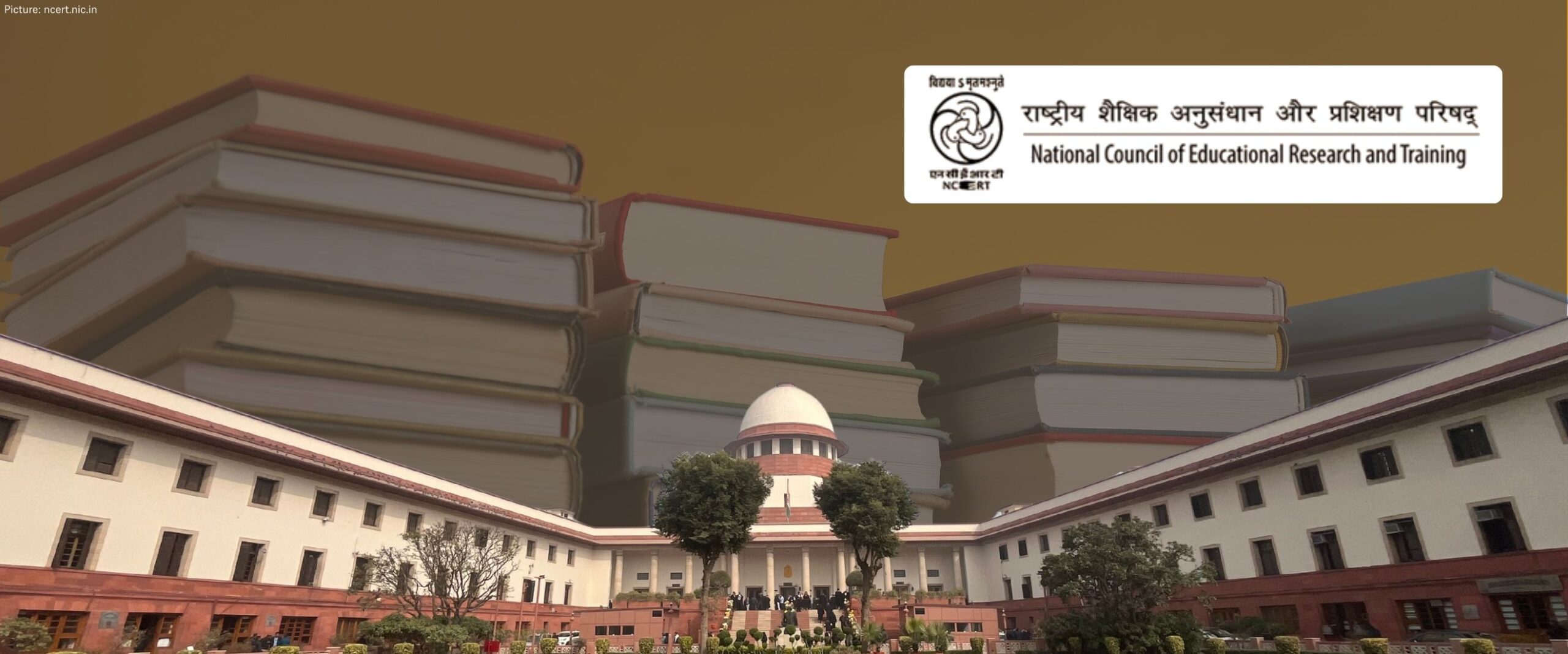
Today, the Supreme Court directed that the individuals involved in drafting the Class 8 NCERT Social Science chapter on “Corruption in the Judiciary” be disassociated from any curriculum-related work funded by public money. The Court said there was no reason for them to continue shaping textbooks meant for future students.
A Bench of Chief Justice Surya Kant and Justices Joymalya Bagchi and V.M. Pancholi issued the direction while hearing its suo motu writ petition concerning the chapter. The Court had earlier ordered a ban on the publication and circulation of the textbook after taking note of a newspaper report on the contents of the chapter.
How did the chapter bypass the official process?
During the hearing, Solicitor General Tushar Mehta informed the Court that two affidavits had been filed tendering unconditional apologies. The Union government, he added, had asked NCERT to review textbooks across all standards and initiate systemic changes.
While dictating its order, the Court recorded that according to the affidavit filed by NCERT Director, the chapter had been drafted by a team chaired by Professor Michel Danino, with Suparna Diwakar and Alok Prasanna Kumar.
Danino was the Chairperson for the NCERT social science curriculum and has previously been a lecturer on history, culture and heritage. Diwakar has been a part of the task force for the implementation of the National Education Policy, 2020. Kumar is a legal researcher and the co-founder of the independent think-tank, Vidhi Centre for Legal Policy. The Bench observed that the persons who prepared the chapter did not have any “reasonable knowledge about the judiciary”.
The Court added that the chapter had to be prepared under a prescribed procedure. It was supposed to be considered by the National Syllabus and Teaching Committee (NSTC). However, the Court found that the chapter was never placed before the committee and was circulated only among a few members digitally.
A bar on publicly funded curriculum work
Turning to the role of the individuals who had prepared the chapter, the Bench said there was ‘no reason to doubt’ that those involved misrepresented facts purposely before students of Class 8, who are at an impressionable age.
The Court therefore directed the Union government, states, Union Territories and universities to disassociate the three individuals from any assignment that involves payment from public funds. At the same time, the Court clarified that they would be free to approach it seeking modification of the direction after filing their response.
The Union was asked to revisit the composition of the NSTC, particularly the members among whom the draft chapter had been circulated.
Court flags unanswered questions over “rewritten” chapter
The Bench expressed concern over the NCERT Director’s statement that the chapter had already been rewritten. As per the affidavit, the chapter had been “duly re-written” and would be incorporated in the forthcoming academic session across schools. But the Court noted that it had not been informed who had rewritten the chapter, who the subject experts were or who had approved the revised version.
A separate affidavit filed by the Secretary of the Department of School Education also tendered an unconditional apology and said that systemic steps had been taken to prevent a similar episode in the future.
Rewrite, but not without experts, Court tells NCERT
The Court directed that any rewritten version of the chapter cannot be published unless it is approved by a committee of domain experts. The Union was directed to constitute the committee within a week. The Court said the panel should preferably include a former senior judge, an eminent academician and a renowned practitioner of law.
The Bench further observed that if NCERT intended to teach students about the judiciary, it was surprising that no eminent jurist had been part of the committee that prepared the curriculum. At the same time, the Court reiterated that its earlier directions were not meant to prevent legitimate criticism of the judiciary. If deficiencies in the institution are pointed out, the Bench said, it could help judges and stakeholders take corrective steps. Notably, in its 26 February order, it recorded, “We may…hasten to add that we do not propose to initiate the suo moto proceedings to stifle any legitimate critique or to bring to task any individual or organisation exercising their right to scrutinize public institution, including the Judiciary”, while directing the seizure of physical copies of the books, removal of digital versions and barring publication “through electronic media or alternative titles.”
The Court also suggested that the National Judicial Academy in Bhopal be consulted while preparing legal studies material for higher classes.
Court warns critics over social media reactions
Taking note of reactions on social media following the controversy, Chief Justice Surya Kant remarked that the manner in which some ‘anti-social elements’ had reacted would not go unanswered, adding that those responsible should realise “how to deal with the current Chief Justice of India.”
The Bench directed the Union government to identify the websites and individuals behind such posts and furnish their details so that action could be taken in accordance with law.
“Even if they are hiding outside the country, I will not spare them,” the CJI said.
Related articles
Analysis
Curriculum under contempt
The Supreme Court’s order to ban a school textbook referring to judicial corruption tests the limits of its own free speech jurisprudence
Analysis
Supreme Court Review 2025: Testing the limits of free speech
In balancing institutional sensitivities with open dialogue, the Court’s focus was on how the legal process could create a chilling effect
Analysis
Where does the Supreme Court really stand on free speech?
Mainstream media coverage of three recent free speech cases in the Supreme Court highlights the inconsistencies of a polyvocal court
Analysis
Has the Supreme Court done enough to protect press freedom?
While it has delivered relief in instances, it has a less admirable record in battling the chilling effect of covert forms of press control