


Analysis
Lifting the veil
A habeas plea concerning five missing Rohingyas has led to concerns on the safeguards owed to non-citizens.
On 2 December 2025, a Bench of Chief Justice Surya Kant and Joymalya Bagchi heard a habeas corpus petition which alleged the disappearance of a family of five Rohingya persons. The petitioner, Rita Manchanda, an academic and an activist, claimed through her counsel, Ujjaini Chatterji that the opacity in removal processes of the Rohingya persons risks the possibility of unlawful transfer or trafficking. She relied on an Office Memorandum dated 2 May 2025, which prescribes verification of nationality, coordination with the country of origin, documentation at each stage of removal, and public disclosure of deportations on an official portal.
The petition states that the five members were taken into police custody for collecting their biometric details. They were detained overnight and taken to the Inderlok detention centre in the Capital. They were then shifted to an undisclosed location. Manchanda undertook an independent fact-finding mission and approached the Delhi High Court, where the Union government submitted a status report stating that the five members were a part of a group of 40 “illegal migrants” (identified as Rohingyas) who were escorted by Delhi Police to a “designated destination” for repatriation to Myanmar. The report is silent on how the authorities chose them out of the current 40,000 Rohingya population in India, as estimated by the Human Rights Watch (HRW).
The High Court granted liberty to Manchanda to withdraw her petition and approach the Supreme Court as a case raising questions about the status of Rohingyas was already pending there.
At the Supreme Court, Manchanda clarified that she does not oppose deportation as a matter of sovereign policy. The challenge is confined to whether it adhered to the procedure established by law. In Mohammad Salimullah v Union of India (2021), a three-judge bench of the Court had declined to stay deportation of Rohingya detainees, but emphasised that deportation must follow a prescribed process. Manchanda does not challenge this outcome, but cites it in her favour. She contended that removals unsupported by documentation raise serious concerns of violation of Article 21 and risk converting deportation into extra-procedural expulsion.
During the hearing, CJI Surya Kant observed India cannot lay a red carpet for intruders and that we ought to focus on the poor among the Indian citizens who lack certain privileges, benefits and amenities. At the same time, he defended the right of illegal migrants not to be subjected to custodial violence. This prompted a public letter which alleged that the remarks dehumanised Rohingyas. A counter-letter cautioned against treating oral observations in court as determinations. A few weeks ago, I described casual oral remarks by judges as a part of the judicial discovery process, while propriety demands that they be wary of tone and word choices. The CJI has, however, sought to dispel misgivings that he might have breached propriety while hearing the Rohingyas case.
The questions of refugee status for Rohingyas, their deportation on the ground of illegal entry into India, and their repatriation to Myanmar or Bangladesh are distinct and separate from Manchanda’s concerns. Yet the debate triggered by the CJI’s remarks has intertwined these issues, conflating her limited pleas for transparency with the broader refugee question. Therefore, when the Court resumes hearing on 16 December, it will, hopefully, give it an opportunity to confine itself to her unique plea for lifting the veil on the prelude to Rohingyas’ deportation and repatriation. This would essentially mean disclosure of criteria by the Union for picking and choosing the deported Rohingyas, the role of the Myanmar Government in the repatriation process and details of the “designated destination” where they were escorted to by the Delhi Police prior to their repatriation.
This article was first featured in SCO’s Weekly newsletter. Sign up now!
Related articles
Analysis
Illegal Immigrants or Refugees?
DESK BRIEF: A three-judge bench will likely hear the Rohingya case next in mid-August
Analysis
SC’s Top Cases 2021: Rights of Non-Citizens
The Supreme Court addressed the rights of Rohingya refugees and admitted a challenge to restrictions placed on OCIs by the Government.
Analysis
Belated scrutiny
As the Supreme Court scrutinises the Special Intensive Revision, the question is whether justice delayed can still protect the franchise
Analysis
The CJI Surya Kant era begins
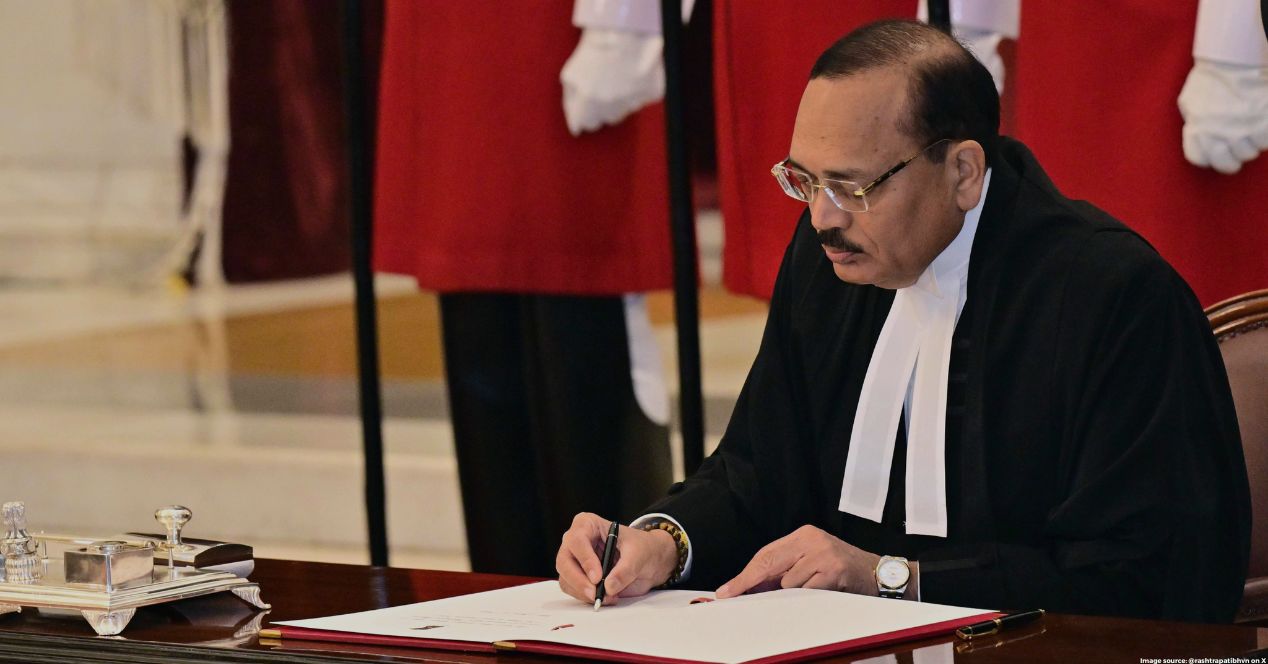
CJI Surya Kant’s first week sets the tone for his 14-month long tenure