


Analysis
Quit before the verdict: The judicial accountability gap
Justice Yashwant Varma's exit revives a constitutional lacuna that has remained unresolved for 15 years
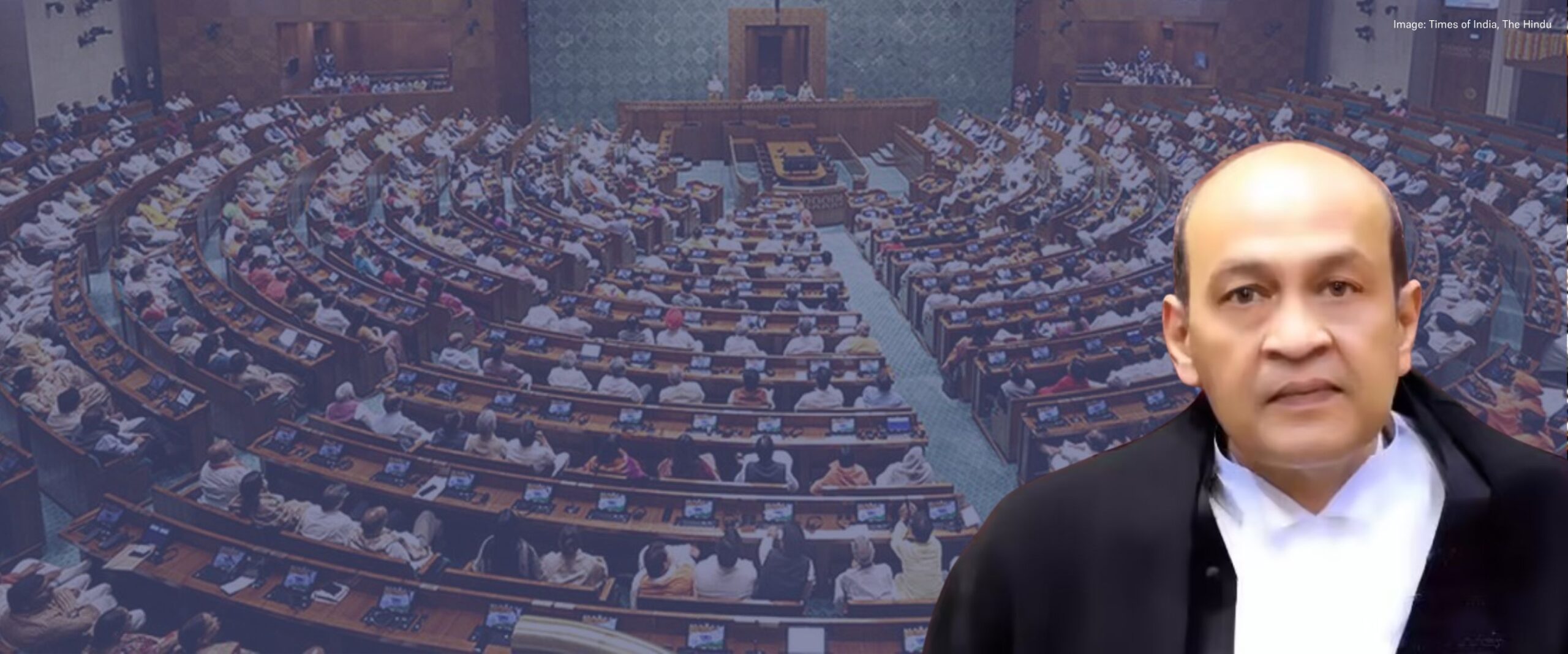
On 9 April 2026, Justice Yashwant Varma of the Allahabad High Court wrote to President Draupadi Murmu, tendering his resignation with immediate effect. This is the third time in independent India that a High Court judge, facing Parliamentary removal proceedings, has resigned to forestall the process. Each resignation has exposed the same constitutional lacuna. None has prompted a legislative remedy.
The Varma timeline
Last year, a firefighting operation led to the discovery of sacks of charred cash at Justice Varma’s official residence in Delhi. He was then a judge of the Delhi High Court. He denied ownership and described the storeroom as “a general dumping area”. After the discovery of the burnt cash, Justice Varma was transferred to the Allahabad High Court.
Within a week, then Chief Justice of India Sanjiv Khanna constituted a three-member in-house committee, comprising Justice Sheel Nagu, Justice G.S. Sandhawalia, and Justice Anu Sivaraman. The committee recommended removal proceedings after their 64-page report found “strong inferential evidence” of Justice Varma’s “tacit or active control” of the storeroom.
CJI Khanna wrote to the President and Prime Minister recommending removal after Justice Varma refused to resign. In an unprecedented step, the Supreme Court published the Delhi High Court Chief Justice’s preliminary report, photographs and video footage of the burnt currency online. Details of the in-house committee’s report were leaked to the media.
Justice Varma challenged the in-house procedure at the Supreme Court. A Bench of Justices Dipankar Datta and A.G. Masih dismissed the petition, stating that the CJI is not a “mere post office” between the committee and the President. Justice Varma then approached the Court challenging Speaker Om Birla’s decision to admit a motion for his removal. This petition too was dismissed in early 2026.
Birla constituted a three-member inquiry committee on 12 August 2025 under the Judges (Inquiry) Act, 1968. It consisted of Justice Aravind Kumar (Supreme Court), Justice Manindra Mohan Shrivastava (Chief Justice, Madras High Court), and B.V. Acharya (Senior Advocate, Karnataka High Court). Justice Shree Chandrashekar, Chief Justice of the Bombay High Court replaced Justice Shrivastava who retired on 5 March 2026. The committee was on the verge of concluding its proceedings when Justice Varma resigned on 9 April 2026. He was due to retire in 2031.
The Justice Dinakaran Precedent
Justice P.D. Dinakaran is the nearest precedent. A Madras High Court judge who was elevated as a Chief Justice of the Karnataka High Court, he was recommended by the Collegium for appointment to the Supreme Court in August 2009. This recommendation collapsed immediately after allegations of large-scale land encroachment and disproportionate assets surfaced against him. Protests erupted in the Madras and Karnataka High Courts seeking Collegium’s reconsideration of its recommendation.
The Collegium reconsidered his recommendation and shifted him as Chief Justice of the Sikkim High Court. The Sikkim Bar Association protested against the transfer.
Seventy-six Rajya Sabha members moved an impeachment motion in December 2009. A three-member committee, led by Justice Aftab Alam, was constituted.
Dinakaran resigned on 29 July 2011, a day before the committee’s first sitting. He cited “lack of faith and confidence” in its impartiality. The inquiry was shelved. On 4 August 2011, Dinakaran sought to withdraw his resignation. The Law Ministry rejected the request. A resignation addressed to the President takes effect upon receipt and admits no retraction.
One of the committee members—eminent jurist Mohan Gopal—wrote to the Rajya Sabha Chairperson Hamid Ansari, arguing that the inquiry should continue despite Justice Dinakaran’s resignation. Gopal claimed that the resignation allows the judge to veto his own accountability proceedings, something that the Constitution did not intend. While the argument was cogent, it was never acted upon.
Justice Alam requested Ansari to fill the vacancy created by the third member Justice J.S. Khehar, who was in the meantime, was elevated to the Supreme Court. Justice Alam wrote to Ansari on the assumption that Justice Dinakaran’s resignation would not have any impact on the committee’s continuance. A Supreme Court judgement dismissing Justice Dinakaran’s plea against the committee was delivered after his resignation, implying that the matter did not become infructuous.
The Justice Sen Variation
Justice Soumitra Sen of the Calcutta High Court adds a third, and more instructive, variation. He was found guilty of misappropriation and misrepresentation after it was discovered that he had collected Rs. 33.22 lakh from a party to proceedings and deposited them to his personal account in 1983. A motion by 58 Rajya Sabha members in 2009 led to the formation of a committee, headed by Justice B. Sudershan Reddy. The committee returned an unambiguous finding of guilt. In August 2011, the Rajya Sabha passed the removal motion by 189 votes to 17—the first time a House of Parliament had voted to remove a judge.
The next motion was to be voted in the Lok Sabha on 5 and 6 September 2011.On 1 September, five days before the vote, Justice Sen resigned. The Lok Sabha never voted. The first successful parliamentary finding against a judge ended without legal completion.
The Sen case adds a dimension absent from the Dinakaran and Varma resignations. Sen did not resign to escape an inquiry. He resigned to escape the formal parliamentary verdict. The Rajya Sabha had already acted. He forestalled the Lok Sabha at the last available moment. But the report of the committee recommending his removal is in the public domain, making him the second Judge to be impeached, if not removed from office—a subtle distinction in law which is relevant for the purpose of accountability. (Justice V Ramaswamy was the first. He evaded removal as the motion against him was defeated for want of sufficient strength in the Lok Sabha).
The Common Thread
The three cases share a structural logic. Under the High Court Judges (Salaries and Conditions of Service) Act, 1954, as amended, pension accrues to a judge “on retirement.” Resignation is treated as a form of leaving office that attracts the pension provisions, subject to qualifying service. Removal by parliamentary address is not “retirement” within the meaning of the 1954 Act. That distinction, embedded in statute, makes resignation the rational choice for any judge facing likely removal. Justices Dinakaran and Sen both retained their benefits after resigning. Justice Varma’s position is expected to be identical.
The comparison is not about equivalence of conduct. It is about an identical consequence: in each case, resignation disabled the accountability mechanism before Parliament recorded a formal finding of proved misbehaviour.
The Unresolved Constitutional Gap
The Judges (Inquiry) Act, 1968 contains no provision requiring inquiry to continue after a judge vacates office. The Constitution is equally silent. Gopal’s 2011 argument was precise: Parliament’s inquiry power is not coterminous with its removal power. Giving effect to that position requires a statutory amendment or a judicial interpretation. Neither has materialised in 15 years.
The Varma resignation reproduces the impasse. His guilt or innocence will not be formally determined. The public record rests on the in-house committee’s finding and on the material the Supreme Court itself published. That record is not erased by resignation. But it cannot constitute proved misbehaviour under Article 217. The case closes, as the others did, without legal finality.
India has now seen three iterations of the same sequence: inquiry initiated, legal challenges exhausted, resignation tendered, proceedings terminated. In Justice Varma’s case, the resignation came when the committee was on the verge of completing its work. The timing was not incidental. The pattern is not accidental. It is the rational product of a constitutional design that offers a judge facing removal an exit that is costless, immediate and permanent. Until Parliament addresses the gap by statute, the pattern will recur.
What the Lok Sabha committee should do
There is, however, a corrective available that does not require legislation. The Speaker’s inquiry committee should continue its work. It should complete the investigation, submit its report and place it in the public domain.
Dissolving an inquiry committee, as done by Vice President Hamid Ansari in the Dinakaran case, also has no explicit sanction in the Judges (Inquiry) Act, 1968. The Act empowers the committee to investigate charges and submit a report. It does not provide that resignation extinguishes the mandate. Ansari’s decision was an exercise of discretion, not a constitutional compulsion.
The inquiry committee’s mandate is to find facts, not solely to enable removal. The two objectives overlap but are not identical. Removal may become infructuous upon resignation. The finding of fact does not.
The public interest in a formal finding survives resignation. Judges are constitutional officers. The manner in which they leave office is a matter of public record. An in-house committee found Justice Varma’s culpability credible. The Supreme Court published its report. The Lok Sabha committee now has an independent statutory mandate. Dissolving it on the Dinakaran precedent would compound the original error.
The Lok Sabha Speaker constituted this committee with a statutory mandate. He directed it to report at the earliest. Justice Varma’s resignation does not nullify that direction. The committee should proceed. It should submit a report. The pattern of impunity can be arrested, at least partially, by a committee that refuses to dissolve itself and insists on discharging its public duty.
Related articles
Analysis
Judge inquiry: The opacity of the in-house process
The CJI’s power to recommend removal of a judge on the basis of an in-house committee’s report may be diluting the separation of powers
Analysis
SC dismisses Justice Yashwant Varma’s challenge against Inquiry Committee
The Court held that the Judges (Inquiry) Act cannot be interpreted to obstruct proceedings that investigate actions against a Judge
Analysis
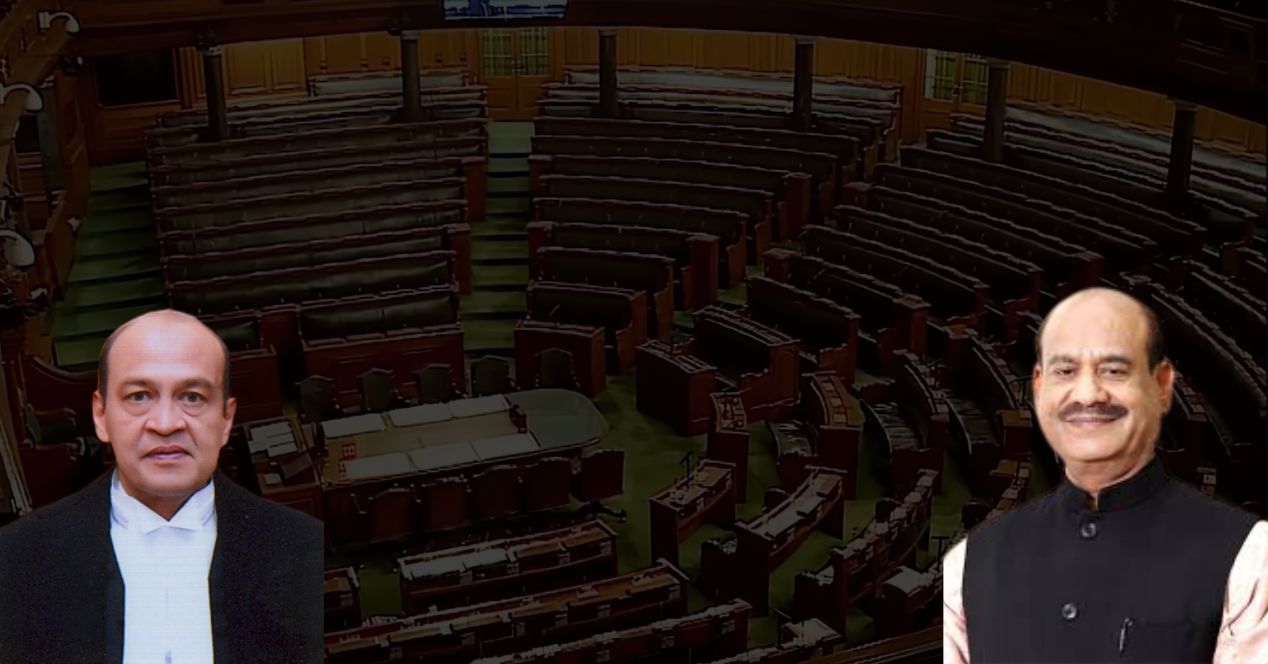
Speaker admits motion for Justice Varma’s removal: What lies ahead?
The Speaker constituted a three-member committee under the Judges Inquiry Act. We explain the steps involved in the parliamentary process
Analysis
Are there limits to the Speaker’s discretion in deciding an impeachment motion?
The Justice Varma case spotlights the Speaker’s power in impeachment procedure, which will be tested again in the Justice Swaminathan matter