


Analysis
SC: No coercive action against students accused of minor criminal offences
The Court said states may close or withdraw FIRs against students in accordance with law.
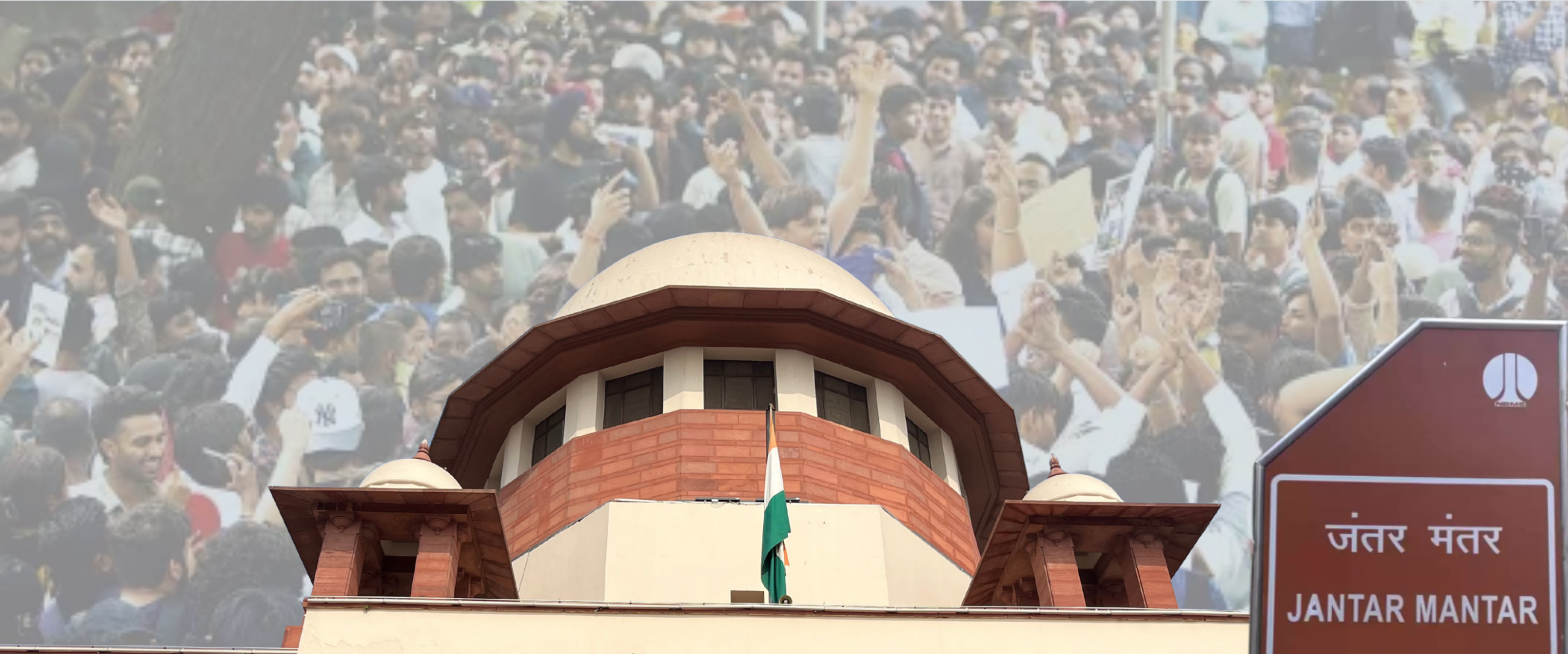
Today, the Supreme Court clarified that protection from “coercive action” cannot be denied to students who were previously accused in minor criminal cases. The 28 July had stated that student protestors who had “criminal antecedents” will not be protected. The Bench of Chief Justice Surya Kant and Justices Joymalya Bagchi and V. Mohana clarified that the expression “criminal antecedents” referred only to persons involved in grave and heinous offences. The Bench said the Government of NCT of Delhi and other states would be at liberty to close or withdraw FIRs against student protesters in accordance with law.
Court clarifies scope of protection for student protesters
Senior Advocate Gopal Sankaranarayanan pointed out that the Union was yet to file its affidavit, as directed by the Court in the previous hearing. Solicitor General Tushar Mehta, appearing for the Union, said there had been a “misapprehension” regarding the course to be adopted in relation to the FIRs registered against protesters. He assured the Bench that the government remained committed to resolving the issue adding that discussions were underway with counsel appearing for the petitioners to determine the legally permissible mechanism. He informed the Court that while the reply was ready, he wished to examine it before placing it on record. The Bench observed that any exercise relating to the FIRs would first require them to be segregated. CJI Surya Kant said the authorities would have to distinguish cases registered against students from those involving persons accused of serious offences before deciding the appropriate course.
Advocate Vrinda Grover submitted that many FIRs had been drafted so broadly that they exposed thousands of unnamed students to possible prosecution. Referring to an FIR registered in Patna, she said it named 152 persons while also referring to “5,000 unknown” individuals, leaving open the possibility of anyone being implicated later. Since similar cases had been registered across several states, she submitted that an appropriate mechanism would have to be worked out with the respective governments. Justice Bagchi observed that the criminal law framework itself permitted prosecutions to be withdrawn through Public Prosecutors, remarking, “This FIR cannot hang over the heads of students.”
Senior Advocate A.M. Singhvi sought a clarification of the Court’s earlier order, submitting that the expression “criminal antecedents” could otherwise include persons accused of petty offences, traffic violations or cases arising from political protests. Accepting the concern, the CJI clarified that its previous order would apply only to persons accused of grave and heinous offences.
Petitioners press for accountability for police action
The petitioners urged the Court to ensure that responsibility for the alleged use of force was fixed at the level of decision-making rather than being confined to individual officers. Sankaranarayanan submitted that the Union’s affidavit should explain who authorised the deployment of the Rapid Action Force (RAF), pellet guns and lathi charge. Referring to nearly 300 videos placed before the Court, he argued, “We have identified individual police officers who have acted. Let the affidavit explain who was responsible for the direction to the RAF. The responsibility has to be fixed.” The CJI agreed that any independent inquiry would have to examine responsibility while ensuring that neither police personnel accused of excess nor persons who had committed serious offences during the protests escaped scrutiny. “There should not be a misconception that a police officer committing excess shall be spared. And it should not be that a hardened criminal under the garb of student protest is also getting protected,” he observed.
The Court considered the nature of the proposed independent inquiry. While referring to the possibility of a Special Investigation Team, CJI Surya Kant indicated that the Court was inclined to constitute a high-powered committee headed by a retired judge. Senior Advocate Shyam Divan suggested that such a committee could be headed by a former Chief Justice of India.
What is the protocol on pellet guns and surveillance?
Senior Advocate N. Hariharan alleged that facial recognition technology had been deployed at protest sites without the consent of participants, while Sankaranarayanan questioned the legal basis for collecting and retaining protesters’ biometric data, including the alleged use of Aadhaar-linked information.
Addressing the Court on the use of pellet guns, Grover submitted that there was no standing order of the Delhi Police authorising the use of pellet guns during public demonstrations. She clarified that the petition did not seek to deprive the police of protective equipment but challenged the use of a weapon that was unsuitable for crowd control. To this the CJI reiterated that, “We would like to lay down a complete protocol on how and where it can be used.”
The respondents have been directed to file their counter affidavits. The matter will next be heard on 18 August.
Related articles
Analysis
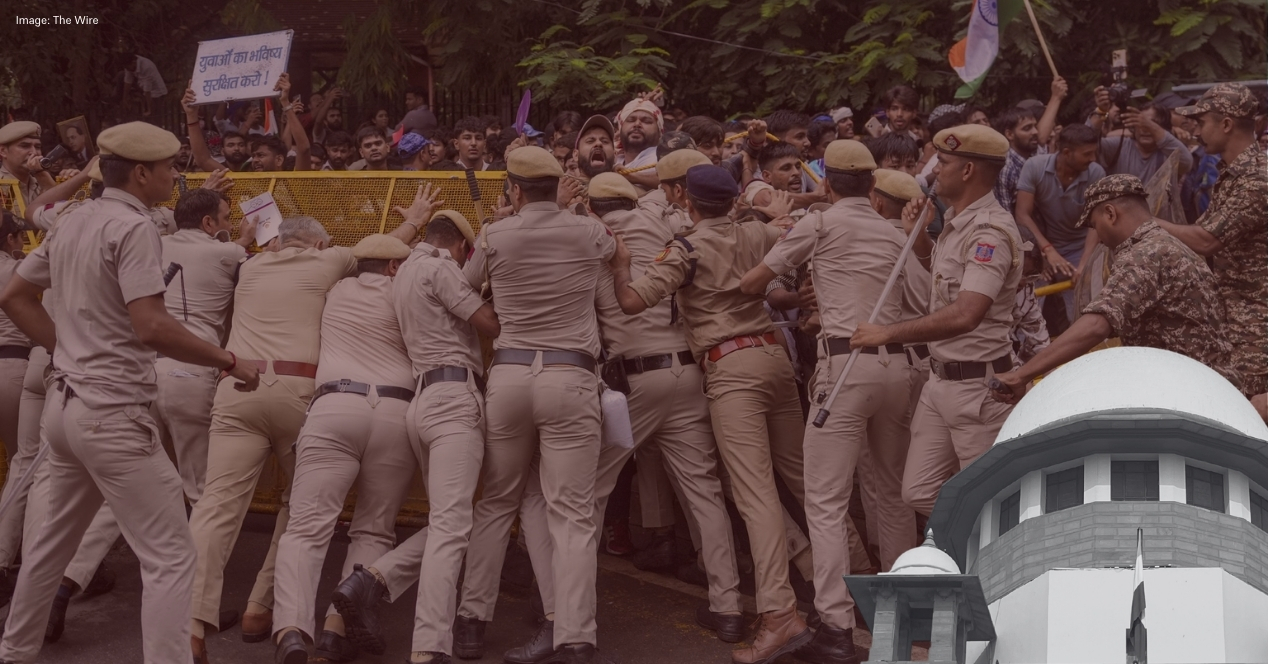
SC hears challenge on use of metallic pellet guns on student protesters
The Court asked petitioners to amend their plea for guidelines on metallic pellet guns and directed treatment for injured students.
Analysis
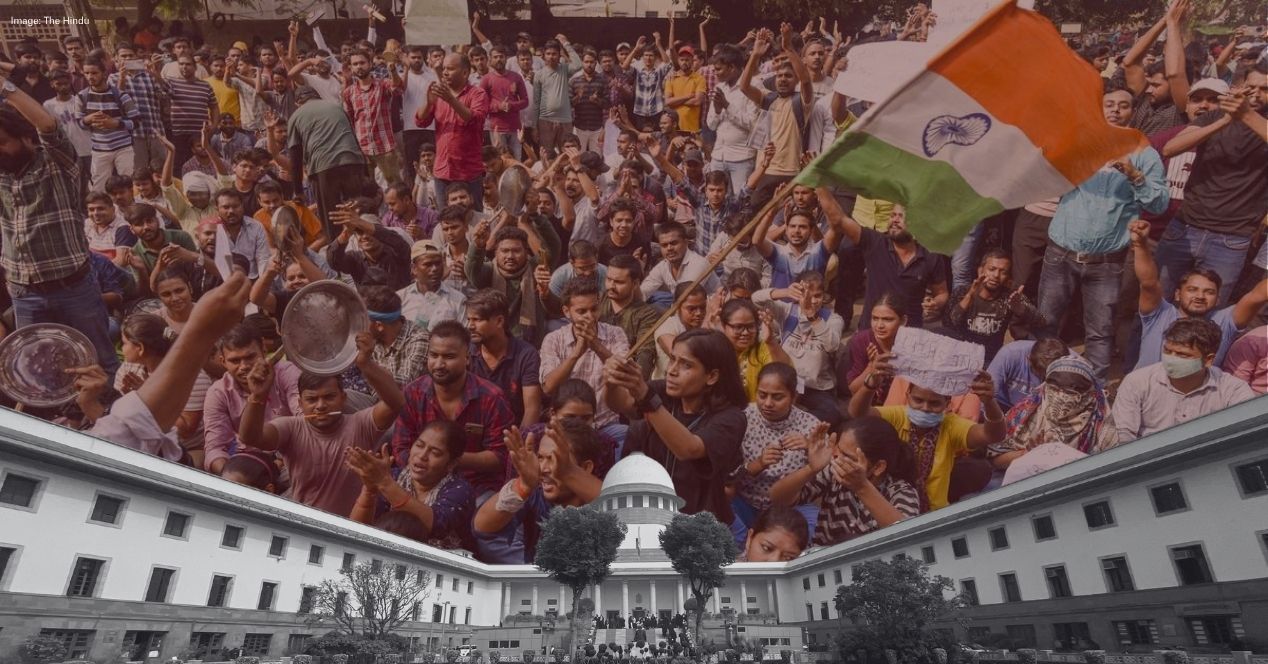
“Agitation cannot justify police excess”: SC on student protest crackdown
The Court said allegations of police excess must be independently examined and suggested a uniform protocol for handling public protests.