


Analysis
Voices on Constitution Day
From judicial independence to everyday constitutionalism, members of the Bar and academia reflect on where the Republic stands today.
To mark the 77th Constitution Day, the Supreme Court Observer spoke to legal minds from the Bar and academia about the enduring promise of India’s founding document. From institutional accountability to gender equity, here is what they had to say about keeping our constitutional ideals alive today:
*****
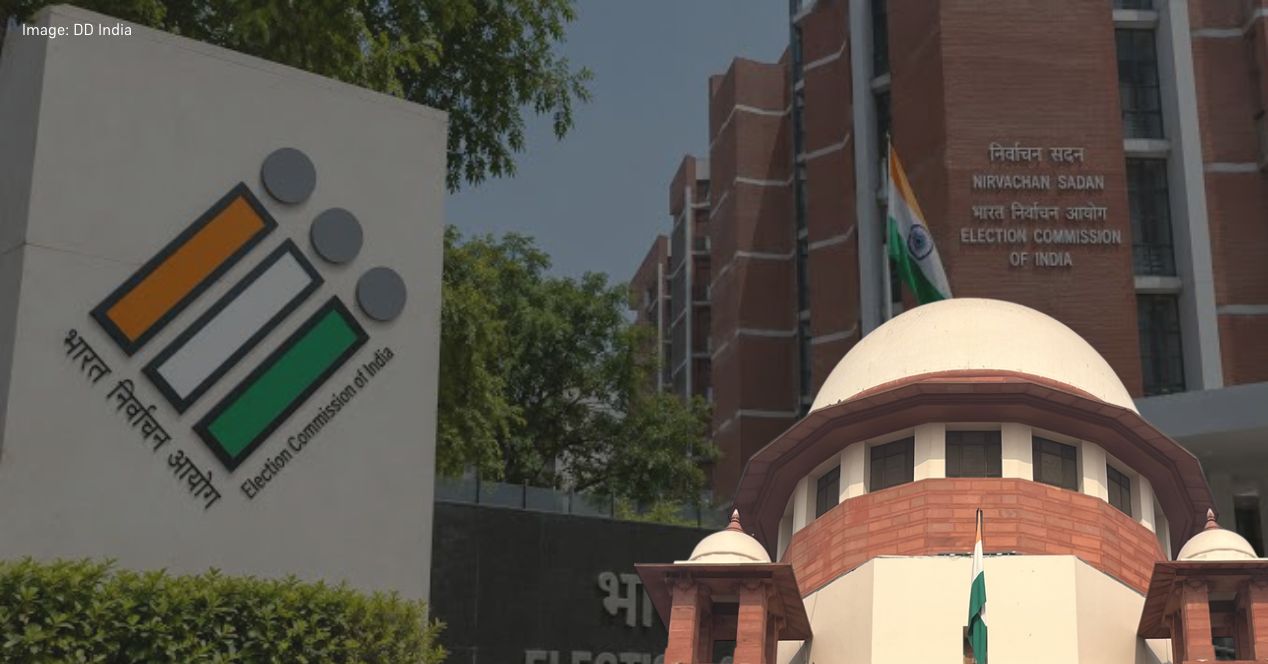
“On our 77th Constitution Day, some questions for our institutions. In 1952, Chief Justice Patanjali Sastri in State of Madras v VG Row, described the role of the Supreme Court as the “sentinel on the qui vive” in the context of protecting fundamental rights. Has the Supreme Court lived up to that role? Free and fair elections are possible only under a neutral, non-partisan Election Commission. Has the Election Commission lost its legitimacy in the last few years? Parliament was meant to be the ultimate expression of independent governance by the people. Is the voice of the people now heard more in Jantar Mantar or Ramlila Maidan than in Parliament?”
Raju Ramachandran
Senior Advocate, Supreme Court of India
*****
“The Constitution Day, 2026 marks the 50th year of the judgement in ADM Jabalpur v Shivkant Shukla. It is a stark reminder of how much the working of the Constitution is dependent on a truly independent judiciary, and particularly the Supreme Court. It is a stark reminder that the least dangerous branch has the constitutional obligation to assert itself and actually be the sentinel on the qui vive. Every judgement that upholds an invasion of personal liberty or freedom of speech on the specious ground of public interest is a breach of that obligation. A succession of such judgements will inevitably lead to constitutional rights that exist merely in theory.”
Arvind P. Datar
Senior Advocate, Supreme Court of India
*****
“We as a nation enjoy the distinction of being the worlds largest democracy. The protection and enforcement of our constitutional rights and guarantees is even more significant today if our democracy is to survive. Long live our Constitution!”
Meenakshi Arora
Senior Advocate, Supreme Court of India
*****
“This is a socio-political moment in India where the Constitution is under greater strain than ever before. Those who rely on it, fall back on it with relentless regularity. And those who grudge it, are happy to undermine it ever so often. The clarion call is, therefore, to all of us to keep the Constitution well-nurtured and to strive to build a public discourse where its principles are seamlessly applied in daily life.”
Aditya Sondhi, PhD
Senior Advocate, Supreme Court of India
*****
“Our Constitution was adopted on 26th November, 1949, to realise the basic rights to equality, freedom, dignity and social justice for all, especially for the most vulnerable. After 77 years of a living Constitution have we been able to achieve that? We have not been able to make equal rights a reality for all, whether it be in guaranteeing that everyone has an equal right to vote and be counted, the right to food, clothing and shelter, the right to quality education or the right to love and marry the person of your choice, irrespective of gender, caste, religion, disability or sexual orientation. On Constitution Day, let us remind ourselves that each and every one of us has the duty to stand up for these constitutional rights and values in our everyday lives.”
Jayna Kothari
Senior Advocate, Supreme Court of India
*****
“Our Constitution is firmly founded on the principles of equality and equity, but the question to be asked today when the Nation is entering into the 78th year of adopting its Constitution, have we fulfilled these promises of our Constitution qua half of our population i.e. women. The answer, unfortunately, is a big ‘NO’. Even a Judiciary that is required to ensure full implementation and adherence to the provisions of the Constitution in letter and spirit, has yet to achieve this equality when it comes to the ratio of male and female judges in the High Courts and Supreme Court. The current statistics—namely only 3 women judges out of total 37 judges in Supreme Court and only 116 women judges out of total 819 judges in High Courts—are quite disturbing and call for extraordinary steps to be taken by the Judiciary in a very concerted manner, with a committed approach to bridge the gap; to bring equality or near equality on the bench in both High Courts and the Supreme Court. Similar efforts are needed to be put in by all organisations/institutions/departments, whether Government or private. India should dedicate the coming year to fulfill this constitutional guarantee in respect to half of its population.”
Shobha Gupta
Senior Advocate, Supreme Court of India
*****
“Our Constitution is written in two registers. The first is a higher, aspirational register, moulded in the fires of colonialism, where our framers learnt the importance of the Preamble’s values of liberty, equality, and pluralism. This was the India they imagined for the future. The second is a pragmatic, messy register, crafted through compromises amidst the violence of Partition. It exists in some of the details of this document: centralisation bias, appointed governors, preventive detention, and concessions to majoritarianism. The framers set out to create a foundation that they thought would be workable and take everyone along, even if it was not morally perfect. But they provided for easy amendment in the hope that the Republic would keep perfecting their work in progress, moving closer to the Preamble’s aspirations and away from the document’s unsightly underbelly. In recent years, we seem to have been moving in the opposite direction. This Constitution Day, we must renew their faith in future generations by not just appreciating their painstaking creation but continually improving it so as to better realise the Preamble’s promises.”
Tarunabh Khaitan
Professor (Chair) of Public Law, London School of Economics and Political Science
*****
“The Constitution was, and remains, a set of promises made by the citizens to one another which were guaranteed by the State. But that was not a promise made once only to be forgotten and hung in halls; it was one to be perpetually renewed, on the ground. 77 years on, perhaps nothing is as important as to secure meaningful enforcement of those promises, for those who are placed in the unfortunate position of fighting for them. Allowing the roads to justice to become longer and more winding may bring about the unfortunate outcome of turning the Constitution into a much-admired document, but one which remains forever out of reach of those who need it most.”
Abhinav Sekhri
Advocate, Delhi High Court
*****
“Our Constitution was not drafted for a perfect India. It was drafted to help us build one. Perhaps the clearest expression of this is the Preamble, which most of us first encountered in our school textbooks. If we read it closely, its verbs reveal something profound, as it states “to secure, to promote.” The framers did not declare justice, liberty, equality and fraternity to be accomplished facts. They handed us a sentence that deliberately refuses to end. That is the most optimistic thing about our Constitution, as it assumes there will always be a next generation with work left to do. 77 years on, the Constitution continues to live not merely in courtrooms or in the institutions that interpret it, but in every assertion of a right, every demand for equality and every effort to hold power accountable. Constitutions don’t die overnight; they fade when people cease to live by them. Ours has endured because, in every generation, someone has been willing to stand up in a courtroom, a classroom, a road, or beyond and remind us that the Constitution must prevail.”
Sarthak Gupta
Advocate, Delhi High Court
Related articles
Analysis
How reasonable is ‘reasonable’?
This Constitution Day, we revisit the making of Article 19 and the constitutional limits on the State’s power to restrict protests.
Analysis
Supreme Court or ‘a sort of peripatetic court’?
Were the framers not prescient enough to understand the travails of litigants in accessing final justice?
Analysis
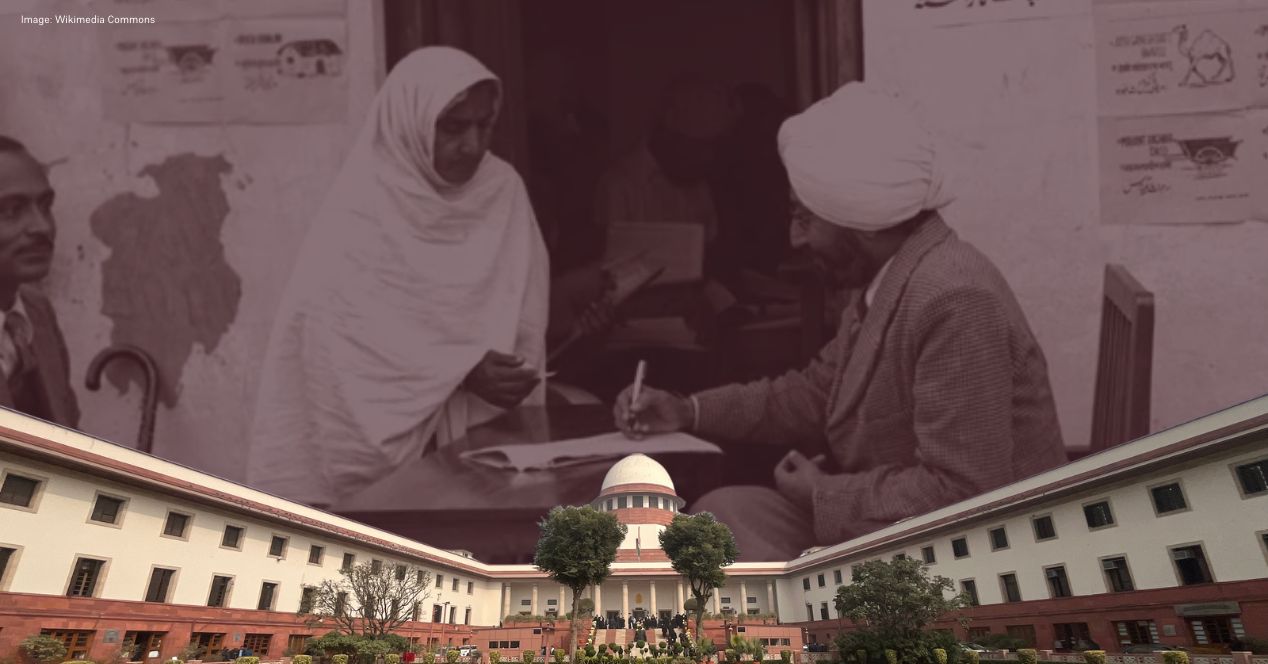
Becoming a democracy
A brief history of how universal adult franchise brought India's marginalised into the electorate
Analysis
Independence of Election Commissioners | Court in review
A history of developments on the procedure for appointment and removal of Election Commissioners