


Manmohan
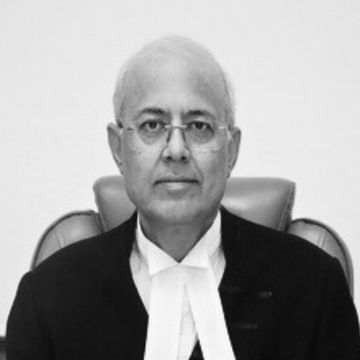
Manmohan
Sitting Judge of the Supreme Court of India
Assumed Office5th Dec, 2024
Retires On16th Dec, 2027
Previously
Chief Justice of the Delhi High Court29 September 2024 - 4 December 2024
Acting Chief Justice of the Delhi High Court9 November 2023 - 28 September 2024
Judge of the Delhi High Court17 December 2009 - 8 November 2023
Additional Judge of the Delhi High Court13 March 2008 - 16 December 2009
Senior Advocate of the Delhi High Court18 January 2003 - 12 March 2008
Advocate at the Delhi High Court1987 - `17 January 2003
Profile
Early Life and Education
Justice Manmohan was born on 17 December 1962 in Delhi. His father, the Late Jagmohan Malhotra, was a former member of Parliament and a member of the Bharatiya Janata Party (BJP). Before joining the BJP, he was a member of the Indian National Congress party. He was also the governor of Jammu and Kashmir, and the Lieutenant Governor of Delhi and Goa.
Justice Manmohan completed his early education from Modern School, Barakhamba Road, New Delhi. He graduated with a B.A. (Hons.) in History from Hindu College, University of Delhi. He then pursued LL.B. from Campus Law Centre, University of Delhi, and completed his law degree in 1987. Justice B.V. Nagarathna, sitting judge of the Supreme Court, was from the same 1987 batch as Justice Manmohan.
Career as an Advocate
Upon graduation, Justice Manmohan enrolled as an Advocate at the Bar Council of Delhi in 1987.
Over the next two decades, he argued in civil, criminal, constitutional, taxation, arbitration, trademark and service litigation cases. During this time, he appeared before the Delhi High Court and the Supreme Court. He also served as Senior Panel Advocate for the Union Government in the Delhi High Court and the Supreme Court. Notably, he argued in the Dabhol case where the Maharashtra Power Development Corporation filed a petition alleging oppressive and prejudicial conduct by Dabhol Power Company’s board. He also appeared in the Hyderabad Nizam’s Jewellery Trust matter which dealt with ownership, auction, and valuation disputes regarding the Nizam’s valuable jewellery. He appeared in legal disputes concerning the Claridges Hotel in New Delhi as well.
He was designated as a Senior Advocate of the Delhi High Court on 18 January 2003.
Career as a Judge
Five years later, on 13 March 2008, Justice Manmohan was appointed as an Additional Judge of the Delhi High Court. Within a year and a half, on 17 December 2009, he became a Permanent Judge of the High Court.
On 9 November 2023, he was appointed as Acting Chief Justice of the Delhi High Court, and less than a year later, in September 2024, he was sworn-in as Chief Justice of the High Court.
On 28 November 2024, the Collegium led by Chief Justice Sanjiv Khanna recommended Justice Manmohan’s elevation to the Supreme Court. The recommendation came roughly two weeks before his retirement from the Delhi High Court. As per the resolution, Justice Mannmohan was at SI. No. 2 in the all-India seniority of High Court Judges. Further, it noted that Justice Manmohan’s elevation to the top court would bring regional representation of the Delhi High Court to the Supreme Court bench. At that time, CJI Khanna was the only sitting judge from the Delhi High Court.
Justice Manmohan will retire on 16 December 2027 after a three-year long tenure at the Supreme Court.
According to Manupatra analytics, Justice Manmohan has authored 26 judgements and has been a part of 72 Benches so far. Justice Manmohan’s highest authorship was in 2025 with 24 judgements.
Figure 2 indicates that Justice Manmohan mainly authored judgements in Criminal matters (24.3%). This is followed by Property (16.2%) and Motor Vehicles (8.1%).
Notable judgements
In Hemlatha (D) by LRs v Tukaram (D) by LRs (20265), a Bench of Justices Rajesh Bindal and Manmohan held that a registered sale deed carries a strong presumption of genuineness and cannot be treated as nominal or a sham in the absence of clear pleadings and cogent evidence. The Court held that registration is a solemn act imparting sanctity to a document and that recitals evidencing an outright sale cannot be displaced merely by contemporaneous execution of a rental agreement.
In Sanjabij Tari v Kishore S. Borcar (2025), a Bench of Justices Manmohan and N.V. Anjaria held that once execution of a cheque is admitted, statutory presumptions under Sections 118 and 139 of the Negotiable Instruments Act, 1881 must follow and cannot be diluted by treating proceedings under Section 138 as ordinary civil recovery actions. The Court restored the conviction and issued comprehensive directions to streamline and expedite trials under Section 138 of the NI Act.
In Tuhin Kumar Biswas v State of West Bengal (2025), a Division Bench of Justices N. K. Singh and Manmohan held that criminal proceedings cannot be sustained where the material on record does not disclose a reasonable prospect of conviction. The Court found that the FIR and chargesheet did not disclose the essential ingredients of the alleged offences and noted the pendency of a civil dispute between the parties. Holding that the prosecution amounted to an abuse of process, the Court quashed the proceedings at the stage of framing of charge.
In Nayan Bhowmick v Aparna Chakraborty (2026), a Bench of Justices Manmohan and Joymalya Bagchi held that prolonged separation and intractable matrimonial litigation constitute mental cruelty. It held that forcing a couple to remain legally married is a mere “legal fiction” as it serves no purpose and only perpetuates misery. Exercising its powers under Article 142, the Court dissolved the marriage after noting that it had irretrievably broken down.
In Orion Conmerx v National Insurance Co. (2025), a Bench of Justices Dipankar Datta and Manmohan held that a fire intentionally caused by a third party, without the knowledge or consent of the insured, is to be treated as an accidental fire for the purposes of insurance coverage. It held that where the insured is not the instigator, the precise cause of fire is immaterial and any ambiguity in coverage clauses must be resolved in favour of the insured.