


Analysis
Delhi Air Pollution Crisis | SC directs implementation of CAQM recommendations
The Bench directed the authorities to submit action-taken plans and provide concrete timelines for the same
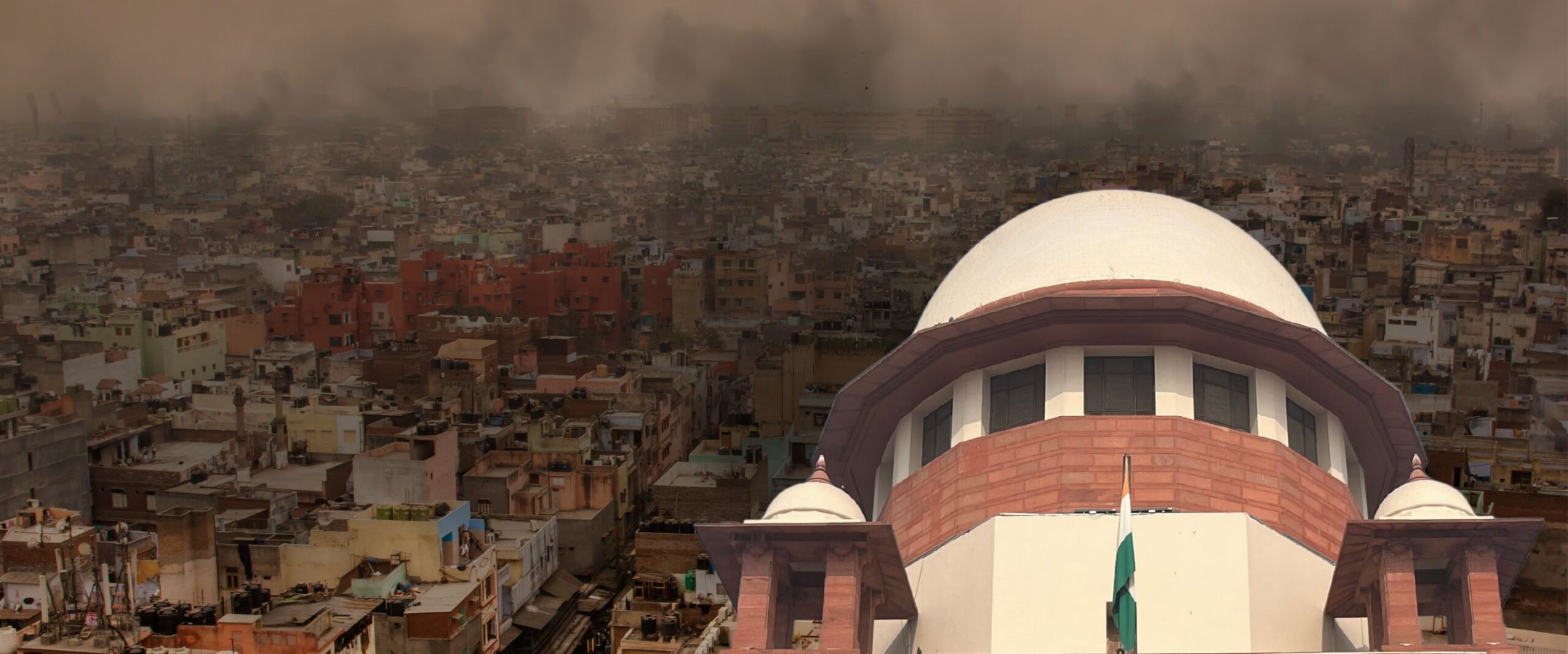
Today, the Commission for Air Quality Management (CAQM) submitted a status report on long term measures to combat the Delhi air pollution crisis. A three-judge Bench of Chief Justice Surya Kant and Justices Joymalya Bagchi and V.M. Pancholi issued directions for implementation of CAQM recommendations.
On 6 January, the Court had refused to extend time for consultation with stakeholders on issues regarding toll and directed CAQM to independently examine the issue.
Highlights of the report
Additional Solicitor General Aishwarya Bhati, appearing for the CAQM, highlighted three aspects of the report for the Court’s consideration.
First, Bhati flagged that the vehicular sector has been identified as the primary contributor of air pollution, particularly with regard to tailpipe emissions. Phasing out vehicles based on emission potential, strengthening of the second generation of PUC certification and improving public transport systems are some crucial measures, she said.
Responding to a query from CJI Surya Kant, Bhati clarified that all concerned government agencies had been served with copies of the same report. When asked if she wanted responses to be filed by them, she asserted that “we do not want their responses”. Instead, she sought directions for the implementation of the report’s recommendations. Amicus curiae Senior Advocate Aparajita Singh added a request for agencies to submit concrete timelines as well. She pointed out that none of the measures were new.
Bhati then pointed out that there were several limitations with the existing studies and emissions inventory. A new source apportionment study is required for Delhi NCR. She said that a meta study on all existing research has been made available on CAQM’s website for public comments. CJI Surya Kant approved of the decision and said, “we can wait for some time, you may get some good suggestions and you can incorporate them in a supplementary report.”
On toll and ECC charges
Finally, on the issue of toll and Environment Compensation Charge (ECC), Bhati submitted that the CAQM has consulted all stakeholders and made recommendations for the Municipal Corporation of Delhi (MCD) to implement. She pointed out that in 2015, the Court had directed for ECC charges with the purpose of making it less lucrative for vehicles to pass through Delhi NCR. Today, she said, the current rates make it cheaper for people to enter the city than go around it.
CJI Surya Kant intervened to express grave concern over a clause in the report which revealed that ECC funds are lying unutilised. Bhati responded that the Delhi government takes permission from the Court for utilisation and pointed out two pending applications for the same. CAQM can sit with the Delhi government and formulate a plan for the utilisation, she said, urging the Bench to treat long-term measures separately from the ECC issue.
Singh intervened to flag that while revising ECC rates, essential commodities must remain outside the ambit of the charge. Bhati submitted that CAQM would also consult the amicus while formulating its plan.
Objections were raised by the Gurugram Metropolitan Development Authority (GMDA) regarding traffic jams at toll plazas affecting air quality in Gurgaon. CJI Surya Kant observed that the agencies would have to work together and decide on a proportionate distribution of ECC funds.
Directions issued by the court
The Court observed that the CAQM’s recommendations must be given effect without any delay. It directed the concerned stakeholders to submit their respective implementation plans within four weeks and clarified that the Court would not entertain any objections to the measures recommended.
The Bench directed the MCD to expeditiously file submissions on any concerns that may delay the implementation of these reforms. The Government of Delhi was directed to submit a plan for utilization of ECC funds for the purpose of giving effect to CAQM recommendations.
The matter will be heard in four weeks.
Related articles
Analysis
Delhi Air Pollution Crisis | SC directs CAQM to identify causes and place findings in public domain
The Bench refused to grant long adjournments and said it would hear the matter on a continuous basis
Analysis
Delhi Air Pollution Crisis | SC allows action against pre-BS-IV vehicles
The Bench was informed about school closures, stipends for construction workers and pollution contributed due to toll booths.
Analysis
Delhi Air Pollution Crisis | CJI Surya Kant warns against politicising stubble burning
Court pushes authorities to show why Delhi’s pollution remains high despite repeated action plans
Analysis
Delhi Air Pollution Crisis | Union submits pollution-control plan
Vacancies in pollution control boards and poor enforcement come under scrutiny as Court demands accountability from NCR states