


Analysis
Caste identity after religious conversion: Who counts as a Scheduled Caste person?
The SC sought evidence for Scheduled Tribe status and quoted scriptures to restrict Scheduled Caste status to persons who convert
Chinthada Anand was born into the Madiga community, a Scheduled Caste community in Andhra Pradesh. He converted to Christianity and spent over a decade conducting Sunday prayer meetings as a pastor. In January 2021, he alleged that members of a locally dominant community assaulted him, abused him by his caste identity and threatened to kill him and his family. The police registered a First Information Report (FIR). A chargesheet was filed with 16 witnesses. Attached with it was a medical report confirming injuries. Anand’s status was confirmed as a “Hindu-Madiga” by the Tahsildar.
A Bench of the Andhra Pradesh High Court, in Akkala Rami Reddy v State of Andhra Pradesh quashed the FIR lodged under the Scheduled Castes and Scheduled Tribes (Prevention of Atrocities) Act, 1989 and provisions of the Indian Penal Code, 1860. The High Court held that the caste system was alien to Christianity and the IPC allegations lacked corroboration.
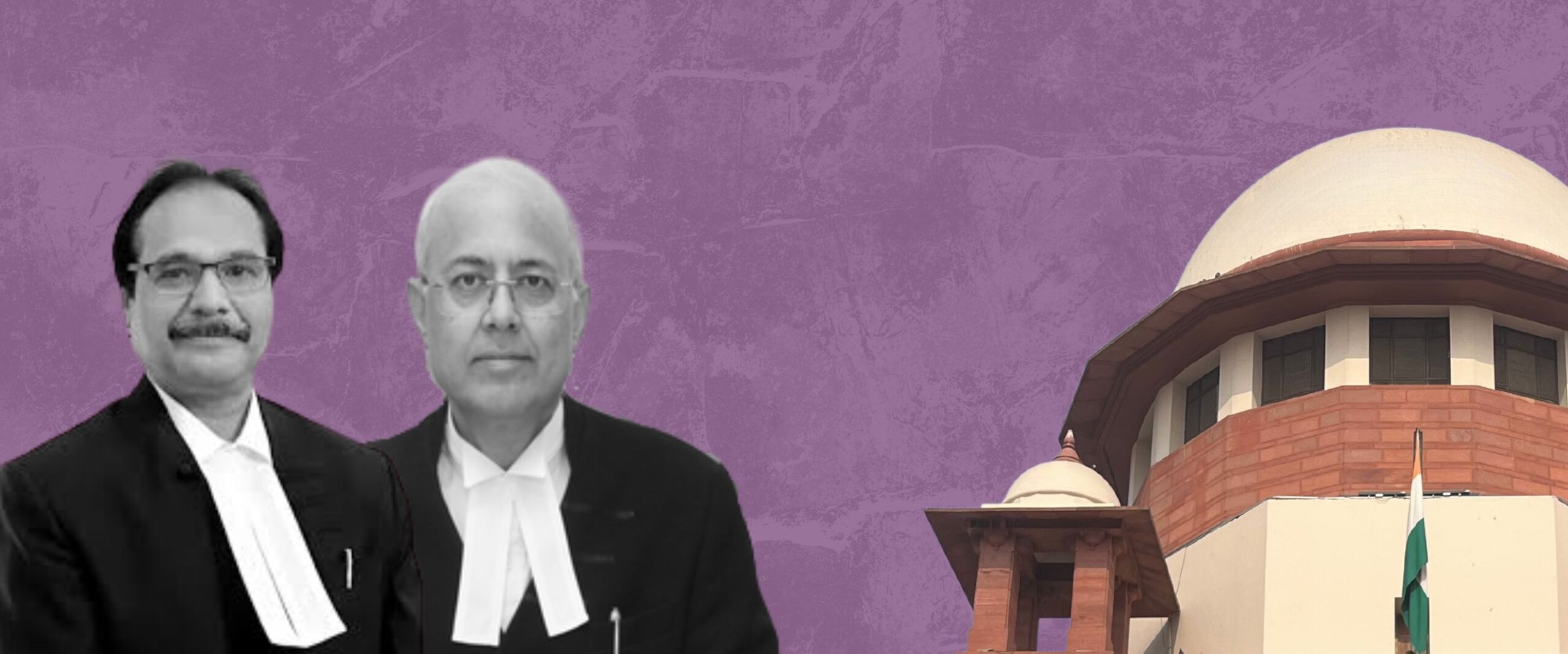
On 24 March 2026, a Supreme Court Bench of Justices P.K.Mishra and Manmohan dismissed Anand’s appeal. It held that religious conversion results in “immediate and complete loss” of Scheduled Caste status from the moment it occurs, regardless of birth. By extension, all statutory benefits terminate automatically and upheld the Andhra Pradesh High Court’s view.
What Anand argued, and why the Court was unconvinced
Anand’s counsel advanced two contentions:
- Caste is a fact of birth determined by descent and community recognition, a change of faith does not erase historical disadvantages;
- A G.O. Ms issued in 1977 acknowledged that Scheduled Caste persons converted to another religion “suffer from all social disabilities as Scheduled Castes, irrespective of their conversion”.
The Bench dismissed the first argument by relying on Clause 3 of the Constitution (Scheduled Castes) Order, 1950, which states that only persons professing the Hindu, Sikh, or Buddhist faiths can be deemed members of a Scheduled Caste community. Further, the word “professes” means an open, public declaration of religion as per Punjabrao v D.P. Meshram (1964). The Bench held that Anand’s decade-long service as a pastor and his role as treasurer of the local Pastors Fellowship constituted an unequivocal profession of Christianity.
The Bench then ruled that christianity does not “by its very theological foundation” recognise caste. It relied on the New Testament, Galatians 3:28: “There is neither Jew nor Gentile, neither slave nor free, nor is there male and female, for you are all one in Christ Jesus.” The Court reasoned that the “the social and economic disabilities arising because of Hindu religion cease” once a person converts from Hinduism to Christianity, as per the Constitution Bench decision in Principal, Guntur Medical College v Y. Mohan Rao (1976) and the three-judge bench in C.M. Arumugam v S. Rajagopal (1975).
On the GO, the Bench held that it distinguishes between statutory and non-statutory concessions. It only extends statutory concessions to Scheduled Caste persons under the 1950 Order. The SC/ST Act, being in the nature of a central legislation, is excluded from being applicable to persons who convert. The Bench buttressed this by relying on a 2021 Lok Sabha reply confirming that the GO does not apply to centrally sponsored schemes or statutory benefits.
The seven postulates and one asymmetry
The judgement goes well beyond the facts. It lays down seven “postulates” as general principles, as it held that professing Christinaity and claiming Scheduled Caste status are “mutually exclusive”. For instances where a person converts back to Hinduism, they should meet three cumulative conditions: proof of original Scheduled Caste membership, credible evidence of bona fide reconversion with “complete and unequivocal renunciation” plus adoption of original customs and evidence of community acceptance. This burden is on the claimant and failure to fulfil any single condition makes the claim “unsustainable”.
The Bench then held that religious conversion does not extinguish Scheduled Tribe status. However, the person must retain essential attributes of tribal identity: customary practices, social organisation and community recognition. The assessment, the Bench said, is “necessarily fact-specific.”
The asymmetry is significant. For tribes, the Court insists on an empirical inquiry into whether conversion has actually altered a person’s social reality. For castes, it treats Clause 3 as a mechanical bar. The doctrinal tenets of Christianity, are treated as conclusive of social reality.
The looming question
The constitutional validity of Clause 3 has been pending consideration since 2004. Meanwhile, there have been recommendations to make the Scheduled Caste status as religion-neutral—The Ranganath Mishra Commission (2007). The Sachar Committee and a 2008 study documented the persistence of caste discrimination among persons who converted from the Dalit community.
Most recently, in 2022, the Union government appointed a Commission of Inquiry under former Chief Justice K.G. Balakrishnan to examine whether Scheduled Caste status should be extended to Dalit converts. The Commission has yet to submit a report. It has been granted repeated extensions on its October 2024 deadline. The latest mandate is of 10 April 2026.
The Supreme Court’s decision contains no reference to the pending petition, the Balakrishnan Commission or the Ranganath Mishra recommendations. It does not engage with Soosai v Union of India (1985)—the only decision where the Supreme Court acknowledged that the constitutional question required socio-economic data to resolve. This is the second two-judge bench decision in recent months to state the Clause 3 position in sweeping terms: in C. Selvarani (November 2024), Justices Pankaj Mithal and R. Mahadevan held that claiming Scheduled Caste status after conversion amounted to “fraud on the Constitution.”
For Anand, the consequence is concrete: an FIR alleging caste-based assault, supported by a chargesheet, 16 witnesses, and a medical report, stands quashed. The law recognises his right to profess Christianity. It does not recognise the possibility that those who assaulted him might have treated him, regardless of his faith, as a Madiga.
Other Dalits and Scheduled Caste members, who have converted to Christianity or Islam find themselves in a similar position: their faith makes them ineligible for the protections that attach to caste, while the religious conversion fails to make the difference the law assumes it did.