


Analysis
The couple behind the Supreme Court’s first PIL
An excerpt from “14 Lawyers: Portraits from the Bar” by Senior Advocate Raju Ramachandran chronicles the legacy of Nirmal & Kapila Hingorani

…the story of Nirmal [Hingorani] and Kapila [Hingorani] is in fact the story of how PIL was pioneered in India. In January 1979, two articles by K.F. Rustamji, a member of the National Police Commission, appeared in the Indian Express. Rustamji had visited prisons in Bihar and reported that the majority of prisoners were undertrials languishing in jail because of sheer negligence and apathy – lost papers, their inability to pay bail bonds or even clerical mistakes. Some of them had been in jail longer than they would have been if they had actually been tried, convicted and sentenced to the maximum punishment for the alleged offences. Even more concerning was that women and children had been kept in jail under ‘protective custody’ for no fault of their own.
Kapila was feeling dissatisfied with the monotony of litigation and wanted to contribute more significantly to improving people’s lives, when Nirmal showed her the Rustamji report. They were shocked and determined to do something. Nirmal conceived of a petition on behalf of these unfortunate individuals, invoking the Supreme Court’s obligation to act under Article 32. This was not easy, since filing a petition requires locus standi – a direct interest in and connection to the grievance being presented to the Court. The Supreme Court Registry (a formidable force) objected to the Hingoranis’ petition since it had no vakalatnama (a document authorizing the lawyer to file the case, signed by the petitioner) and was otherwise not in terms of the rules of the Court – it was just two pages of the facts of the report and the violations of law. But Kapila insisted that they list it with these ‘defects’ outstanding, telling them she would take up these issues directly with the judges. Hussainara Khatoon v. Home Secretary, State of Bihar was duly listed in Court, and resulted in not just the release n personal bond of the prisoners named in Rustamji’s articles, but also an affirmation of the fundamental right to a speedy trial. The Court also issued broader directions for reform of the bail system, which penalizes people ‘for no crime other than their poverty’.
The case led to discoveries of such conditions in other states as well, and the eventual release of about 40,000 persons. Kapila called it ‘the result of an emotional reaction of lawyers who responded to a terrible situation’. She and Nirmal continued to work tirelessly for the most vulnerable and powerless in society. When a lawyer from Bihar wrote to her about police officers blinding people with acid in Bhagalpur, Kapila sought not just an investigation into these horrific criminal acts but also compensation and care for the victims. In Rudul Sah v. State of Bihar, she convinced the Court to give meaning to the right to life and liberty by ordering monetary compensation for a person who was kept in jail for 14 years after his acquittal. In later years, she was disappointed in the misuse of the PIL mechanism, but nothing can take away from the fact that her interventions gave much-needed meaning to fundamental rights.
Nirmal was one of those strong, silent men. He was gentle and soft-spoken in his advocacy, and he was a true feminist. Chief Justice P.N. Bhagwati – who passed the final judgment in the Hussainara Khatoon case – offered to designate Kapila as a Senior Advocate in 1981. But she resisted, saying she did not want the distinction unless her husband was made a senior as well and his contribution acknowledged, since he had conceptualized and drafted the petitions that she argued. This did not happen. Chief Justice M.N. Venkatachaliah’s tenure from February 1993 to October 1994 was consequential for more reasons than one. He commanded enough authority to persuade the full court to give the Chief Justice the special power to nominate two advocates for designation as Senior Advocate, exercisable once in his tenure. This was to ensure that outstanding lawyers who did not fulfil the then-requirement of 20 years’ standing at the Bar could be designated.10 By this time, Kapila was widely acknowledged as the ‘mother of public interest litigation’ in India. In a 1994 case where Kapila highlighted mismanagement at the Ranchi Mental Hospital, Venkatachaliah had recorded the Court’s ‘appreciations of the efforts of Mrs Kapila Hingorani for the improvement of this institution which, in earlier, times, enjoyed a high reputation for its efficiency and utility as a specialised center for the treatment of the mentally-ill but had in past fallen into a morass. She has done great service to the institution.’11 Despite this recognition of Kapila’s eminence, her seniority (which did not require the exercise of any special power), and Venkatachaliah’s influence over the process of designation of Senior Advocates, Kapila was not designated during his tenure. I happened to be passing the judges’ corridor to attend a legal aid committee meeting the day after the designations were announced. One of my most poignant memories is that of a crestfallen Kapila emerging from the Chief Justice’s chamber. Was she hurt? Was she disappointed? Obviously, she was, but her daughter Priya, a Senior Advocate herself, says that her mother was a detached and stoic person, who was unlikely to have taken it to heart.
In his endorsement of Aman’s aforementioned book, Venkatachaliah spoke thus of his parents: ‘Aman bears the awesome Hingorani – Kapila and Nirmal – legacy of the great humanism permeating penology from Hussainara Khatoon onwards.’ Hmm … This is a delicious irony. If that was the regard in which he held the couple, he could have surely designated them during his tenure. In the meantime, the Court, headed by Dr A.S. Anand, atoned for its lapse when it designated Nirmal Hingorani, though late in his life and career, in November 2000. When he was made a Senior Advocate, I felt that justice was done to an extraordinary lawyer couple, though Kapila did not get her due in her lifetime.
Kapila passed away in December 2013 at the age of 86. Nirmal lived till the ripe age of 94 and passed away after a shout bout of pneumonia. Their portraits – the only portraits of a lawyer couple – hang in the Supreme Court.
(This is an excerpt from “14 Lawyers: Portraits from the Bar”, published recently by Juggernaut Books.)
Related articles

Analysis
“Let the Union of India…put the bricks back”: Former Attorney General K.K. Venugopal on Babri Demolition
In his autobiography, Senior Advocate K.K. Venugopal describes the Supreme Court proceedings before and after the Babri demolition
Analysis
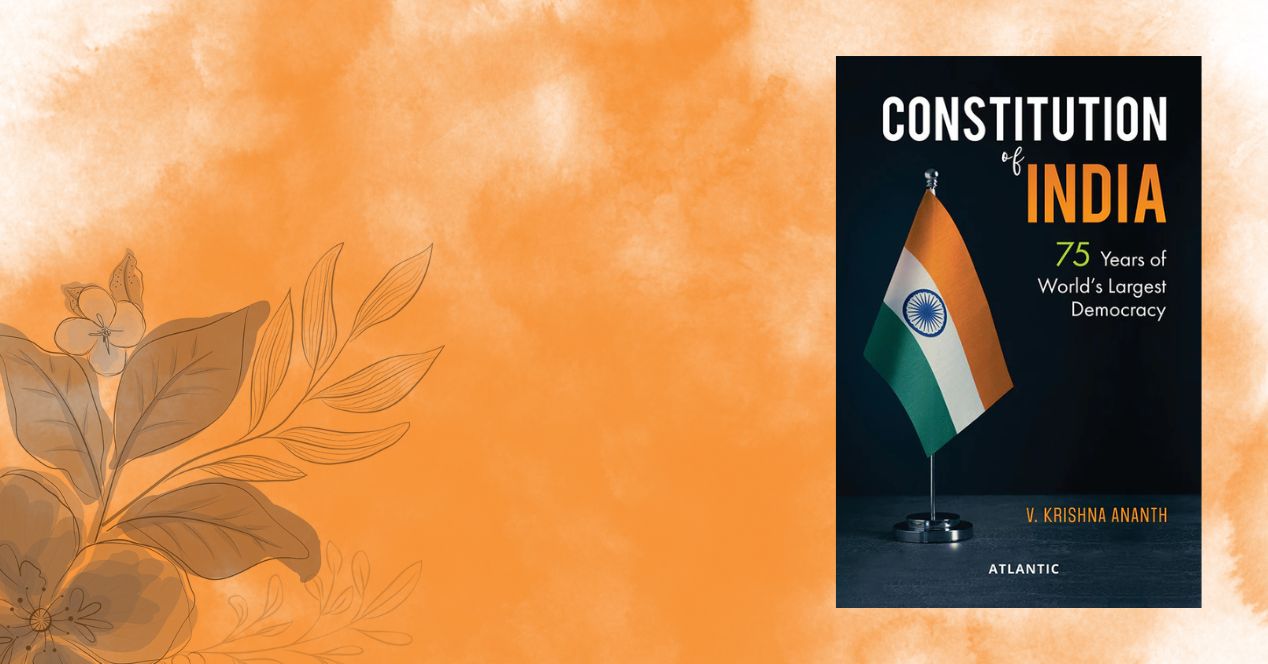
“The Supreme Court treated the Constitution as lex rather than jus”
In this excerpt from the conclusion of a new book, V. Krishna Ananth argues that the SC has often downplayed the aspirations of the framers
Analysis
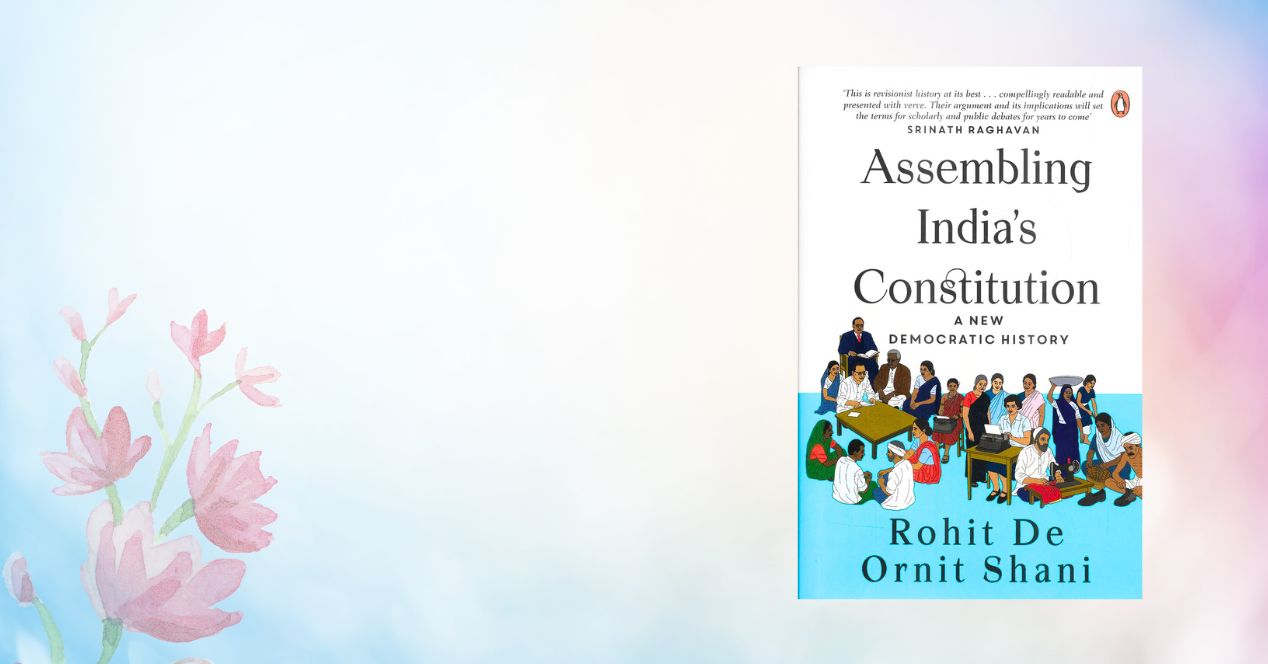
How India’s judiciary tried to shape its own independence
Tensions between the Judiciary and the Executive over appointments were brewing even as the Constitution was being drafted

Analysis
What is the role of ‘constitutional morality’ in legal interpretation?
In this excerpt from a longer essay, Senior Advocate Gopal Subramanium writes that Indian courts developed this tool to uphold rights