


Analysis
Delhi Air Pollution Crisis | SC directs CAQM to identify causes and place findings in public domain
The Bench refused to grant long adjournments and said it would hear the matter on a continuous basis
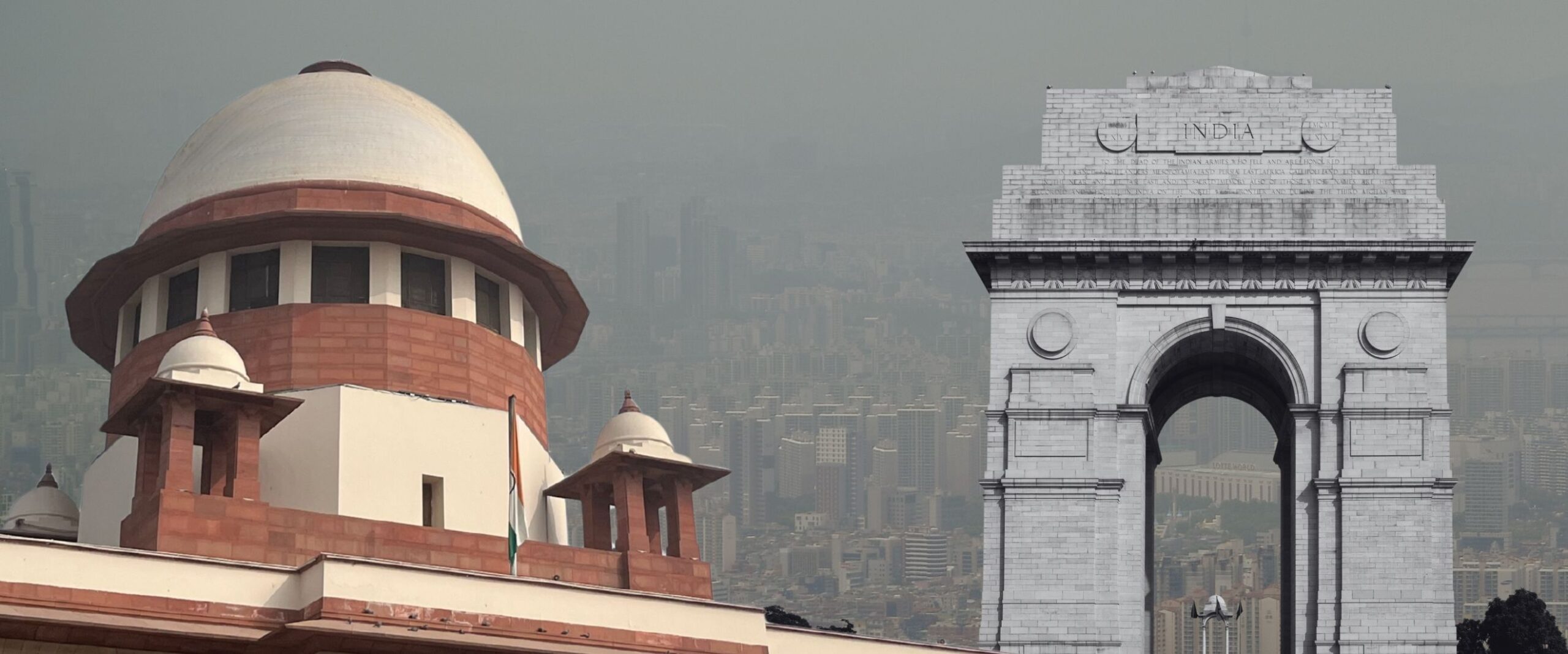
Today, the Supreme Court refused to grant extended time to authorities in the Delhi NCR air pollution crisis matter. It directed the Commission for Air Quality Management (CAQM) to identify causes for the continuing deterioration in air quality and to place its findings in the public domain.
A Bench of Chief Justice Surya Kant and Justice Joymalya Bagchi said the Court would proceed issue by issue so that individual concerns received focused consideration.
Court refuses time sought on toll and ECC issues
Additional Solicitor General Aishwarya Bhati sought issue-wise scheduling and time to place status reports on record. On the issue of Environment Compensation Charge (ECC) and toll plazas, she asked for two months, stating that authorities had held meetings with stakeholders. The Court refused.
CJI Surya Kant said authorities could not continue to hold meetings and return after long gaps without concrete outcomes. He asked whether the authorities had identified the causes of pollution during this period and referred to the volume of material already available in the public domain, including expert articles and opinions sent to the Court.
The Court noted that heavy vehicles contribute substantially to pollution levels and noted that construction activity continued across the NCR. “Holding a meeting on 2 January and telling us that you will come after two months, that is not acceptable,” CJI Surya Kant said.
CJI Surya Kant observed that the status note filed by CAQM remained silent on several issues raised earlier. He also noted that the Municipal Corporation of Delhi (MCD) had defended toll plazas as a source of revenue, while the Gurugram Metropolitan Development Authority (GMDA) had filed an application seeking a share of ECC collections.
Vehicular pollution and differing expert assessments
Senior Advocate Aparajita Singh, the amicus curiae, referred to reports that placed vehicular pollution at around 20 per cent. CJI Surya Kant responded that vehicular pollution now contributed close to 40 per cent and said he relied on more than one report.
The Court noted that expert institutions differed sharply on source apportionment. CJI Surya Kant said identification of the problem remained the first step. He warned against assigning responsibility to a single group and reiterated that although stubble burning peaked during the pandemic period, it was the only time when people in Delhi saw blue skies.
Dissatisfaction with response of statutory authorities
Referring to its Order dated 17 December 2025, the Court said it had taken up the issue of air pollution intermittently over the years and acted on advice from different experts. Despite measures introduced from time to time, air quality in the NCR continued to remain poor and in several periods, worsened. In that context, the Court had asked CAQM to revisit long term measures.
CJI Surya Kant pointed out that the Court had to intervene because the “CAQM appears to be in no hurry either to identify the causes or to find long term solutions. The Court noted that CAQM had an obligation to bring domain experts under one umbrella and arrive at a uniform identification of causes, particularly when expert institutions had already conducted detailed exercises. He said placing this material in the public domain would allow public awareness and informed suggestions.
Court’s directions
The Court issued the following directions:
- Directed CAQM to convene a meeting with shortlisted domain experts within two weeks to arrive at a uniform identification of the major causes contributing to deterioration of AQI in the NCR.
- Directed that the expert deliberations be conducted on a continuous basis and that a report identifying the principal causes be placed on record and in the public domain.
- Directed CAQM to begin consideration of long-term solutions in parallel and to plan their implementation in a phased manner.
- Directed that priority be accorded to measures addressing the sector contributing the highest pollution load.
- Directed CAQM to independently examine the issue of toll plazas and congestion, uninfluenced by the positions taken by stakeholders.
The Court said it would now take up the matter issue wise and hear it on a continuous basis.
Related articles
Analysis
Delhi Air Pollution Crisis | SC allows action against pre-BS-IV vehicles
The Bench was informed about school closures, stipends for construction workers and pollution contributed due to toll booths.
Analysis
Delhi Air Pollution Crisis | CJI Surya Kant warns against politicising stubble burning
Court pushes authorities to show why Delhi’s pollution remains high despite repeated action plans
Analysis
Delhi Air Pollution Crisis | Union submits pollution-control plan
Vacancies in pollution control boards and poor enforcement come under scrutiny as Court demands accountability from NCR states
Analysis
Delhi Air Pollution Crisis | Can’t hold us to standards of developed countries, Union argues; SC asks for long term plan
Amicus says burning is undercounted; Union points to machinery subsidies; Court seeks durable plan beyond seasonal bans