


Analysis
SC says Jantar Mantar protest FIRs cannot define students’ futures
The Court said Article 142 can clear FIRs involving students, cases against those accused of grave offences will continue separately
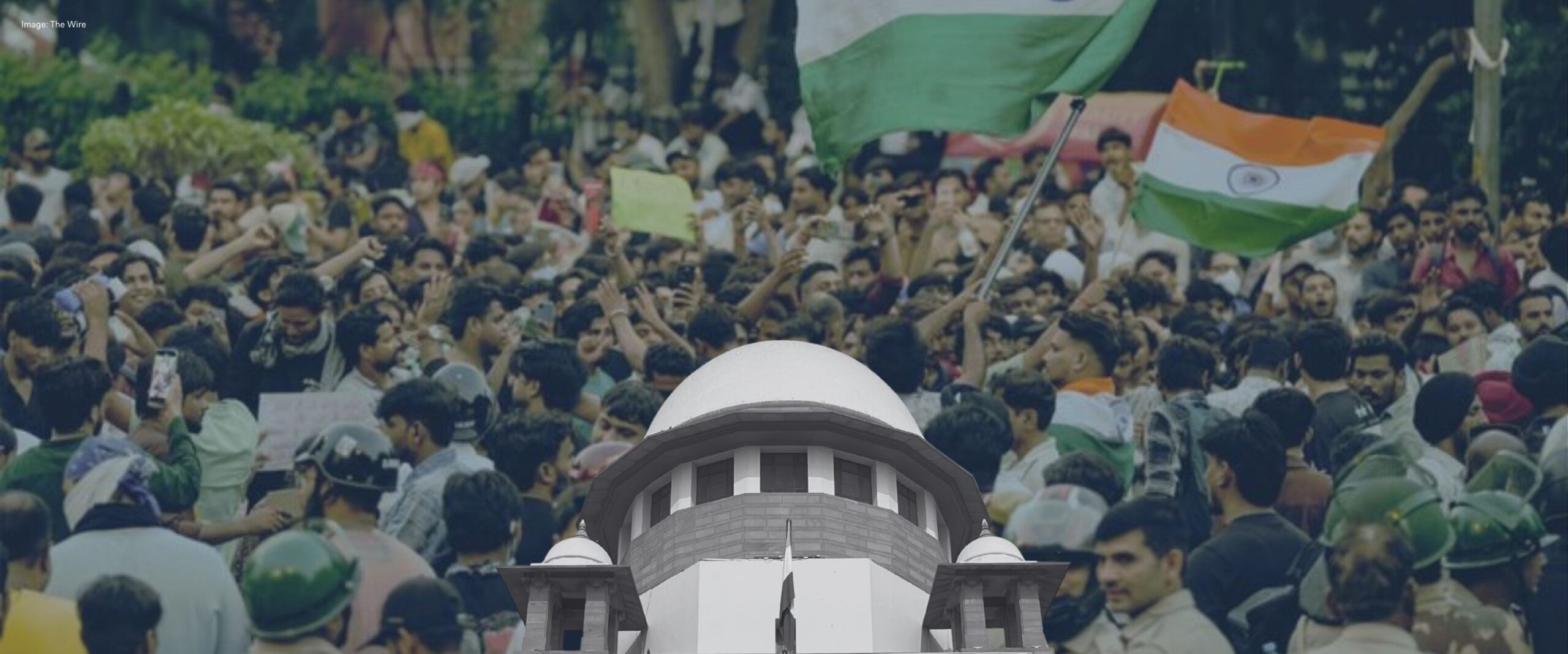
Today, the Supreme Court indicated that it may use Article 142 to quash FIRs against students who participated in the student protests at Jantar Mantar on 20 July. The Bench of Chief Justice Surya Kant and Justices Joymalya Bagchi and V. Mohana clarified that cases involving persons accused of grave offences will be kept open. The Bench then decided to constitute a high-powered committee to examine allegations of police excess, sexual violence and other incidents arising from the protests.
Court: “Undesirable elements” not a category of criminals
Advocate Vrinda Grover renewed the petitioners’ request to quash cases registered against students and young protestors, pointing out that the states of Bihar and Delhi had placed details of the FIRs on record. Solicitor General Tushar Mehta had “no objection” to the demand and stated that there was only difficulty concerning persons who had “serious criminal antecedents” and had infiltrated the protests.
CJI Surya Kant stated: “In those FIRs where only students are involved, Ms Grover is right. We can invoke Article 142 and quash those FIRs”. Mehta said the category of persons whose cases would continue involved grave offences such as murder, rape, kidnapping and POCSO offences. This did not include petty offences. CJI Surya Kant said those cases could be considered separately.
Mehta referred to the Union’s affidavit and proposed that the SIT constituted by the Commissioner can look into the involvement of 2873 persons who had serious criminal backgrounds. There would be no investigation against other protesters, he said. Justice Bagchi asked for the FIR numbers in which investigations were proposed to continue. Mehta said Bihar had supplied the numbers, but Delhi and other states had not.
Several FIRs, he explained, had been registered against unnamed protesters, making it difficult to identify those whose cases should continue. The CJI was unconvinced. “You must have done at least that much homework to identify the FIRs in which you want the matters to continue,” he said. “Unless you give us a list, how are we going to pass an order? At the moment, this is all theoretical.”
Justice Bagchi added that “undesirable elements” could not remain a generic category. “You have to identify those persons.”
CJI: Students have legitimate expectations from the system
Dr Rizwan Ahmed argued that the leniency by the Court could be portrayed as weakness. He urged the Court not to withdraw the cases. He submitted that the students had not shown remorse and submitted that they could file affidavits expressing regret. He argued that the 20 July protest was unlawful. Justice Bagchi rejected the suggestion that the students should be directed to express remorse.
The CJI said criminality could not be determined simply by the fact that the students had participated in an unlawful act. “Criminality has to be seen with the object and purpose for which students gathered,” he said. The Court also had to keep in mind their rights under Article 19. “So long as there is no intention to violate the law and raise your voice peacefully,” the CJI added, such cases were “completely distinguishable” from those involving hardened criminals who entered a peaceful gathering and indulged in violence. The Court’s concern, he added, was the consequences for the students. “It’s a question of the life and future of innocent students. Even if there is outcry, they have legitimate expectations from the system.”
High-powered committee to examine police action
The Court formally signalled moving towards constituting the high-powered committee it had proposed at the earlier hearing. The Court informed that it had obtained the consent of a former Director General of the CBI and a former DGP from a State unconnected with the protests. The CJI said both were outstanding officers and that the Court was considering whether to include one or both. The parties were invited to give suggestions on the committee’s composition, mandate and scope.
Senior Advocate N. Hariharan suggested appointing nodal officers representing the protesters and the prosecution so that complaints could be dealt with through a single channel. Mehta agreed, calling it “the most important part of today’s hearing”. The Court said parties could place issues before it or approach the committee directly. It would provide the committee with the necessary infrastructure and allow it to hear all sides. The CJI said the committee could submit reports as issues arose rather than waiting for one final report.
Petitioners: Women protesters face sexual harassment, online abuse
The petitioners raised allegations of sexual assault, molestation and online harassment of women and other vulnerable protesters. Counsel said women who had reported threats of rape and sexually offensive messages were having their social-media accounts disabled—while those allegedly responsible remained free. The petitioners alleged that the authorities had violated the Court’s 28 July direction against “doxxing” protesters and requiring preservation of CCTV and other material. They sought directions to states to report the FIRs and complaints concerning offences against women, children and sexual minorities. A request was also made for the Supreme Court Registrar to receive complaints so that grievances now being taken to different forums could be dealt with in one place.
The CJI said the allegations could not be treated lightly. “Whosoever is responsible, there can be no excuse and no justification,” he said. “Whosoever is the victim, we are with them. How can we allow these kinds of things to happen in a civilized society?”
Senior Advocate Shadan Farasat sought disciplinary action against police officers whose alleged assault of women protesters had been captured on video. He argued that the State should not wait for the committee’s findings where the conduct was already visible. Senior Advocate Gopal Sankaranarayanan supplemented the request, pointing to the Delhi Police affidavit filed the previous night. He said the affidavit acknowledged that police personnel had been in plain clothes and had used force, but was silent on name tags and whether administrative action had been taken against individual officers. Mehta cautioned against putting “the cart before the horse”. If the committee found an officer guilty of dereliction of duty or misconduct, the government would take appropriate action, he said. There should be no “ad hoc inquiry or premature opinion” while the committee was being constituted.
The CJI agreed that the Court did not want to express a premature or final opinion on individual incidents. At the same time, he said, the committee could take up matters requiring immediate attention.
Facial recognition: Fact first, Constitution later
Senior Advocate Dr. Menaka Guruswamy raised a separate challenge to the use of facial recognition technology during the protests. She argued that the collection and processing of facial images raised constitutional questions under Article 21 and the right to privacy, particularly since private companies were allegedly involved in processing the material. Justice Bagchi said the issue had to be examined “from the lens of proportionality and not privacy”.
Mehta said there was a misconception about the technology. According to him, faces captured during the protests were checked against records maintained by the National Crime Records Bureau concerning persons with serious criminal antecedents. A possible match did not automatically result in action and was followed by field verification. Guruswamy disputed this account, arguing that the collection of images itself raised constitutional concerns. Hariharan similarly questioned the legal basis for both collecting and processing facial recognition data. CJI Surya Kant said that the committee was essentially a fact-finding body. The larger constitutional questions concerning facial recognition would ultimately have to be decided by the Court.
On Grover’s plea for interim compensation for victims of pellet-gun injuries, including one person still hospitalised with a serious eye injury and another artist who had suffered an injury to his right hand and remained unable to work, the Court said it would consider the suggestions received from the parties before issuing its order on the committee.
Related articles
Analysis
SC hears challenge on use of metallic pellet guns on student protesters
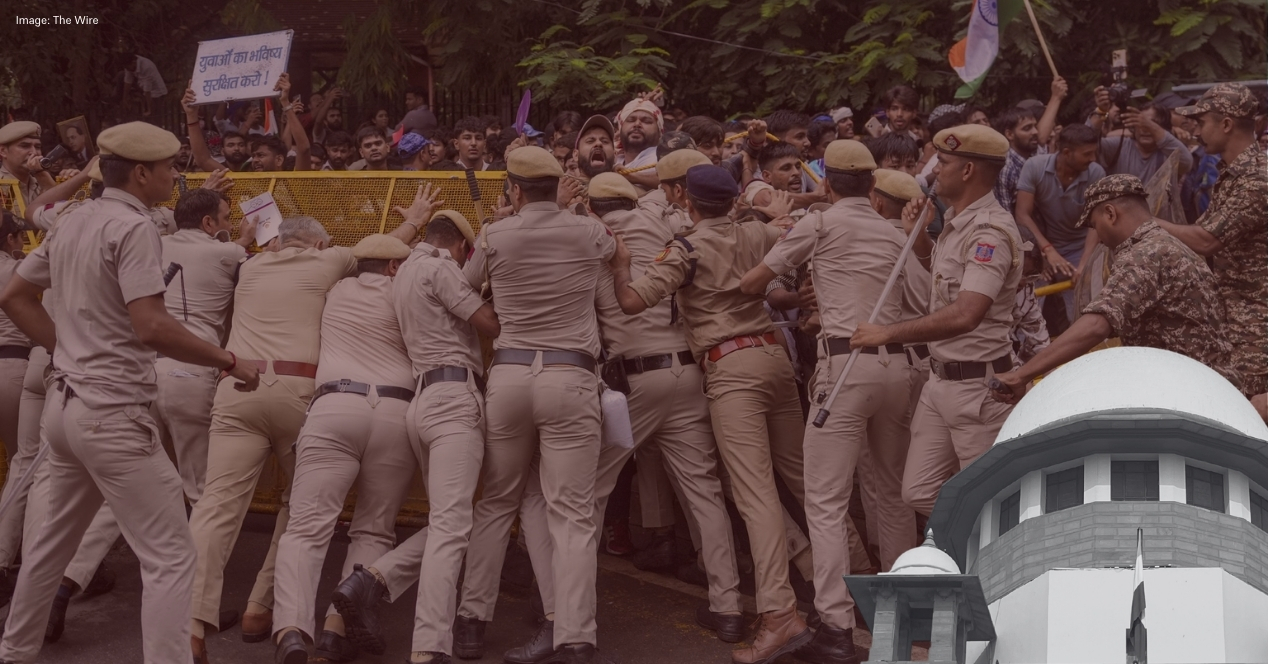
The Court asked petitioners to amend their plea for guidelines on metallic pellet guns and directed treatment for injured students.
Analysis
“Agitation cannot justify police excess”: SC on student protest crackdown
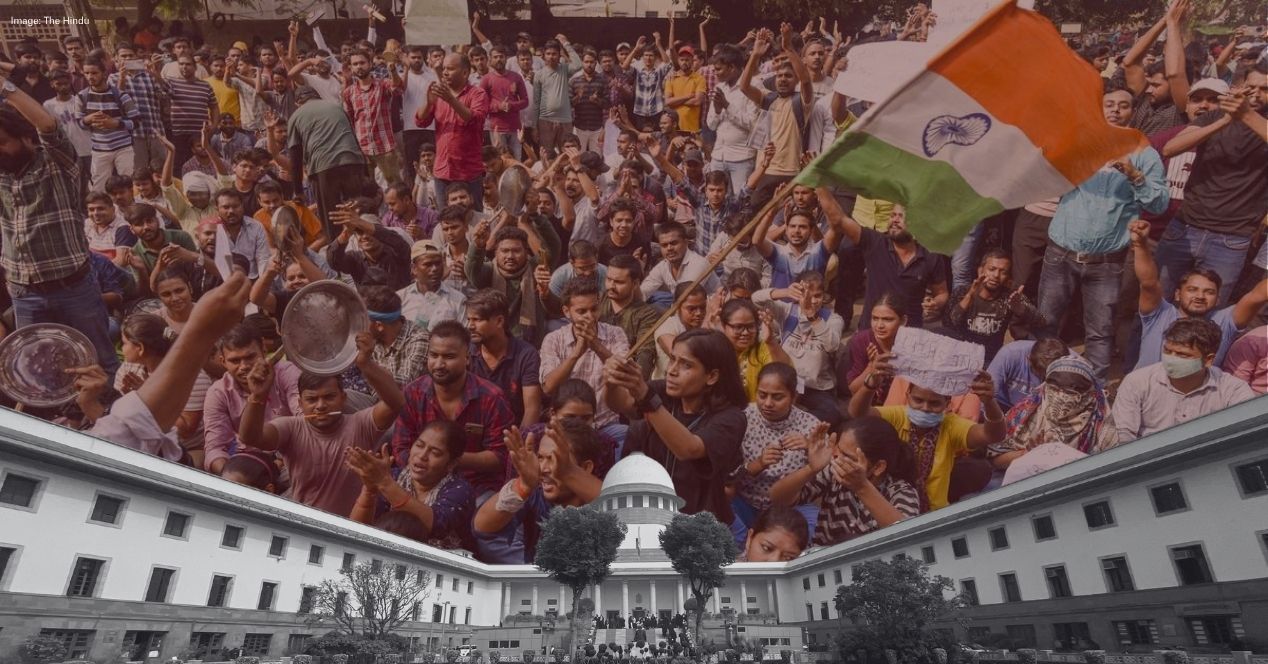
The Court said allegations of police excess must be independently examined and suggested a uniform protocol for handling public protests.
Analysis
SC says allegations of police excess warrant independent probe
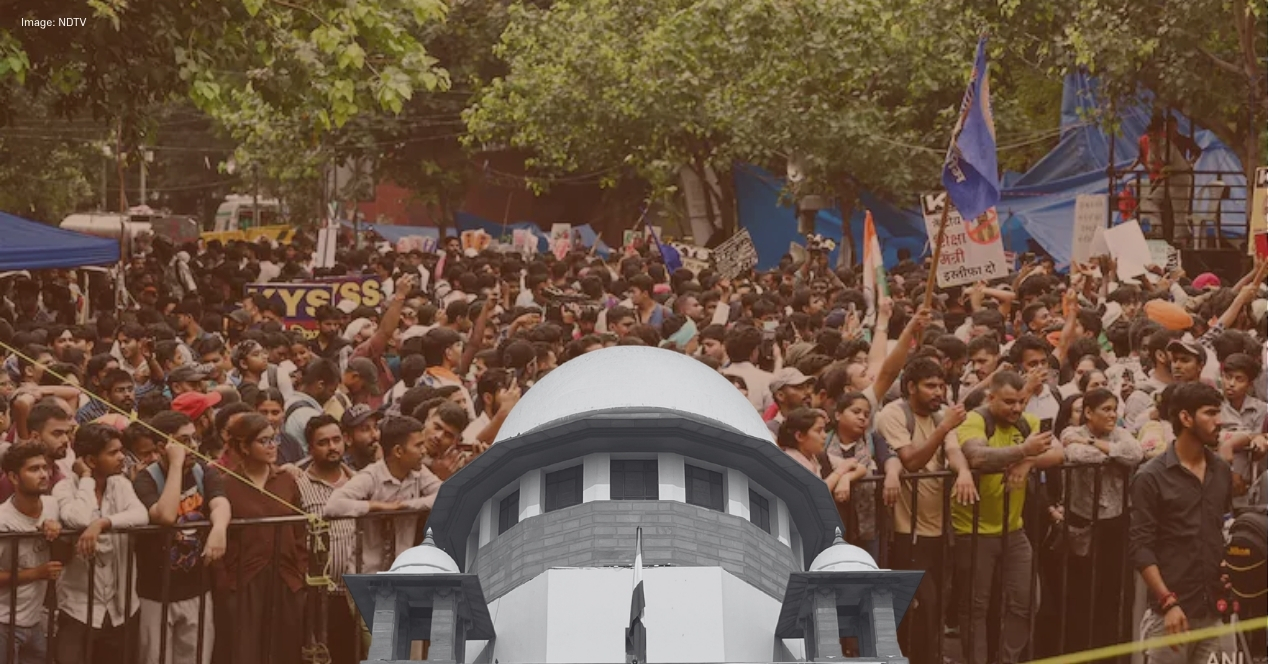
The Court directed preservation of CCTV footage and protesters’ data, and the release of detained minors.