


Analysis
Who can pay for a clean chit?
SC faces the heat over ₹9,800 crore settlement with the Sandesara brothers
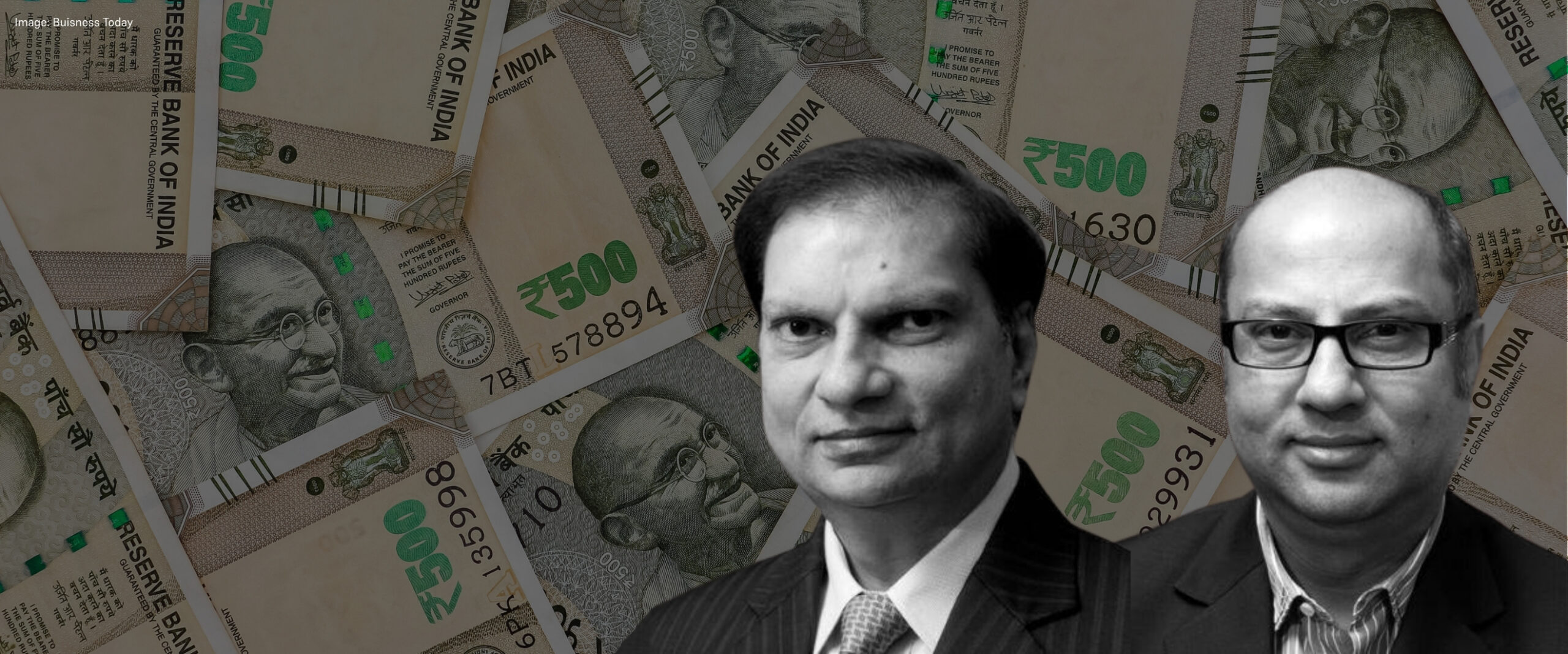
On 13 April, the Supreme Court compounded the last criminal complaint pending against promoters of Sterling Biotech, a Vadodara-based pharmaceutical group founded by Nitin and Chetan Sandesara. A Bench of Justices J.K. Maheshwari and A.S. Chandurkar recorded the tender of a demand draft for ₹45.7 lakh under Section 24A of the Securities and Exchange Board of India (SEBI) Act, 1992. On that footing, it directed that SEBI’s criminal complaint shall stand compounded. Recovery proceedings shall also stand closed.
The order is the final legal act in the Sandesara sequence that has held the criminal law apparatus for over a decade. It finishes the work of compounding within the statutory scheme, but what it does not finish, is the controversy. Conflicting views on precedent, principles and arithmetic calculation remain unresolved.
What happened in Court
Between 2008 and 2016 Sterling Biotech borrowed over ₹8,100 crore from a consortium led by Andhra Bank. In 2017, the Central Bureau of Investigation (CBI) registered its first information report (FIR), alleging fraud to the tune of ₹5,383 crore. The Enforcement Directorate attached ₹9,700 crore in Indian and overseas assets, and filed chargesheets against seven individuals and 184 companies. The Sandesara brothers fled India on Albanian passports that year and were declared fugitive economic offenders in September 2020. Proceedings opened across multiple forums, registered under the Prevention of Corruption Act (PC Act), the Prevention of Money Laundering Act (PMLA) and the Fugitive Economic Offenders Act (FEOA).
In early 2020, the Sandesara brothers and their chartered accountant Hemant S. Hathi moved the Supreme Court in two parallel writ petitions. Their writ sought a single quietus of every criminal and regulatory proceeding. Senior advocate Mukul Rohatgi appeared for the petitioners. Through repeated hearings, the Court pressed the Union for a settlement figure. On 18 November 2025, Solicitor General Tushar Mehta, appearing for SEBI, placed a sealed-cover proposal for ₹5,100 crore. A day later, a Bench of Justices Maheshwari and Vijay Bishnoi invoked Article 142 to quash every pending proceeding against the promoters, including cases under the PC Act, PMLA, FEOA, the Black Money Act, the Companies Act and the income tax statutes. The deposit was completed on 6 December 2025. The Bench clarified that its directions stood issued in the “peculiar facts” of the case and were not to be treated as precedent.
Critique from the media
The financial press read the order with unease. A Business Standard editorial called the settlement a bargain and raised four objections. It argued that the order “effectively decriminalises” the offence by privileging pragmatism over probity. Noting that the “consensus” figure was placed in a sealed cover without public disclosure, it observed that the calculation overlooked accumulated interest, making the recovery a fraction of the true dues. It warned that absconding defaulters such as Vijay Mallya, Nirav Modi, Mehul Choksi and Jatin Mehta could now seek parallel bargains. The Hindu Business Line described the ruling as “unprecedented” and raised the same concern. A column in Open magazine asked directly: if the Sandesaras can get relief, why not Mallya? Further, an IIM-Ahmedabad empirical study of 1,579 cases found that the practice of insisting on non-precedential character is highly irregular.
Do the numbers add up?
The official account puts aggregate recovery at approximately ₹9,800 crore against the FIR principal of ₹5,383 crore, nearly double the alleged loss. Moneylife, which has tracked the Sterling group since 2019, reads the arithmetic differently. Its 2020 reporting showed the bankers’ accommodation of a fugitive borrower through the pandemic. Its 2020 aggregation across domestic and foreign entities showed the group owing over ₹15,600 crore. The gap has since widened. The lender banks themselves told the Supreme Court in March that their total outstanding dues stood at ₹19,283.77 crore. The National Company Law Appellate Tribunal (NCLAT) had sanctioned an earlier one-time settlement (OTS) of ₹3,100 crore. By March 2020, only ₹181 crore of that amount had been met. The celebrated recovery ceiling obscures the floor from which it arose.
A doctrinal problem
Eight days before the Sandesara disposal, on 11 November 2025, a different Bench was at work. In a non-reportable ruling, Justices Vikram Nath and Sandeep Mehta decided CBI v Sarvodaya Highways (2025), and restored criminal proceedings that the Punjab and Haryana High Court had quashed on the strength of an OTS. The OTS was ₹41 crore against a liability of approximately ₹52 crore. Following Gian Singh v State of Punjab (2012) and State of Maharashtra Through CBI v Vikram Anantrai Doshi (2014), the Bench held that economic offences are wrongs against society. Such offences, involving public exchequer loss and PC Act charges, cannot be extinguished by private composition with a bank. The Sandesara brothers were involved in fraud allegations of an altogether larger magnitude, across group entities. It was closed on precisely that principle’s inverse. A non-reportable ruling, even so marked, binds the parties and carries persuasive weight. The contradiction has received no explanation from the court.
Lines of inquiry that never reached trial
The PC Act, PMLA and FEOA proceedings had questioned how loans were sanctioned and how funds were layered through offshore entities. Queries were also raised about bribe flows to officials and politicians, as indicated by the “Sandesara Diaries”, produced in court in 2017 by advocate Prashant Bhushan. SEBI alone had tried to keep its complaint alive. The regulator was granted a limited extension through the spring. At a mid-March sitting, Justice Maheshwari asked SEBI why it was “coming in the way” when comprehensive closure had already been achieved. The 13 April order is the coda to that exchange. In Prakash Gupta v SEBI (2021), a Bench of Justices D.Y. Chandrachud and M.R. Shah held that SEBI’s consent was not a pre-requisite for compounding under Section 24A. The regulator’s view, the court added, must be sought and accorded high deference. The ritual was observed. Whether its spirit survived the top court’s pressure for total closure is a separate question.
A clean slate
On 4 April, a senior civil judge at Tis Hazari, New Delhi, passed an ex parte interim injunction. The injunction was issued on a defamation suit filed by Manoj Kesarichand Sandesara, represented by advocate Hemant Shah. Shah had also assisted Rohatgi in the Sandesara proceedings. The order directed Google and Meta to de-index and de-list all content linking the Sandesara family to the Sterling Biotech fraud within 36 hours. The reasoning rested on the Supreme Court’s 19 November closure and invoked a “right to be forgotten”. A John Doe clause, borrowed from anti-piracy litigation, extended the injunction to unnamed media houses beyond those identified in the plaint.
Moneywise Media LLP, which runs Moneylife, had reported on the group for years. It was not arraigned as a defendant. Three of its articles and a YouTube video were nevertheless covered. Sucheta Dalal, Moneylife’s managing editor, has moved Tis Hazari in appeal. Her plea contends the injunction fails the three-fold test for pre-trial restraints laid down in Bloomberg TV v Zee Entertainment (2024). District Judge Vinod Kumar Meena issued notice on 13 April. The matter is listed for 29 April.
“Two Indias of insolvency”
Seen together, these strands map what Dalal, in a December analysis, called two Indias of insolvency. In one, small borrowers face the full rigour of recovery statutes. In the other, large defaulters secure judicially mediated pardons. The asymmetry with Sarvodaya Highways remains unexplained. The arithmetic the financial press questioned remains unresolved. The precedent effect has already materialised: Anil Ambani moved the Supreme Court in March, seeking debt resolution “like the Sandesara case”.
This year marks a decade since the Insolvency and Bankruptcy Code was enacted on the premise that the law would treat every default alike. The 13 April order is its progress report.
Related articles

Analysis
Steely resolve
The review Bench’s reinstatement of JSW’s Rs 19,700 crore acquisition of Bhushan Steel under the IBC brings cheer to the corporate world
Analysis
Tiger Global: SC says ‘tax sovereignty comes first’ but verdict raises questions
The ruling in favour of Revenue leaves open several issues around indirect transfers, GAAR protections, and Tax Residency Certificates
Analysis
Digital scams: The Supreme Court must direct banks to improve flagging mechanisms
A Bench has proposed to further empower agencies to probe cyber crimes. But it must also expand its view to plug holes in the banking system
Analysis
PMLA and the Supreme Court: A Timeline from Vijay Madanlal
SCO tracks how the Supreme Court may have brought incremental relaxations to the Prevention of Money Laundering Act since 2022