


Analysis
Why the Supreme Court wants new rules for sexual offence trials
By reversing a High Court's dilution of charges, the Court turned the spotlight on how judges “read” sexual violence
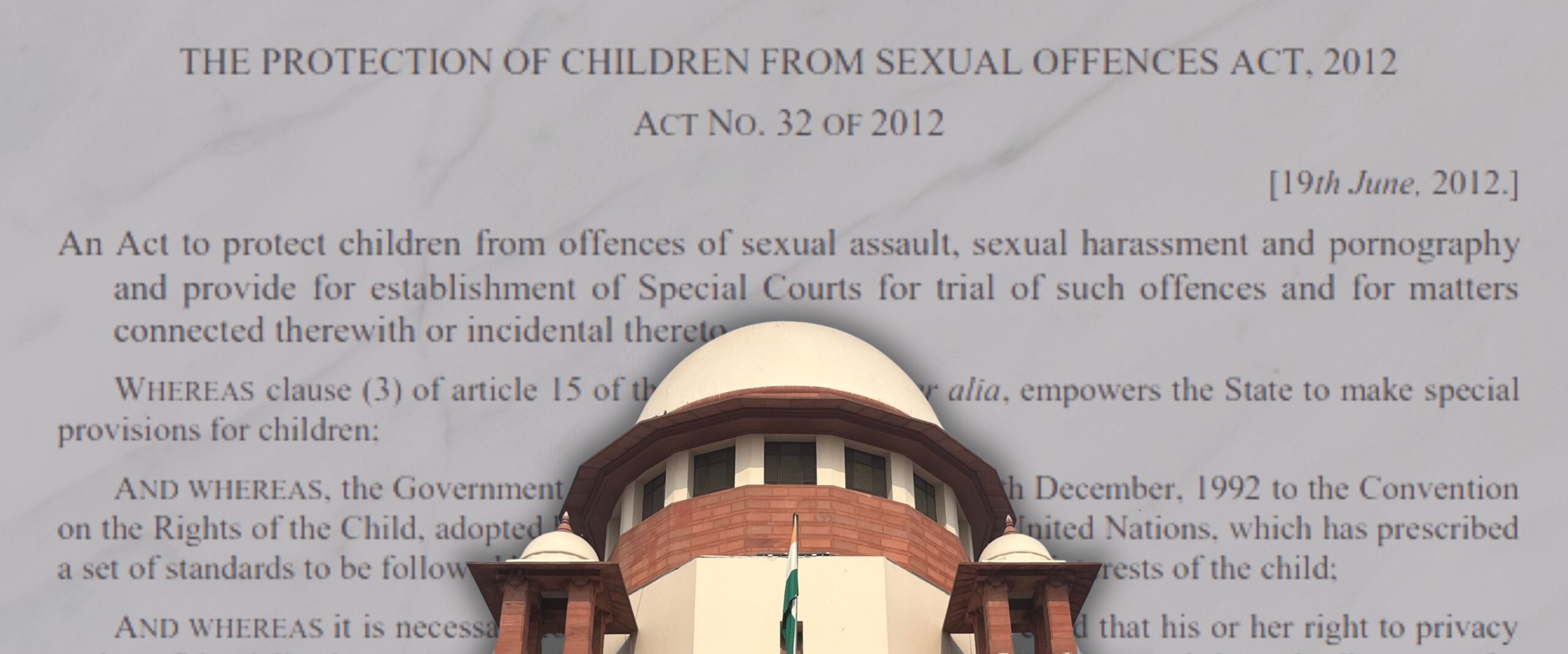
On 10 February 2026, the Supreme Court set aside an Allahabad High Court decision that diluted summons in a Protection of Children from Sexual Offences Act, 2012 (POCSO) case. The Bench of Chief Justice Surya Kant and Justices Joymalya Bagchi and N.V. Anjaria restored the trial court’s original summons order and held that the allegations, on a prima facie view, disclose an “attempt” to commit rape rather than mere “preparation”.
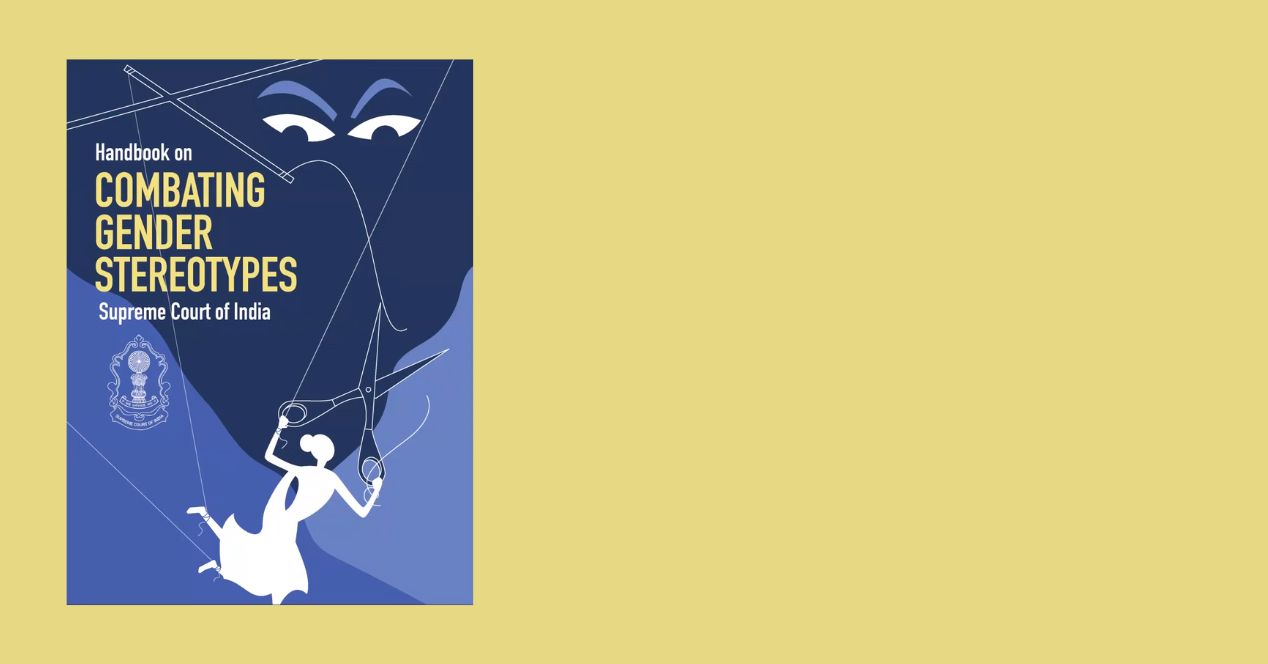
Significantly, the Supreme Court went a step further and launched a process to draft guidelines for more sensitive and consistent adjudication in sexual-offence trials. While issuing these directions, CJI Surya Kant set aside the Supreme Court’s 2023 Handbook on Combating Gender Stereotypes. His remark that it was too “Harvard-oriented” invited a strong rebuttal from Senior Advocate Indira Jaising.
This is the sort of decision that can easily be reduced to a lurid headline about clothing and intent. It has also been interpreted as one CJI discarding the reform introduced by their predecessor.
However, the real story in this case is institutional: the Court has signalled that the problem is not only the outcome in one case, but the methods that result in such outcomes—language, assumptions, and the ease with which a legal threshold like “attempt” is collapsed into a judge’s instinctive moral arithmetic.
Attempt versus preparation
On 17 March 2025, the Allahabad High Court had downgraded the trial court’s summons from rape under Section 376 of the Indian Penal Code to “assault with the intent to disrobe” under Section 354B. Corresponding POCSO provisions were also lowered from Section 18 which prescribes not less than half of life imprisonment, to Section 10 which prescribes 5-7 years imprisonment.
Acting on a 20 March 2025 letter from “We the Women of India” (founded by Senior Advocate Shobha Gupta), the Supreme Court took up the matter on a suo moto basis. Intervening in stages, it first stayed specific paragraphs of the High Court judgement on 26 March, and later, on 8 December 2025, stayed the entire judgment. The Court directed that the trial proceed as if summons were under Section 376 IPC read with Section 18 of POCSO. By doing so, it restored the “attempt” framing and held that the allegations could not be pushed back into the safer, lower-stakes category of “preparation”.
This direction matters because it determines what evidence can be tested for and what defences can be built.
Indian criminal law has long wrestled with the boundary between “preparation” and “attempt”. The distinction is often taught as doctrinal—attempt begins where preparation ends—but it becomes profoundly practical in sexual offence prosecutions when courts are asked to infer intent from a rapid sequence of acts, often interrupted by chance, resistance, or intervention.
The Supreme Court’s point in this case is not merely that the High Court reached an unpalatable outcome. It is that the High Court misapplication of established principles was “patently erroneous”. The message is also about method: when a court revises summons or charges at a threshold stage, it is not meant to conduct a mini-trial or impose its own narrative of plausibility. In sexual offence cases, that tendency is especially dangerous because it often imports external stereotypes: what a “real” attempt looks like, what resistance must look like, what level of force must be present, what kinds of bodily acts are “serious” enough. The Supreme Court’s intervention is, in effect, a warning against exactly that slippage.
The bigger move: guidelines as institutional self-correction
The Judgement acknowledges that the problem is not episodic. During the hearing, counsel raised the need for guidelines to inculcate sensitivity and compassion in judicial approaches and court processes in sexual offence matters—especially where victims and witnesses are vulnerable.
In response, the Court outsourced the task to the training ecosystem. It requested the National Judicial Academy, Bhopal to constitute an expert committee chaired by its Director, Justice Aniruddha Bose (former Supreme Court judge) with four other domain experts. The committee has been asked to prepare a comprehensive report and draft guidelines, with attention to linguistic diversity and accessibility for laypersons.
Committees can be a delaying device, but they can also be a way to hardwire implementation. A guideline drafted through the NJA has the potential to enter judicial education, state judicial academies, training modules, and the mundane but powerful administrative circulars that shape how evidence is recorded, how victims are spoken to, how courtroom conduct is policed, how adjournments are handled, and how cross-examination is controlled.
The Court also set a deadline of two weeks for constitution of the committee and submissions by parties, and a “preferably” three-month window for the report. The report is to be placed before the CJI on the administrative side for appropriate instructions, reflecting the Court’s recognition that courtroom culture often changes through administrative levers as much as through judicial precedent.
Three future-facing questions
First, what will the guidelines actually cover—only language and “sensitivity”, or also hard procedural standards: managing cross-examination, limiting humiliating questions, setting norms for in-camera proceedings, ensuring support persons, translation, and disability access? The Judgement’s emphasis on accessibility and linguistic diversity hints that the committee is expected to go beyond platitudes.
Second, will the guidelines attempt to standardise thresholds like “attempt”? Many controversial sexual offence orders are not merely about tone; they are about the interpretive frames judges bring to doctrine. A robust guideline could insist on disciplined legal reasoning at threshold stages: what can and cannot be inferred, and what belongs to trial.
Third, will the committee’s recommendations become enforceable norms—referenced in appellate scrutiny, cited in transfers of cases, or used to discipline courtroom misconduct? By routing the report through the administrative side, the Court has left room for adoption through training and practice directions.
For now, the Judgement’s significance lies in its twin message. On the merits, it restores a serious summons posture, reaffirming that “attempt” cannot be diluted away by intuition. Institutionally, it says: the justice system needs a better script for how it hears, speaks, and reasons in sexual offence cases, because a bad judgement is not only unfair—it is also contagious.
Related articles
Analysis
Supreme Court handbook on gender stereotypes: Progressive, but will the law catch up?
A new publication from the apex court acknowledges that ‘stereotypical language’ reinforces ideas contrary to constitutional ethos
Analysis
2025 Supreme Court Half-Yearly Review: Child Rights
The Court maintained a steady beat in cases involving child rights and delivered key decisions concerning POCSO victims
Analysis
“Not a precedent”: Supreme Court holds back from sentencing POCSO convict
In a rare judgement, the Supreme Court held that the imprisoning of the POCSO convict would worsen victim’s life
Analysis
Can the tragedy at Unnao shape POCSO implementation?
DESK BRIEF: On July 31st, Chief Justice Gogoi tagged the Unnao rape to the POCSO case.