


Vikram Nath
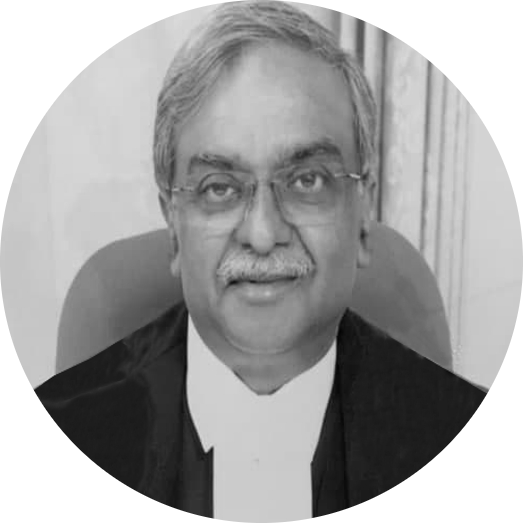
Vikram Nath
Sitting Judge of the Supreme Court of India
Assumed Office31st Aug, 2021
Retires On23rd Sep, 2027
Previously
Chief Justice of the Gujarat High CourtSeptember 10th 2019-August 30th 2021
Permanent Judge of the Allahabad High CourtFebruary 27th 2006-September 9th 2019
Additional Judge of the Allahabad High CourtSeptember 24th 2004-February 26th 2006
Enrollment1987
Profile
Education and Career as an Advocate
Justice Vikram Nath graduated from the University of Lucknow and enrolled as an Advocate with the Bar Council of Uttar Pradesh in 1987.
Career as a Judge
Justice Nath practised as an Advocate for 17 years before being appointed an Additional Judge of the Allahabad High Court in 2004. In February 2006, he became a Permanent Judge of the Allahabad High Court.
In April 2019, Justice Nath was recommended for appointment as Chief Justice of the Andhra Pradesh High Court. However, the Union Government asked for the recommendation to be reconsidered. He was subsequently appointed Chief Justice of the Gujarat High Court in September 2019. The post had been vacant since November 2018 before Justice Nath’s appointment.
On 31 August, 2021 he was elevated to the Supreme Court. He will become the Chief Justice of India on 9 February 2027 and will serve until his retirement in September 2027.
Figure 1 shows that Justice Nath has authored 295 Judgements and has been a part of 562 Benches during his tenure so far.
According to Figure 2, Justice Nath has primarily authored judgements in Criminal matters (103), followed by Civil matters (55), Property matters (47), Family Matters (30) and Service matters (29).
Notable Judgements
In Barun Chandra Thakur v Master Bholu (2022), a Bench of Justices Dinesh Maheshwari and Nath held that ‘mental capacity and the ability to understand consequences of acts’ are not the same. They reasoned that a child may be aware of the consequences of their actions but lacks the emotional competence to control them. The Court illustrated this distinction through the example of a child with average intelligence who understands the risks of reckless driving but may still engage in it due to low emotional competence and a desire for thrill-seeking.
In CBI v R.R. Kishore (2023), Justice Nath, writing for the five-judge Bench, authored a judgement holding that the striking down Section 6A of the Delhi Special Police Establishment Act, 1946, which granted immunity to senior bureaucrats for corruption offences, applies retrospectively from the date of its insertion.
In Vasanta Sampat Dupare v Union of India (2025), a Bench of Justices Nath, Sanjay Karol and Sandeep Mehta upheld the right of an accused to have their sentence re-examined under Article 32. The Court set aside the death sentence of the appellant, who was convicted of sexually assaulting and murdering a four-year old, noting that safeguards against conviction would be available under Article 32 in the case of clear, specific and serious breach of procedure.
In Mahesh Kumar Agarwal v Union of India (2025), the Division Bench of Justices Nath and A.G. Masih held that the bar on issuance or renewal of passports, if criminal proceedings are pending against the appellant under Section 6(2)(f) of The Passport Act, 1967, is not absolute. The Bench held that authorities cannot deny an issuance or renewal merely because criminal proceedings or appeals are pending, especially where the Court has permitted such renewal.
In Rehana Khan v Rizwan Siddhiqui (2026), a Bench of Justices Nath, Sandeep Mehta and Vijay Bishnoi held that an advocate cannot use information received in confidence against his client, even if the client turns adversarial. Affirming a two year suspension of an advocate’s license to practice for publicly disclosing confidential information received from his client, the Bench held that an advocate’s duty is not conditional upon his client’s good behaviour.
In Sujata Kumari v Rahul Kumar (2026), the Division Bench of Justices Nath and Sandeep Mehta held that the mother’s income does not, by itself, halve the father’s financial liability towards their children’s maintenance.