

Analysis
Broken bargain
The NEET-UG 2026 leak unsettles the premise on which the 2024 refusal was decided
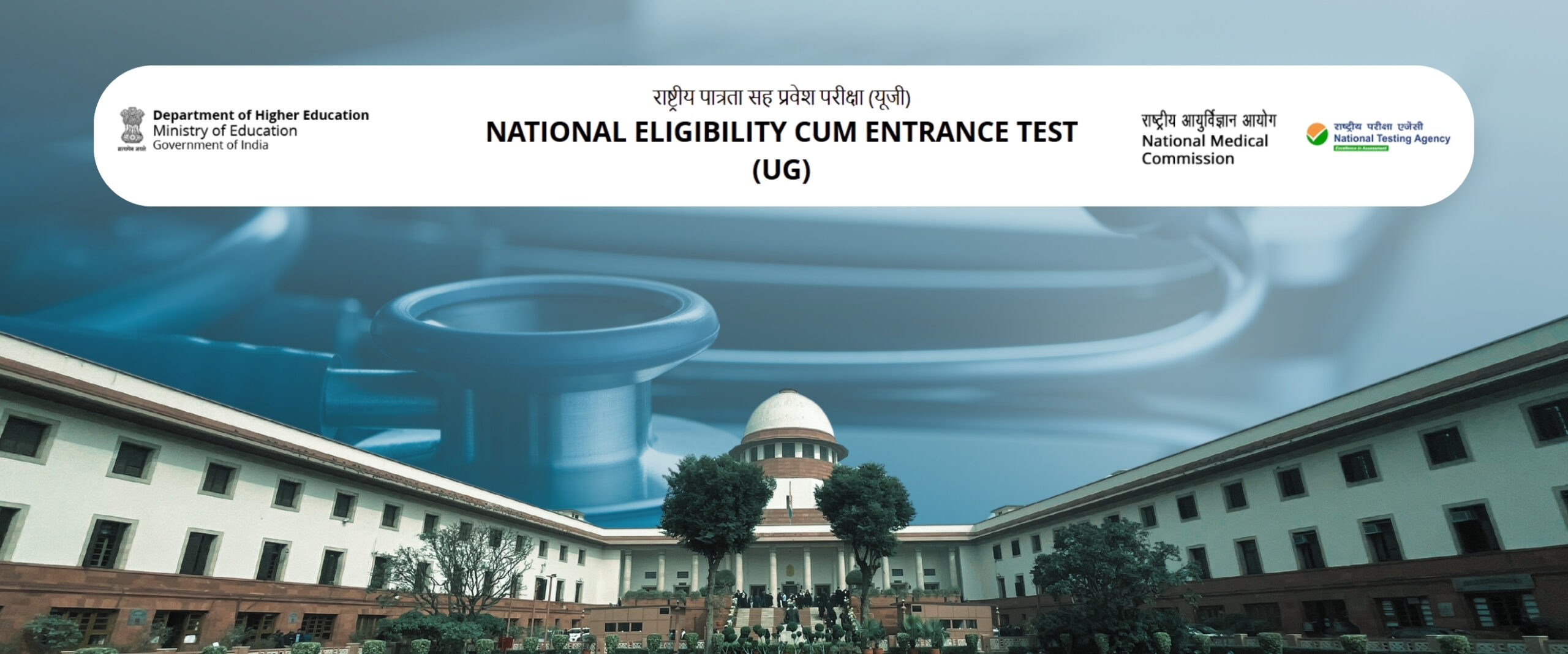
This week’s news cycle felt like a classic case of déjà vu, dominated by the NEET-UG 2026 paper leak. The National Testing Agency (NTA) cancelled the examination after a “guess paper” in Rajasthan turned up over 100 questions that matched the final test. While the CBI began probes and made arrests, the Federation of All India Medical Association (FAIMA) invoked the Supreme Court’s writ jurisdiction. Alleging a “systemic failure,” FAIMA sought a complete overhaul of the NTA, a court-monitored re-examination, and a court-appointed integrity commission. This script feels familiar; the Supreme Court intervened in a similar leak in July 2024.
In Vanshika Yadav v Union of India (2024), a Bench of Chief Justice D.Y. Chandrachud, Justices J.B. Pardiwala and Manoj Misra had refused to cancel the NEET-UG 2024 examination. The Bench reasoned that leaks in Hazaribagh and Patna lacked “systemic” magnitude. With 23 lakh candidates at stake, the Court stated that cancellation would disrupt the medical-education calendar and prejudice marginalised students.
While the refusal appeared absolute in its formal expression, it was effectively conditional in practice. The Union had constituted a high-level committee chaired by Dr K. Radhakrishnan in June 2024. Vanshika Yadav widened the committee’s mandate: it was to ensure that “the process of conducting the NEET (UG) and other examinations falling within the remit of the NTA is duly strengthened”. This direction specifically aimed to ensure the leak was “not repeated in the future.”
It took only 21 months for the leak to repeat. In Vanshika Yadav, the Supreme Court had directed that the matter be listed before an appropriate Bench to verify compliance with its directions. On 7 April 2025, the Bench of Justices P.S. Narasimha and Joymalya Bagchi disposed of the Union’s compliance application. The Order noted that the Ministry had constituted a High-Powered Steering Committee on 14 November 2024 to monitor the implementation of the Radhakrishnan committee’s 101 recommendations. The Court accepted this monitoring body as part of the effort to strengthen the NEET examination. Consequently, FAIMA’s petition raises a sharper doctrinal question than the 2024 disposition contemplated: what happens when both the operative premise of a refusal and its compliance machinery are empirically falsified?
The Court’s 2024 directions were specific. The Steering Committee constituted to monitor the recommendations of the Radhakrishnan committee is now 18 months old. The 2026 leak indicates that the monitoring was ineffective or done against a flawed template.
The Court did not extract a formal undertaking from the Union in 2024; it proceeded instead through directions to a committee and acceptance of the Union’s submissions. There lies the easy retort that the disposition was not conditional in law. Yet the 2024 refusal loses its operative premise. The Union Education Minister, Dharmendra Pradhan, has admitted the failure. The central Radhakrishnan recommendation, the migration from Optical Mark Recognition (OMR) sheets to a Computer-Based Test (CBT) format, was not implemented for 2026. Pradhan, nevertheless, claimed that the recommendations had been implemented “word for word”. He also acknowledged “a breach in the command chain”, a failure the committee’s recommendations on decentralised distribution with audit trails were designed to prevent. The re-examination is scheduled for 21 June in the same OMR format, with the CBT migration deferred to 2027.
As the Court hears FAIMA’s petition, it is likely to consider whether executive promises might substitute for judicial commands.
The appropriate remedy, perhaps, sits between a continuing mandamus and a dismissal. The natural first inquiry, for instance, would be for the Court to examine the Steering Committee’s own record of what it has monitored, reported, and recommended over the last 18 months. One limb of that inquiry will be to ask whether it flagged the non-implementation of the CBT migration before the 2026 examination. Probing the extent of and the reasons for the “breach in the command chain” which Pradhan had acknowledged would be another.
This article was first featured in SCO’s Weekly newsletter. Sign up now!
Related articles
Analysis
Supreme Court confronts student suicide “epidemic”
After the vague mental-health guidelines of July 2025, the SC’s latest directions to educational institutions are more sharply focused
Analysis
Supreme Court issues directions to High-Powered Committee to strengthen NEET exam management
The Court has directed the Committee to submit a status and compliance report by 30 September
Analysis
Paper leak in NEET UG 2024 is an undisputed fact, says Supreme Court; directs NTA to disclose exam details by 10 July
The Bench will decide if a retest of the NEET UG 2024 is essential based on the NTA’s report
Analysis
Supreme Court refuses to cancel 2024 NEET UG exam due to insufficient evidence of “systemic” leak
The Court held that a retest would have “cascading effects” on medical education and prejudice students from marginalised communities