


Court Data
Filling in the blanks | The Collegium story, part 2
A brief history of how and why the Supreme Court Collegium came to be
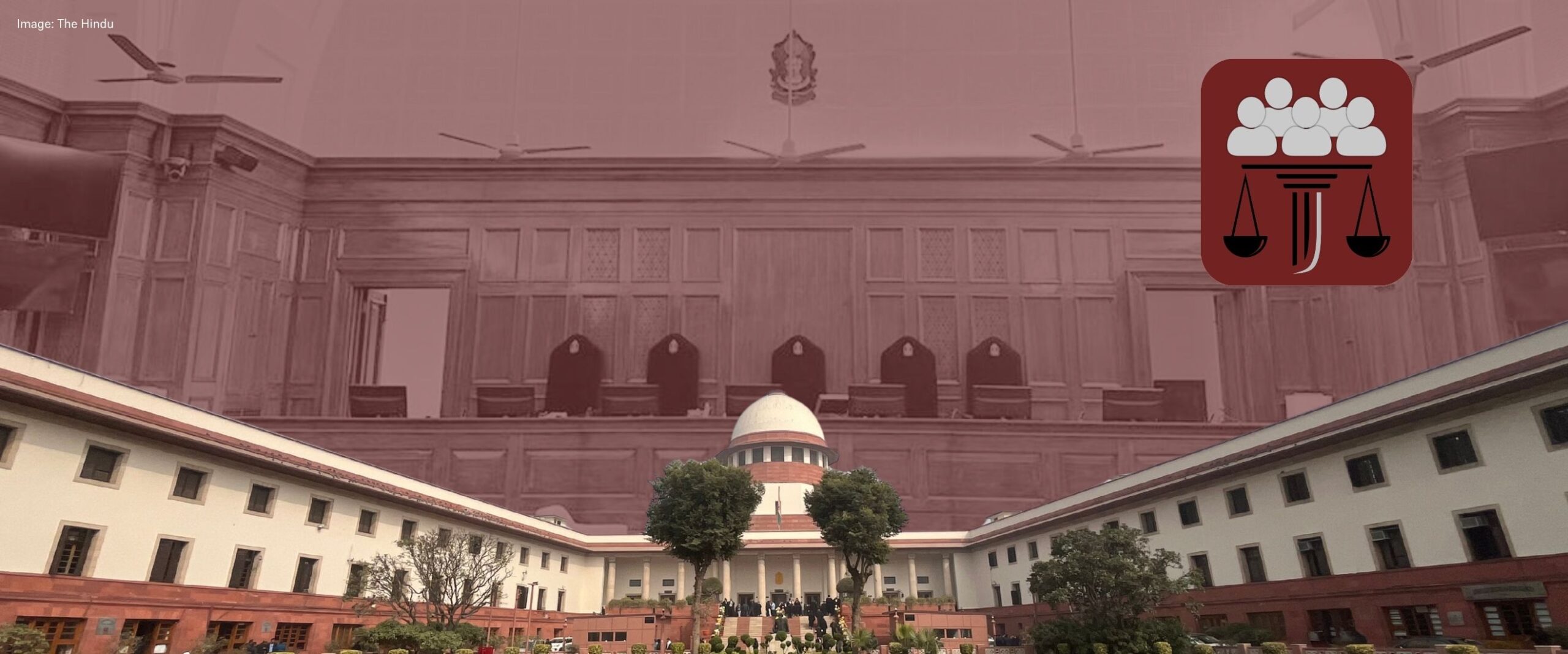
Article 124 of the Constitution of India states that judicial appointments to the Supreme Court are made by the executive in “consultation” with a selection of judges from the higher judiciary, as deemed necessary by the President. This seemingly innocuous formulation became a battleground for judicial independence and was interpreted in diametrically opposite ways by different constitution benches. Ultimately, it also spawned the Collegium.
This battle dates back to the 1970s when Justices A.N. Ray (in 1973) and M.H. Beg (in 1977) were appointed to the post of Chief Justice, superseding senior judges who opposed the ruling regime in one way or another. The judiciary was called upon to lay down a definitive interpretation of Article 124 in what is now known as the First Judges Case (1981). By a 4:3 majority, a seven-judge bench upheld the primacy of the executive’s opinion in appointments to the higher judiciary. Authored by Justice P.N. Bhagwati, the Judgement suggested that consultation could take place with a “collegium” of persons and not the Chief Justice of India alone.
The idea of a collegium gained traction in the decade that followed, and was established as we know it by a nine-judge bench in the Second Judges Case (1993). This time, the Court held that “consultation” is to be interpreted as “concurrence” with the opinion of the CJI and two senior most judges of the Court in order to “secure independence of the judiciary.”
Five years later, another nine-judge bench had to answer a presidential reference to clarify certain unresolved issues. In the Third Judges Case (1998), the Court expanded the collegium for Supreme Court appointments to include four senior most puisne judges, emphasising the need for plurality as an “in-built check” against arbitrariness.
Both the Second and Third judges’ cases expressed unwavering confidence that the Collegium system would ensure judicial independence from executive influence. However, the executive was not ready to give up the fight.
In 2014, Parliament enacted the 99th Constitutional Amendment, replacing the Collegium system with the National Judicial Appointments Commission (NJAC). In the Fourth Judges Case (2015), a five-judge bench struck down the NJAC. By now there were widespread concerns about Collegium, voiced from within the judiciary as well. In his concurring opinion, Justice Kurian Joseph acknowledged that the Collegium system “lacks transparency, accountability and objectivity” while asserting that this “trust deficit” was curable. The system has struggled to ensure concurrence of opinion, not only with the executive but also among Collegium members themselves. Unpopular recommendations are simply waited out—either by other Collegium members who silently drop a name after the retirement of the judge who proposed it, or by the executive who either rejects proposals or indefinitely sits on them without explanation.
The lack of accessible and comprehensive data on the Collegium is a barrier to crucial analysis of these roadblocks. This series is our attempt to begin filling the blanks. The list of 89 members released earlier was built on the seniority list below which features all judges who served in the top court between 6 October 1993 and 31 December 2025.
Click here for the PDF view.
Note: The dataset was developed based on logical reasoning and reverse calculating the strength of the Court. It is prone to human error. Any information to improve the dataset would be appreciated. Write to us at admin@scobserver.in.
Related articles
Court Data
46% of SC judges were members | The Collegium story, part 1
The first publicly available dataset on the Supreme Court Collegium reveals 89 members over 33 years
Analysis
How the Emergency birthed the Collegium system
The Emergency left deep scars on the judiciary—it took until the 1990s for the Supreme Court to acknowledge and respond to those compromises
Analysis
The Collegium’s Spell of Transparency
DESK BRIEF: For 2 brief years, the collegium used to publish reasons for recommending appointments and transfers of judges.
Analysis
A crack in the Collegium’s wall of secrecy
Justice Nagarathna’s reported dissent against a recent recommendation highlights the lack of transparency around Collegium deliberations