


Analysis
SC to hear plea challenging composition of Jantar Mantar protest inquiry committee
Petitioners flagged a “common concern” over the committee as SG Mehta described the application “very mischievous”
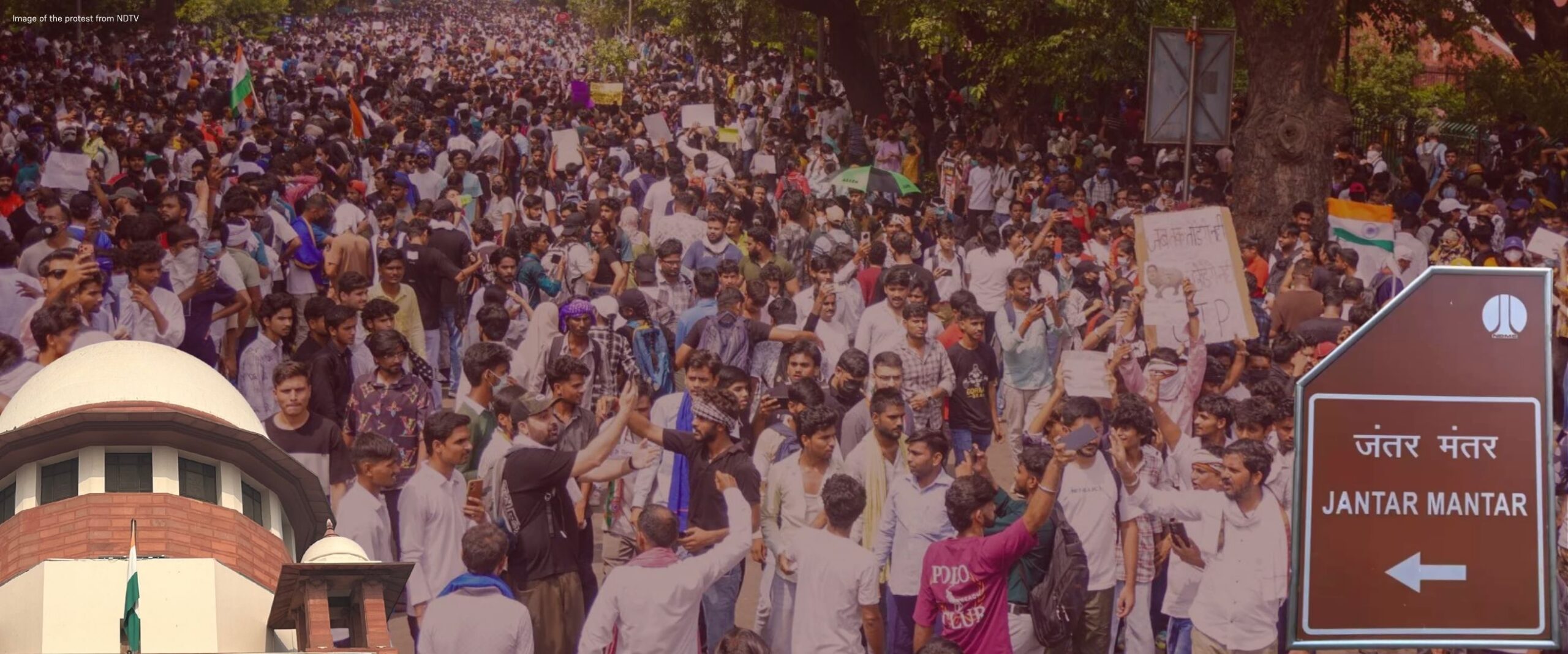
Today, the Supreme Court agreed to list an interim application seeking the reconstitution of the High-Powered Enquiry Committee (HPEC) constituted to inquire into allegations of police excesses during the 20 July student protests at Jantar Mantar. Solicitor General Tushar Mehta opposed the application, calling it “very mischievous”. The Bench of Chief Justice Surya Kant and Justices Joymalya Bagchi and V. Mohana said the application would be listed with the main matter.
Mehta: “This is not a political platform”
Senior Advocate Gopal Sankaranarayanan mentioned the application seeking its listing sometime next week. Mehta opposed the request, objecting to the suggestion of names of judges to head the committee. Mehta stated: “This is not a political platform. Something else is happening”. Sankaranarayanan clarified that he was only seeking listing. If the application was taken up, he would not mention the names suggested in it, he added. CJI Surya Kant said the Court did not appreciate the mentioning of judges’ names.
CJI Surya Kant assured that the Court will hear the concerns of the counsel, reminding that they were to assist the committee: “Whosoever will work will work under our supervision”. He added that the matter had not been disposed of. Advocate Prashant Bhushan then said the application reflected a “common concern” and that petitioners had misgivings about the committee. The CJI reiterated that the Court would consider the matter and said the parties should allow the committee to work.
Why the SC set up the HPEC
The application comes a week after the Court formally constituted the HPEC through its 18 August order. The batch of petitions had raised allegations of excessive and disproportionate use of force by police, paramilitary forces and other security personnel against protesters at Jantar Mantar and other locations. The allegations recorded by the Court included deployment of pellet guns causing grievous and, in some cases, irreversible injuries; violence by police officials in plain clothes, use of electric batons, indiscriminate lathi charges and tear gas, threats to fabricate evidence or plant incriminating material and violence against women and children.
The respondents had contended that “anti-social elements with serious criminal antecedents, masquerading as aggrieved students”, had indulged in violence during the protests, resulting in clashes in which police personnel sustained grievous injuries.
The Court had earlier directed authorities to refrain from coercive measures against protesting students and to release those below 18 years who had been detained or arrested in connection with the protests. The protection was not extended to persons with criminal antecedents accused of “grave and heinous offences”. The Court had directed authorities to preserve protesters’ personal information and digital data and not disclose it in the public domain. The Court subsequently held that the allegations and the contentions of the respondents made out a prima facie case for an independent and impartial investigation and the constitution of an HPEC.
Five-member committee includes former judges, CBI Director and DGP
The HPEC is headed by Justice R. S. Reddy, former judge of the Supreme Court and former Chief Justice of the Gujarat High Court. Its judicial members also include Justice Ravi Shankar Jha, former Chief Justice of the Punjab and Haryana High Court, and Justice Shalinder Kaur, former judge of the Delhi High Court. The other members are Rishi Kumar Shukla, former CBI Director and former DGP of Madhya Pradesh, and Dr L.R. Bishnoi, retired DGP of Meghalaya. The Court said the composition took into account the members’ “individual expertise and experience” and the diversity of the committee.
HPEC to examine police force, surveillance and allegations involving women protesters
The HPEC has been asked to examine the use of excessive force and violence against protesters. It will consider whether police responses during protests and peaceful assemblies were proportionate and appropriately balanced the maintenance of public order with the right to peaceful dissent.
It will also examine the desirability of banning metallic kinetic projectiles because of the “grave and, at times, irreversible bodily harm” caused by their deployment. The committee will consider whether police and security personnel should wear proper uniforms and visible nameplates while effecting arrests or using force during crowd-control operations.
The Court has also tasked the HPEC with examining allegations of monitoring and surveillance of protesters and whether such measures were consistent with their constitutional rights to privacy and free assembly. A separate issue concerns allegations of targeted violence, harassment, molestation and/or any secondary victimisation of female protesters.
The committee will further examine the provision of medical and other support, including compensation, to victims of alleged police abuse. It will consider the use of blanket prohibitory orders under Section 163 of the Bharatiya Nagarik Suraksha Sanhita, 2023 and the invocation of Section 152 of the Bharatiya Nyaya Sanhita, 2023 in a manner that could stifle political dissent and peaceful protest.
The Court has also directed the HPEC to consider the respondents’ grievances, including alleged violence by protesters against police and security personnel, damage to public property and injuries sustained by police personnel and the mental and emotional trauma suffered by their families.
Committee to submit interim reports, starting with women protesters’ complaints
The Court clarified that the HPEC’s inquiry would not be a one-time exercise. It would conduct a “continuous and periodic assessment” and submit interim findings to enable the Court to take appropriate measures and issue directions as warranted. The Court directed the committee to take up allegations of targeted violence, harassment and molestation of female protesters on a priority basis.
The Court has empowered the HPEC to enlist the assistance of forensic, technical and domain experts during the course of its enquiry. It has also granted the parties liberty to place relevant material, documentary evidence and suggestions before the committee, while permitting complaints, representations and other material to be submitted anonymously to protect the identity of complainants and witnesses.
The Court has directed the police authorities, paramilitary forces and other investigating agencies to preserve and furnish the entire record relating to the protests to the HPEC, including CCTV footage, drone footage, body-worn camera recordings, videography, wireless communication records and PCR call logs. It clarified that the constitution of the HPEC would not deter or debar the authorities from taking administrative or disciplinary action against officers found to have acted in contravention of the rules governing their conduct.
Requesting an expeditious inquiry, the Court asked the HPEC to complete its deliberations on the allegations and submit its “First Interim Report” at the earliest. At the same time, the Court made it clear that the broader constitutional questions arising from the protests would remain for its own consideration. Those issues, it said, would be decided separately after hearing the parties, as they required “judicial nuance and circumspection”.
Related articles
Analysis
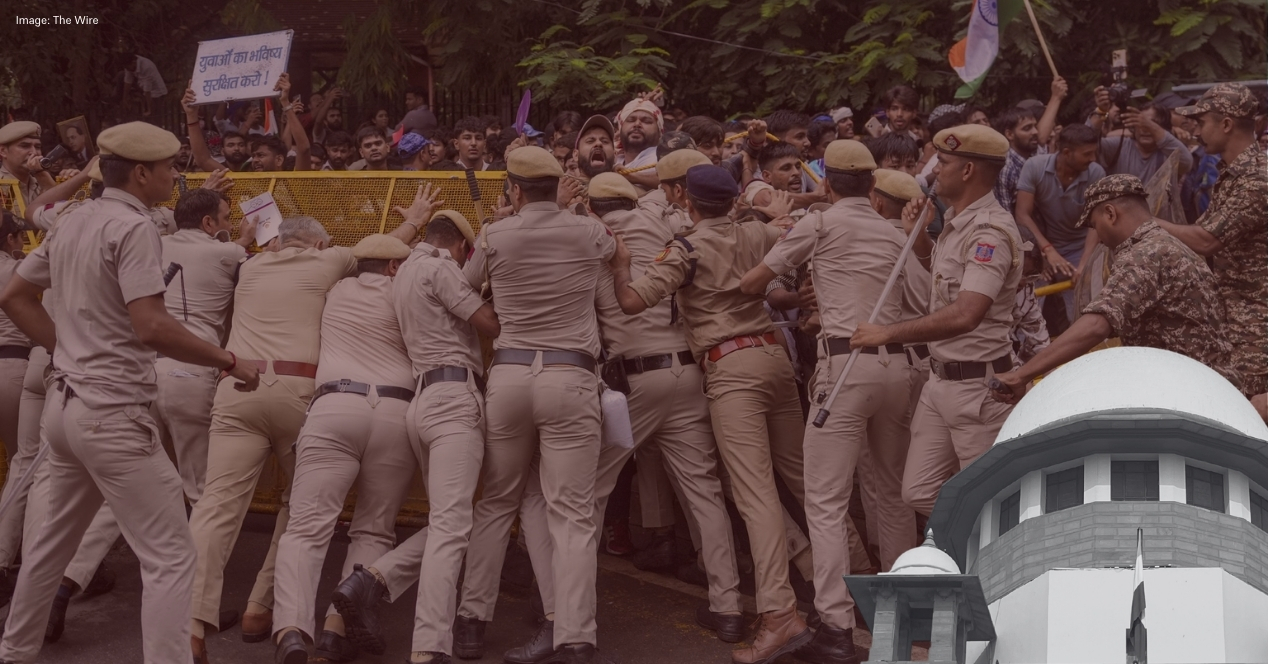
SC hears challenge on use of metallic pellet guns on student protesters
The Court asked petitioners to amend their plea for guidelines on metallic pellet guns and directed treatment for injured students.
Analysis
SC says Jantar Mantar protest FIRs cannot define students’ futures
The Court said Article 142 can clear FIRs involving students, cases against those accused of grave offences will continue separately
Analysis
SC: No coercive action against students accused of minor criminal offences
The Court said states may close or withdraw FIRs against students in accordance with law.