


Analysis
The Supreme Court’s rebuke to a broom-bearing bail Order
As the Court voids unfair bail conditions in Odisha, deeper structural diagnosis remains untouched
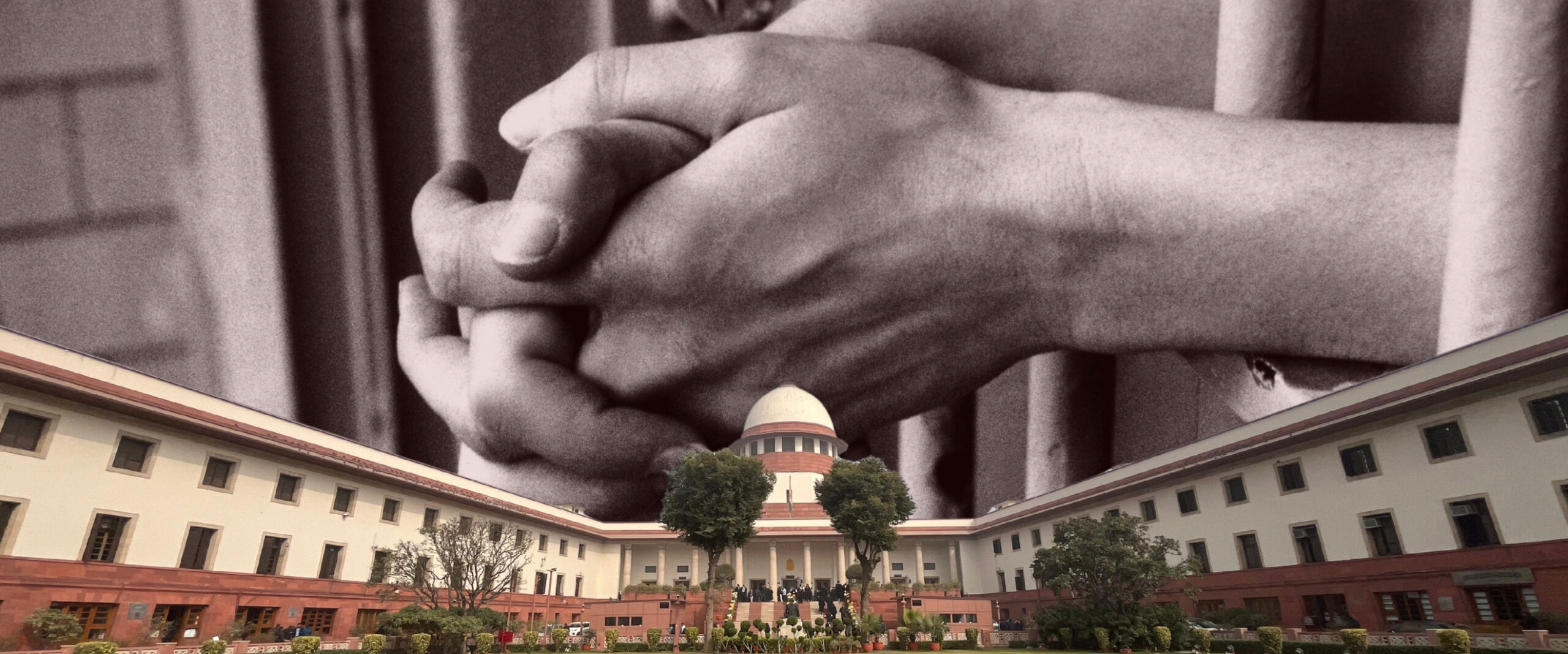
A bail order is not a sentence. The accused enjoys the presumption of innocence. A bail bond exists only to secure his attendance. Bail conditions must speak to that purpose and to no other. These propositions are now so often repeated by the Supreme Court that one might assume them settled in the working consciousness of the subordinate judiciary. The Court’s Order by a Bench of Chief Justice Surya Kant and Joymalya Bagchi on 4 May in In Re: Condition Being Imposed While Granting Bail establishes that they are not.
The suo motu writ was triggered by reportage in Article 14. Eight accused persons were granted bail by the Sessions Court at Rayagada and the Odisha High Court. They were arrested in connection with protests against a bauxite mining project at the Tijimali hills, awarded to Vedanta Ltd in 2023. Between May 2025 and January 2026, seven of the bail Orders were passed by the Sessions Court and one by Justice S.K. Panigrahi of the Odisha High Court.. The conditions compelled the accused to clean the premises of the Kashipur Police Station in Odisha for two months, between 6 a.m. and 9 a.m. Six of the eight beneficiaries were Dalit; two were Adivasi.
The Supreme Court took cognisance and disposed of the suo moto petition on the same day. Every such condition, whether already passed or framed in similar terms in future, was held null and void. The accused stood relieved of the offending requirements. Every High Court was directed to circulate the Order to every judicial officer within its jurisdiction. The Registrar General of the Orissa High Court was directed to file a compliance report in four weeks. .
A pattern more capacious than it appears
A subsequent investigation revealed that Justice Panigrahi of the Orissa High Court had alone passed at least 50 bail Orders between April and September 2025. Each directed the accused to perform cleaning duties. The objects ranged across police stations, hospitals, temples, village roads, ponds, and in one instance, a bank branch. The offences ranged from theft to murder. The conditions were uniform in template and indifferent to proportionality. A man accused of unnatural sex with a calf was directed to gather and dump cow dung at a fixed location each morning. A woman charged with cheating an ICICI Bank branch was directed to clean its premises. The volume and reach of these directions place the Kashipur Orders within a wider judicial habit, not an aberration confined to anti-mining protests.
The Supreme Court’s 4 May Order noted the absence of any comparable condition imposed on accused persons from “the privileged sections of society.” The conditions were recorded as “abhorrent, degrading and unknown to law.” The Bench then concluded that they cast “a serious aspersion, suggesting that the Odisha Judiciary is afflicted by caste-based bias.”
The doctrinal terrain the Order joins
The Supreme Court’s bail-conditions jurisprudence has accreted in fragments. In Munish Bhasin v State (NCT of Delhi) (2009), the Court struck down a maintenance-payment requirement attached to anticipatory bail to a husband in a marital dispute. In Sumit Mehta v State (NCT of Delhi) (2013), the Court held that “any condition” attached to anticipatory bail under Section 438(2) of the Code of Criminal Procedure, 1973 must be reasonable and tied to the administration of justice. In that case, the Court set aside a direction of the Delhi High Court requiring the appellant to deposit Rs 1 crore in a fixed deposit in the name of the complainant as a condition for anticipatory bail. The Court called it an extreme condition.
In Parvez Noordin Lokhandwalla v State of Maharashtra (2020), the appellant, a Green-card holder in the U.S. was not permitted to travel abroad as a condition for bail. Justice D.Y. Chandrachud set aside the condition and reiterated a previous ruling that conditions cannot be so strict making the grant of bail illusory.
In Aparna Bhat v State of Madhya Pradesh (2021), the Court set aside a direction that the accused tie a rakhi to the prosecutrix. The Bench found the condition stereotypical and offensive to the dignity of the victim. Frank Vitus v Narcotics Control Bureau (2024) struck down a Google-PIN tracking condition as a violation of privacy under Article 21. In Ramratan @ Ramswaroop v State of Madhya Pradesh (2024), the Court set aside conditions compelling the accused to demolish a wall and surrender property keys.
Read together, the line of authority makes three things clear. The Court’s tolerance for novel bail conditions is exhausted. The constitutional vice can be located variously, in Article 21, in proportionality, or in the prohibition on stereotype. The Bench has now added an additional doctrinal anchor, by expressly invoking Article 17.
The Article 17 turn
The Order’s central paragraphs locate the constitutional infirmity not in the disproportion of the conditions but in their caste signature. It then reads Articles 14, 15, 16 and 17 as a composite guarantee of “a casteless society”. E.P. Royappa v State of Tamil Nadu (1974) is deployed for the doctrine that equality is antithetical to arbitrariness. Maneka Gandhi v Union of India (1978) supplies the requirement that procedure be just, fair and reasonable. The progression is deliberate. The Bench moves from a generic equality argument to a specifically caste-coded one. The conditions are condemned not because they are excessive (they are) but because they are caste-coded sentences masquerading as bail conditions.
This is the same constitutional path the Court travelled in Sukanya Shantha v Union of India (2024). That judgement, by the Bench led by CJI Chandrachud, struck down state prison-manual provisions that allotted sweeping and scavenging duties to lower-caste prisoners. The provisions were held violative of Articles 14, 15, 17, 21 and 23. While the 4 May Order does not cite Sukanya Shantha, the doctrinal continuity is unmistakable. That a Judge of a High Court could craft such a condition seven months after Sukanya Shantha is the malaise the present Order confronts.
Why unreasonable bail conditions
A decision-rule cannot be enforced if it is not internalised. Three factors plausibly explain the persistence of these conditions in the Odisha judiciary, and to a lesser extent in the High Court.
The first is statutory misreading. Section 4(f) of the Bharatiya Nyaya Sanhita, 2023 introduces “community service” as a punishment for certain offences.The Indian Penal Code, 1860, which the BNS replaces, contained no equivalent. In Ajin K.V. v State of Kerala (2025), Justice C. Jayachandran of the Kerala High Court clarified the position. Community service under the BNS is a sentence to be awarded after conviction. It cannot be imposed as a bail condition. Several Odisha trial judges have evidently read Section 4(f) as licence to convert bail Orders into pre-conviction penal exercises. The Bench’s refusal to engage with Section 4(f) in the present Order is conspicuous. The statutory pathway through which judges have rationalised the practice is left untouched.
The second factor is the demography of the district judiciary itself. The India Justice Report 2025 tracks the gap between actual and reserved Scheduled Caste, Scheduled Tribe and OBC representation in the subordinate judiciary across states. Odisha is among those that fall short of their declared diversity quotas. Seven of the eight impugned Orders in the present matter came from two Sessions Judges in Rayagada. Both, according to Article 14, are from dominant or OBC backgrounds. Caste demography does not determine outcome. It does, however, shape the unspoken assumptions that surface when a judge frames an appropriate condition for a Dalit or Adivasi accused. The Bench’s silence on the demographic dimension is itself notable. The 4 May Order treats the bias as ambient and judicial, not structural.
The third factor is the symbiosis between the executive and the trial bench in extractive zones. Rayagada, Kalahandi and the surrounding Scheduled Areas are sites of high-stakes mining. They are also sites of sustained Adivasi resistance. Twenty-four protesters were arrested between 13 and 25 August 2023 alone. FIRs invoke rioting, attempt to murder and damage to public property. In such an environment, a trial judge’s instinctive sense of who needs disciplining cannot be insulated from the surrounding political economy. Eighty-six citizens, lawyers and activists wrote to the Chief Justices of the Orissa High Court and the Supreme Court on 26 July 2025 seeking suo moto intervention to recall the bail conditions. The Court did not move then. It has moved now, after media reportage made the pattern impossible to ignore.
What the Order does and does not
The omnibus direction is the Order’s central operative feature. It is rare for the Court to declare every “similarly worded” condition null and void without the offending Orders being individually before it. It is rarer still to direct every High Court to communicate the position to every judicial officer within its jurisdiction. The compliance report from Odisha is due by 11 May; the matter is listed solely for compliance. To that extent, the Order is a strong administrative intervention.
What it does not do is also significant. It does not ask whether the offending Orders expose the concerned judges to in-house disciplinary scrutiny. It does not name the High Court Order of 28 May 2025; the Bench refers to it descriptively. It does not engage Section 4(f) of the BNS, nor does it examine the FIRs themselves, leaving the statutory misreading uncorrected.
Related articles
Analysis
Supreme Court Review 2025: Walking the tightrope of jail and bail
The Court served up a mixed bag of bail orders—some baffling for their onerousness and others providing relief before the start of trial

Analysis
Supreme Court strikes down rules perpetuating caste based segregation and discrimination in prisons | Judgement Summary
We summarise the 148 page landmark ruling that has directed amendments to prison manuals within three months

Analysis
Many a slip between jail and bail?
The Supreme Court must take into account both structural and practical issues that cause delays at every stage of the bail process

Analysis
Supreme Court directs state governments to address concerns surrounding the premature release of prisoners
In the hearing on bail policy reform, the Court also asked states to update information on the e-Prison module