


Analysis
What are the sub judice cases that form part of INDIA Bloc’s memorandum to CJI Surya Kant?
CJI Surya Kant declined to meet INDIA bloc leaders as matters concerning alleged electoral irregularities are pending before the SC
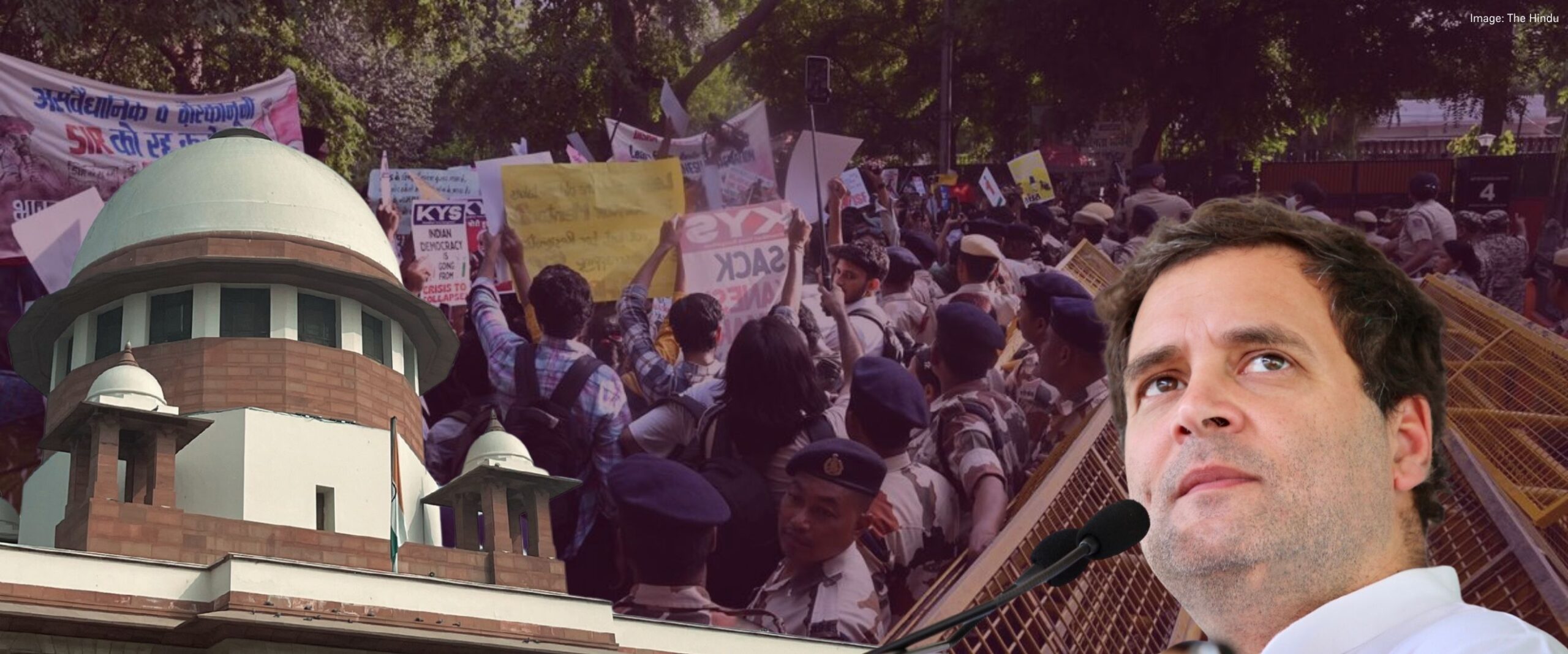
On 11 October, Leader of Opposition and Congress leader Rahul Gandhi announced a march to the Supreme Court “as Indians, united beyond party, gender, caste, community and state.” The intention is to submit a memorandum to Chief Justice Surya Kant demanding immediate suspension of the Special Intensive Revision of electoral rolls, the resignation of Chief Election Commissioner Gyanesh Kumar, a return to paper ballots, and repeal of all Assembly elections over the past two years in which vote theft has been proved.
Late last night, CJI Surya Kant informed the press that he received a letter from leaders of the Indian National Developmental Inclusive Alliance (INDIA) bloc requesting a meeting. He stated that he responded with a reasoned refusal as their memorandum concerns issues that are pending before the Supreme Court.
We revisit the pending matters and their stage of hearing.
Challenges to the SIR
The first challenge to the SIR arose in Bihar where it was initiated in June 2025, five months ahead of the State assembly elections. The challenge was listed in July and the exercise was upheld in May 2026, after elections had concluded. The Court affirmed the powers of the Election Commission of India (ECI) to conduct the SIR, holding that Article 324 of the Constitution is of sufficient amplitude to encompass all powers necessary for the smooth conduct of elections. The ECI’s supervisory authority is inherently expansive. Section 21(3) of Representation of People Act, 1950 permits the ECI to carry out a special revision in “any constituency” in such a manner as it may think fit with reasons recorded.
Notably, the plea in the Bihar challenge was to set aside the SIR exercise, a demand that is central to the INDIA bloc memorandum. In its May 2026 decision, the Court upheld the exercise and the ECI’s power to conduct it.
While the Bihar challenge has been decided, several challenges regarding the conduct of SIR in states such as West Bengal and Delhi remain pending and continue to be listed from time to time.. These challenges centre on procedural aspects of the SIR, such as the procedure for deletion of names due to “logical discrepancies” and the establishment of tribunals to hear voter appeals.
Powers of the Chief Election Commissioner
The petition in this matter was filed after the Indian Express reported 14 formal objections by Election Commissioners Sukhbir Singh Sandhu and Vivek Joshi over 10 months against decisions allegedly taken by the ECI without their knowledge. The objections concerned changes to Form 6, the handling of electoral rolls and the centralisation of the voter database, bringing an internal disagreement within the three-member Commission into public view. The petition raises questions about decision-making within the ECI and argues that the SIR and changes to Form 6 are examples of a breakdown in the ECI’s functioning.
Form 6 is used for inclusion in the electoral rolls under the Registration of Electors Rules, 1960. Senior Advocate Menaka Guruswamy had argued that additional conditions have been introduced to the statutory form, including one requiring applicants to establish their inclusion in the electoral roll after the previous SIR. Since Form 6 is prescribed in the Schedule to the Rules, she argued that it cannot be altered without an amendment to the Rules. CJI Surya Kant clarified: “No modification to Form 6 has been approved by us.” Today, during another hearing, CJI Surya Kant and Justice Joymalya Bagchi stated that the modified Form 6 was “neither approved nor disapproved” in the Bihar SIR challenge. The Bench said it would seek the ECI’s response and examine whether decisions had been taken unanimously or by majority, as contemplated under the statutory framework.
A separate petition seeks the removal of Kumar as the CEC. Senior Advocate Vikas Singh had argued that Kumar’s actions undermined the electoral process and the ECI’s functioning. He accused Kumar of repeatedly going beyond the statutory framework while assuring the Supreme Court that the ECI only took unanimous decisions. The Court issued notice in the CEC case on 5 October.
What does the INDIA Bloc aim to achieve?
The Supreme Court is currently the only forum responding to cases related to the protest, the alleged illegal detentions on 10 October, and the powers of the CEC. The protests are still ongoing, with INDIA Bloc’s march expected to begin at 1:30 PM today. Arguably, the executive and the legislative branches, including the ECI, have made no formal acknowledgement of the protests so far. There has been no response from Kumar either.
Follow our Live Updates page for more coverage from the Court and the streets on this extraordinary occasion.
Related articles
Analysis
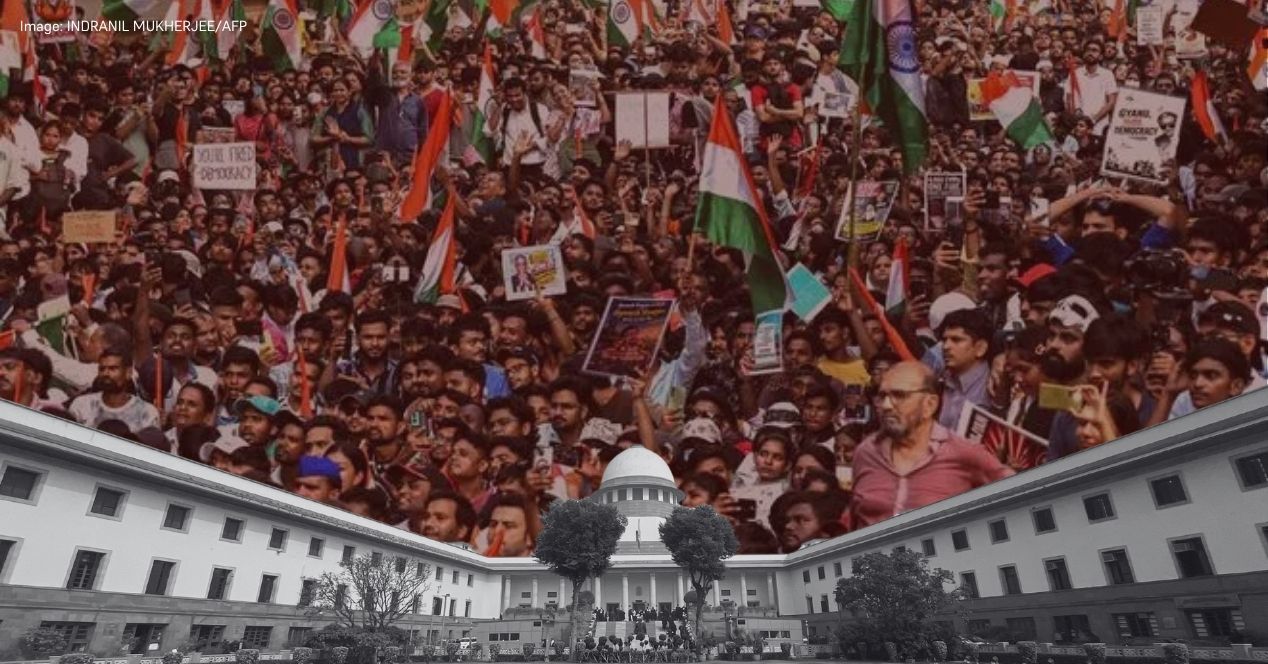
Delhi CEC Protests | Live Updates from the Supreme Court
On the extraordinary occassion of a march to the Supreme Court by the Leader of Opposition, we report between Court and the streets
Analysis
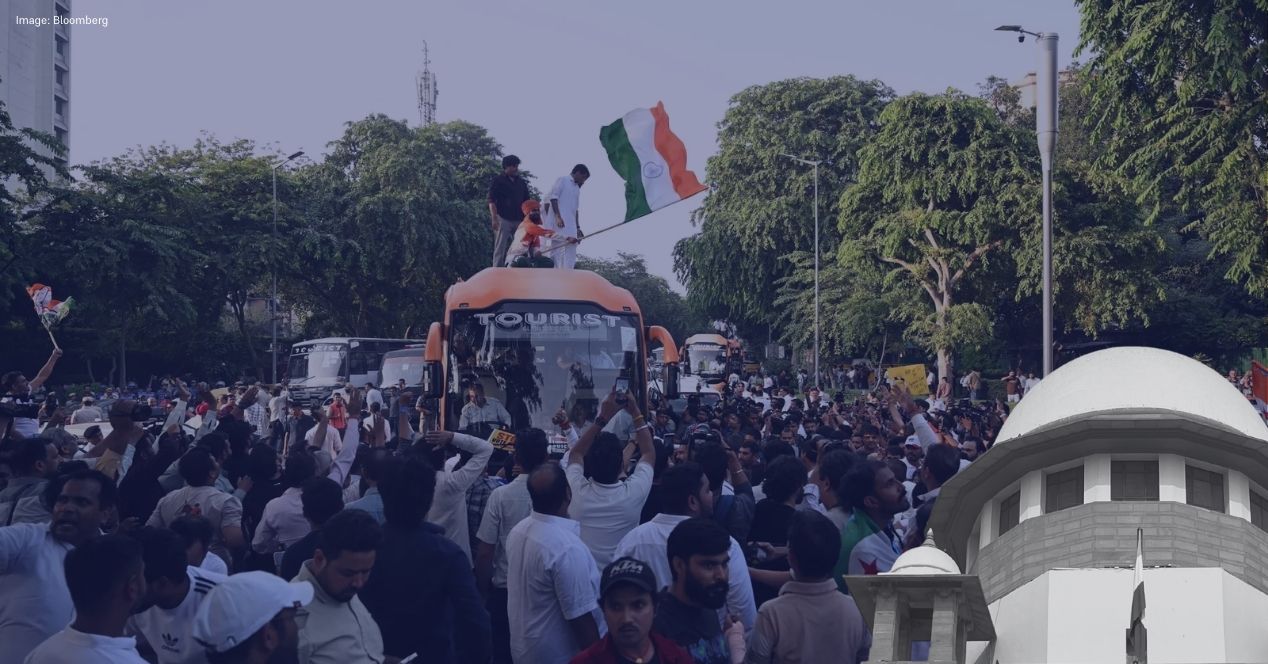
Delhi protests: No immediate relief on contempt and Habeas Corpus petitions
The Supreme Court directed restoration of services in New Delhi and will hear compliance reports from State authorities on Tuesday
Analysis
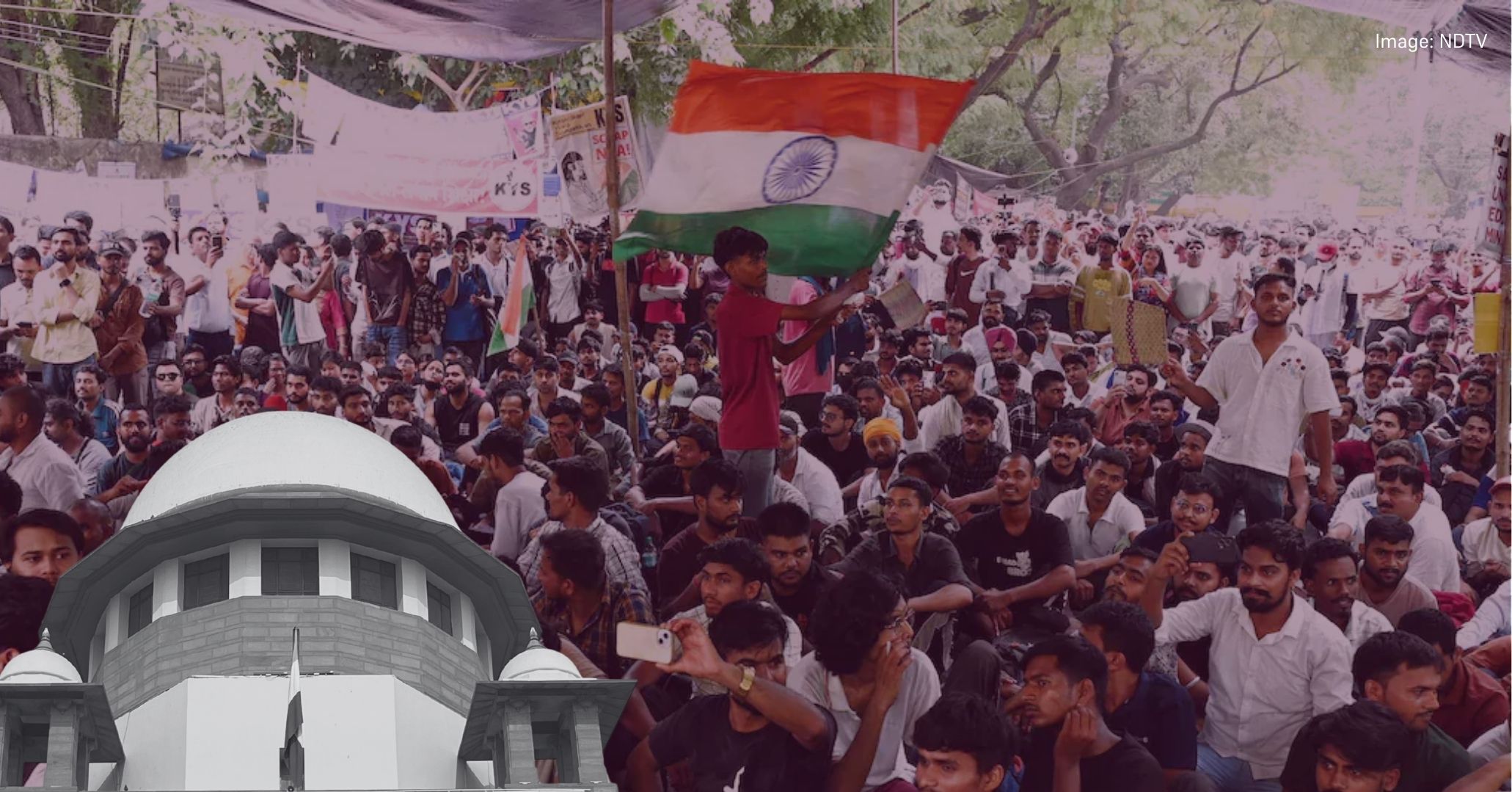
SC asks authorities to “regulate” metro, train services ahead of CJP protest
The Bench ruled out a complete Metro shutdown and directed authorities to issue a traffic advisory

Analysis
The CJP Order and the limits of Article 142
The quashing of FIRs reads less like an adjudication and more like a settlement agreement that received a judicial stamp.