


Analysis
From “Resolution” to “Statement”
Three new judges were recommended to the Supreme Court. The Collegium said little about them. We asked practitioners.
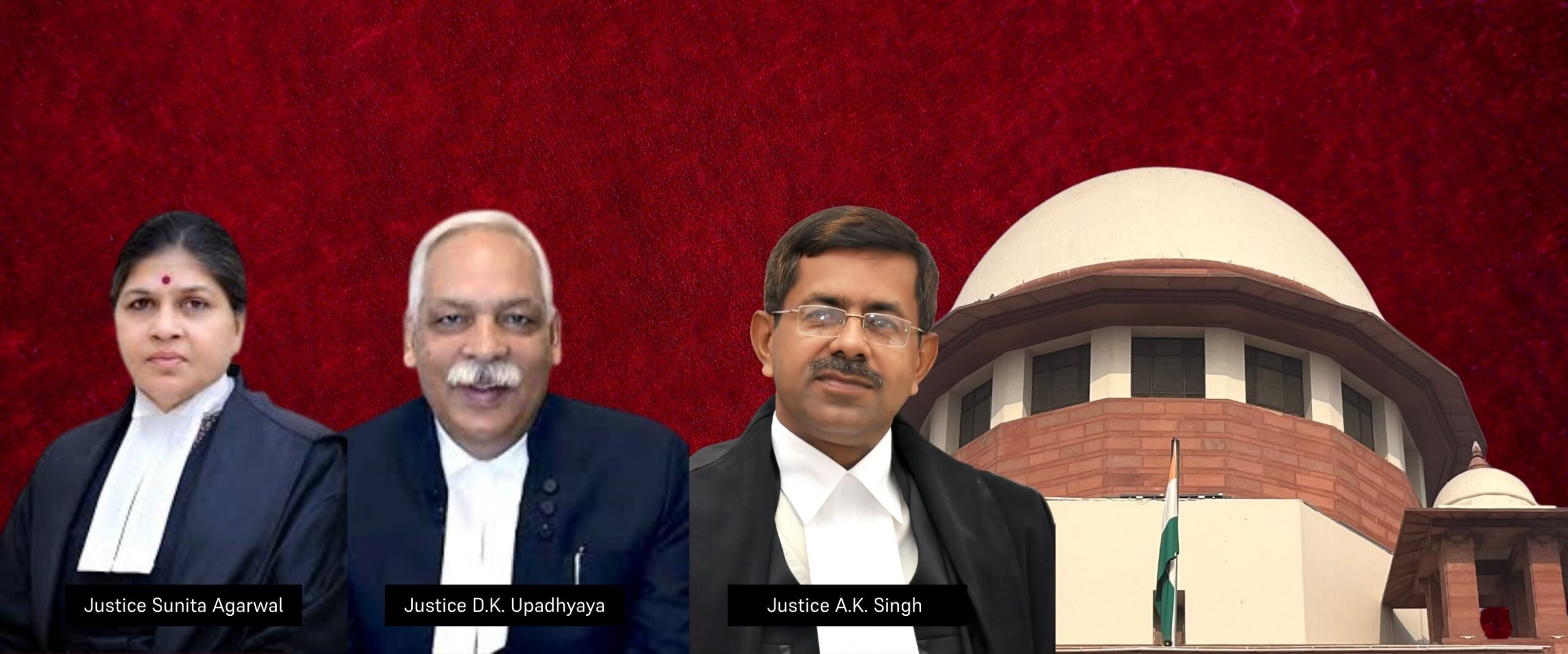
The 28 September 2026 Collegium statement recommending Chief Justices Sunita Agarwal, D.K. Upadhyaya and Aparesh Kumar Singh offered little insight into the considerations behind their recommendations. This was the second Collegium statement issued by the Chief Justice Surya Kant-led Collegium. If the executive notifies these appointments, the Supreme Court will have three women judges on the Bench: Justice B.V. Nagarathna—recommended by the CJI N.V. Ramana-led Collegium—and Justices V. Mohana and Sunita Agarwal, both recommended by the Collegium under CJI Surya Kant.
This lack of candidate details has now become a standard practice, departing from the previous approach where Collegium “resolutions” detailed selection factors, seniority rankings and subject-matter expertise. This gives observers a basis to understand deviation from the seniority norm. There is a distinction between a “Collegium Resolution” and a “Collegium Statement”. In this round, the Supreme Court publicly released a “statement,” whereas the “resolution” containing the details of the candidate remained confidential. Detailed resolutions also highlight relevant socio-demographic considerations. For example, the resolution recommending Justice P.B. Varale noted his Scheduled Caste background as a factor.
With no official explanation on the candidates, the Supreme Court Observer spoke to practitioners in Gujarat, Delhi, Bombay and Telangana about their expertise, courtroom conduct and administrative record. Senior Advocate Mihir Thakor of the Gujarat High Court described Justice Sunita Agarwal as “sharp and hardworking”. On administration, he noted that Justice Agarwal introduced structural reforms in Gujarat and encouraged senior lawyers to train younger members of the bar. According to Manupatra data, Justice Agarwal has authored 313 judgements and has been cited in 10 decisions at the Gujarat High Court.
Justice D.K. Upadhyaya drew praise from all three practitioners we spoke to. Advocate Sanskruti Yagnik, who practises at the Bombay High Court, pointed to his work in service matters and said he had “reflected sensitivity towards the human consequences of administrative and service related matters.” Advocate Sarthak Gupta, who practises in Delhi, identified public law as Justice Upadhyaya’s area of expertise. Gupta said he “gives young counsel a fair chance and encourages them to argue more.” Advocate Ronita Bhattacharya, also from Bombay High Court, described his court as “calm” and “orderly”, noting his patience with counsel. Manupatra records show that Justice Upadhyaya has authored 152 judgements and has been cited in 23 decisions of the Delhi High Court.
Justice Aparesh Kumar Singh has authored eight judgements as Chief Justice of the Telangana High Court since his 2025 appointment. His recommendation altered the relative seniority of sitting judges. Justice Shree Chandrashekar, also from Jharkhand, was appointed in a previous round by the CJI Surya Kant Collegium despite being junior to Justice Singh. This is not unprecedented. The Collegium has previously departed from seniority for institutional considerations. Notably, all judges are considered equal once appointed to the Supreme Court. Seniority does, however, apply to bench composition, Collegium membership and roster allocation.
In this batch, the three recommendees ranked 4th, 5th, and 6th on the All-India Seniority List. The judges holding 1st and 2nd rank hailed from the Calcutta High Court, which already has representation on the Supreme Court through Justices Dipankar Datta and Joymalya Bagchi. Justice G.S. Sandhawalia, ranked third on the All-India Seniority List, was also passed over. His elevation would have brought a Sikh judge to the Supreme Court, where J.S. Khehar, who retired in August 2017, remains the last Sikh judge to have served. Justice Sandhawalia is due to retire on 31 October 2027. This has scope for the five-member body to consider his appointment.
The recommendations, published on Monday evening, are pending approval from the Union government. While the Collegium statement says little, our Judge Profiles will bring you details on everything you need to know. Stay tuned to scobserver.in for when the appointments are notified.
Related articles
Analysis
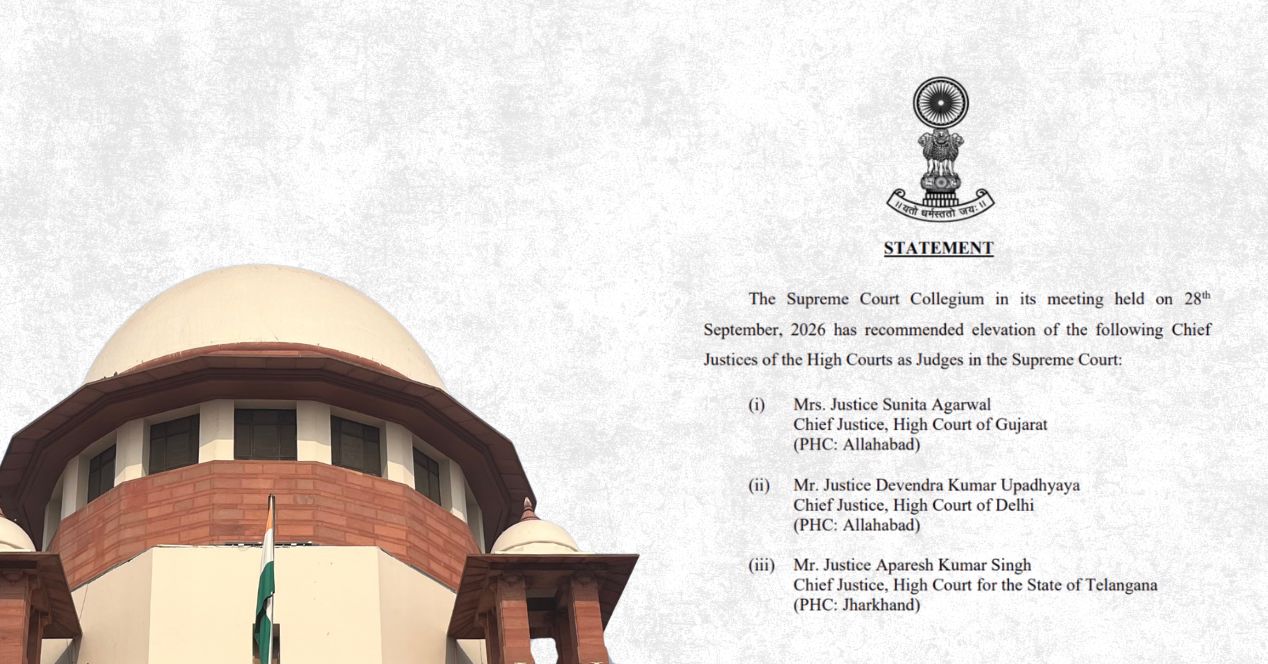
Three new judges recommended for the Supreme Court
Two of the three recommendations have their parent High Courts of Allahabad; one recommendation hails from Jharkhand
Analysis
Five new judges recommended for appointment to the Supreme Court
The Supreme Court Collegium has recommended four HC Chief Justices and a senior advocate for appointment to the apex court
Analysis
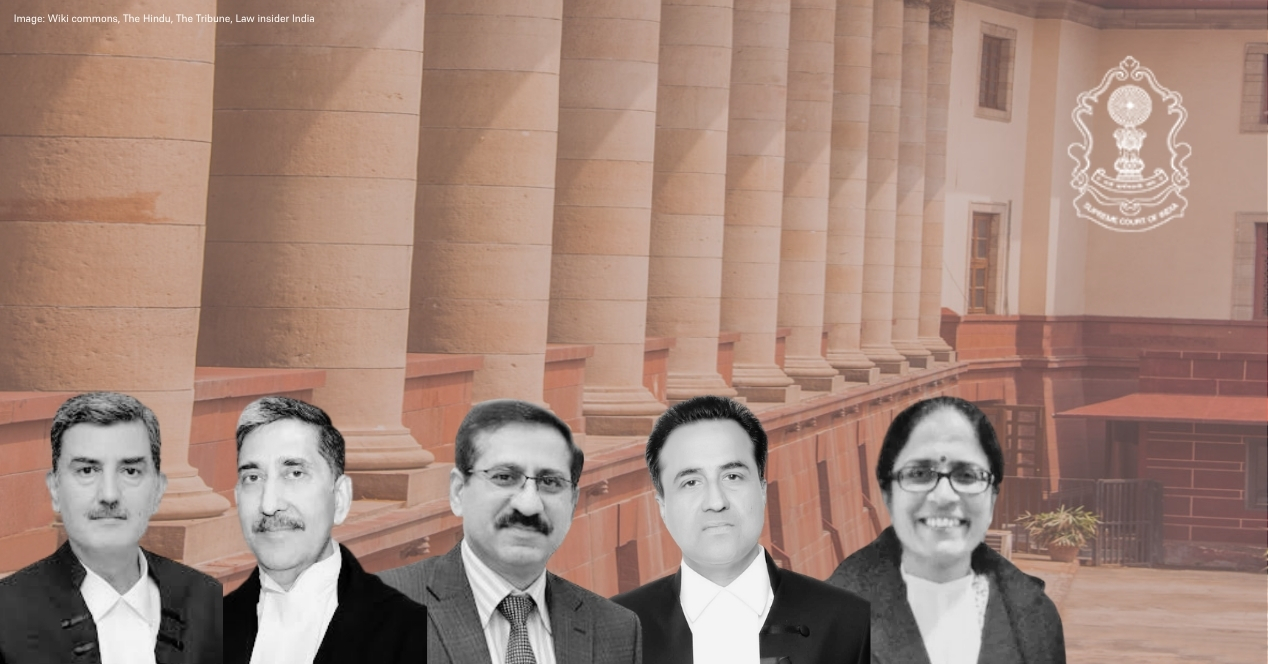
Five more chairs
With its first set of recommendations, the Collegium has an opportunity to address the religious diversity question in its next cycle
Analysis
Ordinance lifts SC strength to 38, Collegium likely to begin deliberations
The executive’s urgency in enhancing the strength comes two weeks before the Supreme Court begins its six-week long Partial Working Days