

Analysis
Five new judges recommended for appointment to the Supreme Court
The Supreme Court Collegium has recommended four HC Chief Justices and a senior advocate for appointment to the apex court
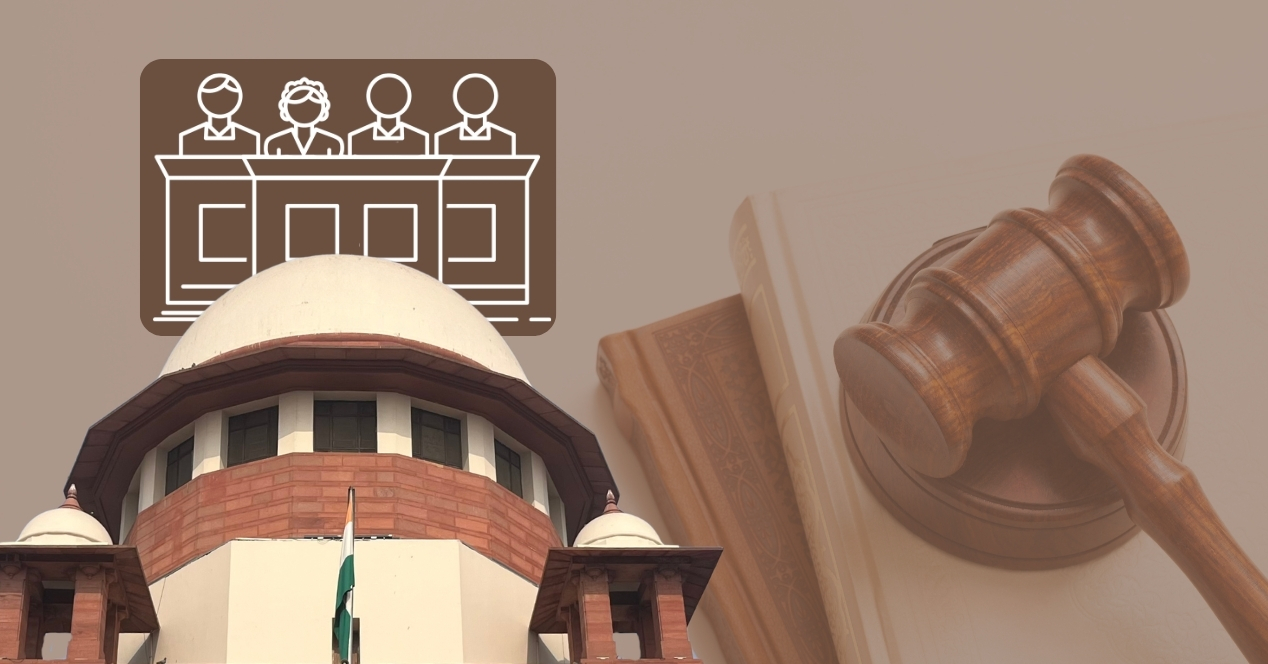
On 27 May, the Supreme Court Collegium recommended the appointment of five judges to the Supreme Court. This is the first set of recommendations made under the Chief Justice Surya Kant led Collegium since he assumed office in November 2025. In line with his predecessors—the Collegiums led by CJI Sanjiv Khanna and B.R. Gavai—the resolution did not disclose details about the judges and the deliberations of the Collegium.
The resolution comes shortly after the Union cabinet approved a bill increasing the Court’s sanctioned strength from 34 to 38 judges. At the time, the Court had two vacancies, followed by President Droupadi Murmu’s promulgation of the Supreme Court (Number of Judges) Amendment Ordinance, 2026. The move was unusually swift and a rare instance of the President promulgating an ordinance to increase the sitting strength. An official notification justified the expansion as a measure to ensure speedy justice and decrease pendency in the Supreme Court. If all five judges are appointed, the Court’s sitting strength will be 37 judges, leaving just one less vacancy under the new sanctioned strength. With two retirements scheduled for June 2026, the Collegium is expected to recommend more judges in July, once it returns from its 6-week-long Partial Working Days.
Speculation had surrounded the Collegium resolution, with many expecting it to address the question of gender diversity. The 27 May resolution has somewhat delivered on that promise by recommending Senior Advocate V. Mohana directly from the Bar. Along with Mohana, the Collegium has recommended four sitting Chief Justices: Justice Sheel Nagu, High Court of Punjab and Haryana; Justice Shree Chandrashekhar, High Court of Bombay; Justice Sanjeev Sachdeva, High Court of Madhya Pradesh; and Justice Arun Palli, High Court of Jammu & Kashmir and Ladakh.
Justice Sheel Nagu
Justice Nagu was born on 1 January 1965 and enrolled with the Bar Council of Madhya Pradesh in October 1987. He practiced in civil and constitutional matters at the High Court until he was elevated as an Additional Judge in May 2011. Two years later, he became a Permanent Judge in May 2013. He served as the Acting Chief Justice of the Madhya Pradesh High Court until his appointment as Chief Justice of the Punjab and Haryana High Court.
Currently, three sitting judges in the Supreme Court hail from the Madhya Pradesh High Court: Justices J.K. Maheshwari, S.C. Sharma and Alok Aradhe. Justice Maheshwari is set to retire on 28 June 2026, and was part of the Collegium that recommended the appointment of Justice Nagu.
His recommendation comes seven months before his retirement on 31 December 2026 from the High Court.
Justice Shree Chandrashekhar
Justice Chandrashekhar was born on 25 May 1965, and hails from the Jharkhand High Court. His appointment is notable as the Supreme Court currently lacks regional representation from Jharkhand. He was recently one of the members of the Parliamentary Inquiry Committee that submitted its report to Speaker Om Birla in the Justice Yashwant Varma case. He enrolled with the Bar Council of Delhi in 1993 and specialised in civil and criminal matters. His biography states that he has over 140 reported judgements in the Supreme Court where he appeared as counsel. He was appointed as an Additional Judge in Jharkhand on 17 January 2013, and made a Permanent Judge in June 2014. His recommendation comes a year before his retirement from the High Court.
Justice Sanjeev Sachdeva
Justice Sachdeva is the Chief Justice of the Madhya Pradesh High Court. He was born on 26 December 1964 and enrolled with the Bar Council of Delhi in 1988 and was appointed as an additional judge in 2013. He is an alumnus of the Campus Law Centre, Delhi University, graduating in 1988. His recommendation continues a trend of Supreme Court judges being appointed from the Delhi campus, joining alumni such as former Chief Justice D.Y. Chandrachud, former CJI Sanjiv Khanna, Justices S.K. Kaul, S.R. Bhat, Hrishikesh Roy, B.V. Nagarathna, N.K. Singh, and Manmohan.
Currently, Justice Manmohan is the sole sitting judge from the Delhi High Court on the Supreme Court bench. If Justice Sachdeva’s appointment is accepted by the Union government, representation from Delhi will increase to two judges. His recommendation comes seven months before his retirement from the Delhi High Court.
Justice Arun Palli
Justice Palli was born on 18 September 1964. He comes from a family of practicing advocates, including his grandfather and father who were practitioners in Patiala. He served as the Additional Advocate General for Punjab between 2004 and 2007, before being elevated as a Judge of the Punjab and Haryana High Court on 28 December 2013.
Currently, there are two sitting Supreme Court judges from Punjab and Haryana—CJI Surya Kant and Justice A.G. Masih. Justice Rajesh Bindal, who retired in April 2026, also hailed from the same High Court. Justice Palli’s recommendation could be viewed as an attempt to maintain the regional representation of Punjab and Haryana at three judges. His recommendation comes four months before his retirement.
Senior Advocate V. Mohana
In a historic move, the Supreme Court Collegium looked to the Bar to recommend Mohana. This is only the second time a woman advocate, in the Supreme Court’s history, has been recommended directly from the Bar since the appointment of Justice Indu Malhotra in 2018. It is also the first time since August 2021, that the Collegium recommended the appointment of a woman judge.
Currently, Justice Nagarathna is the sole woman on the Bench, who is also on the Supreme Court Collegium. There are presently two judges elevated directly from the Bar—Justices P.S. Narasimha and K.V. Viswanathan.
Related articles
Analysis
Ordinance lifts SC strength to 38, Collegium likely to begin deliberations
The executive’s urgency in enhancing the strength comes two weeks before the Supreme Court begins its six-week long Partial Working Days
Court Data
Bench expansion and pendency: A timeline
A year-by-year rundown of total pending cases each time the sanctioned strength of the Supreme Court increased
Court Data
46% of SC judges were members | The Collegium story, part 1
The first publicly available dataset on the Supreme Court Collegium reveals 89 members over 33 years
Court Data
How many women members? | The Collegium Story, Part 3
Since its inception in 1993, the Supreme Court Collegium has had six women members, less than seven per cent of total membership