


Court Data
How many women members? | The Collegium Story, Part 3
Since its inception in 1993, the Supreme Court Collegium has had six women members, less than seven per cent of total membership
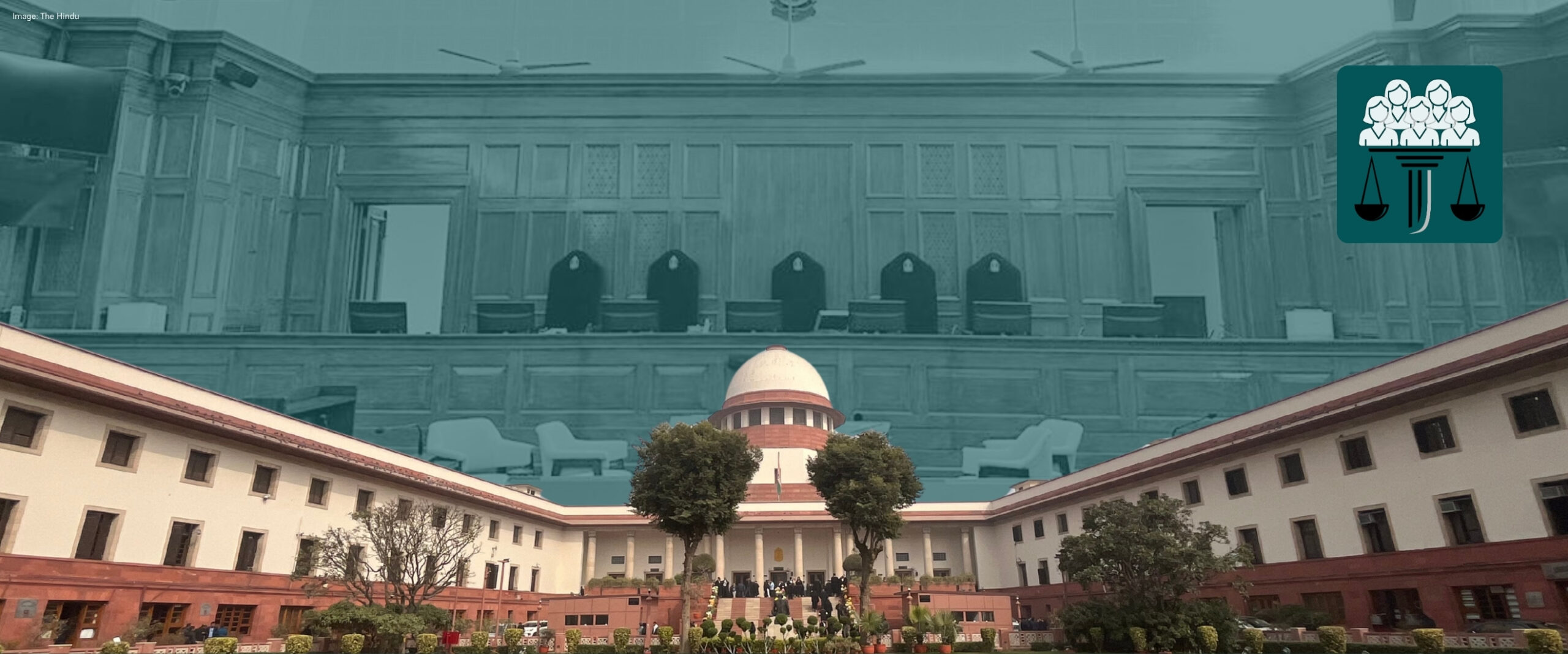
On 25 May 2025, Justice B.V. Nagarathna made history as only the sixth woman judge to join the Supreme Court Collegium. So far, she has been involved in the appointment of five judges— Justices N.V. Anjaria, Vijay Bishnoi, A.S. Chandurkar, Alok Aradhe, and V.M. Pancholi.
In 2027, Justice Nagarathna will become the first woman Chief Justice of India and the first woman to lead the Collegium. This moment shrinks with the realisation that her tenure will last for 36 days.
Since its inception in 1993, the Collegium has had six women members, less than seven per cent of total membership.
Who are the six women?
Justice Sujata V. Manohar was the first woman to become a member of the Supreme Court Collegium in 1998.
That year, the Third Judges Case expanded the strength of the Collegium from a three- to five-member body. Justice Manohar was the fourth senior most judge at the time, joining Justices S.P. Bharucha, M.K. Mukherjee and S.B. Majumdar in the Collegium led by then Chief Justice A.S. Anand. She participated in the Collegium for ten months until her retirement on 27 August 1999*.
Only the second woman to be elevated to the Supreme Court, Justice Manohar’s overall tenure lasted four years and nine months.
When asked about her experience in the Collegium, Justice Manohar told the Supreme Court Observer: “All decisions were taken together. If any of us dissented, our opinion was accepted by the others.”
Justice Ruma Pal was the second woman to become a member of the Collegium on 1 June 2004. She served for two years in Collegium’s led by CJIs R.C. Lahoti and Y.K. Sabharwal respectively, until her retirement on 3 June 2006.
“In our time, all the appointments were of friends,” said Justice Pal, adding that “today, all the appointments are by the executive.”
Of the 11 women judges in 75 years of the Supreme Court, Justice Pal was the third to be appointed and remains to date, the longest-serving woman judge with a tenure of 6.42 years.
Eight years later, Justice Ranjana Desai became the third woman member in Collegium history. She was a part of the Collegium led by CJI H.L. Dattu for one month from 28 September to 29 October 2014.
Justice R. Banumathi joined the Collegium led by CJI S.A. Bobde on 18 November 2019 and served less than one year until her retirement on 19 July 2020.
Justice Indira Banerjee served a month-long tenure on the Collegium led by CJI U.U. Lalit, from 27 August to 23 September 2022.
Appointments during their tenure
Collegium recommendations were only available to the public post 2017. The lack of documentation prior to it makes it impossible to ascertain whether women actively encouraged gender representation in the top court. Even today, Collegium resolutions only publish names of recommended judges and exclude names that were under consideration. There are no records or transcripts that provide insight into the discussions that took place between members. Further, there is often a gap between recommendations and appointments. There is room for speculation that recommendations may have been rejected by other Collegium members or the Executive.
Keeping this in mind, it is notable that none of the seven Supreme Court judges appointed during Justice Manohar’s tenure or the 11 appointed during Justice Pal’s tenure were women. In the period that Justices Desai, Banumathi and Banerjee served on the Collegium, there were no appointments to the Supreme Court.
A compounding effect
Given that 96 per cent of Supreme Court judges are appointed from the pool of High Court judges, representation of any kind at the top court depends on representation at the lower courts.
Data reveals that at both levels, women judges are on average, appointed at a later age than male judges. This results in shorter tenures, giving them less time than their male counterparts to make their way up the Court’s hierarchy. While male judges serve a median tenure of 5.14 years in the Supreme Court, women judges serve a median tenure of 3.99.
As seniority is the only criteria for membership at the Collegium, greater representation can only be achieved through progress at the lower judiciary.
Official figures remain out of reach
On 26 August 2025, the Hindustan Times reported Justice Nagarathna’s dissent against the elevation of Justice Pancholi. Among other reasons for her dissent was the fact that his elevation supersedes several more senior judges, including three women.
The Supreme Court Observer had filed a Right to Information application seeking details on the number of women who have served in the Supreme Court Collegium. This request was declined on the grounds that data had to be collated from across multiple files and would require a “disproportionate diversion of resources of the public authority.”
At a time of growing concerns around the lack of representation and objectivity in judicial appointments, transparency could be essential to restore public faith in the system. This series is an attempt to begin filling in the blanks.
*Note: The tenure details cited in this article are from a dataset we built based on records of seniority. These are not official figures.
Related articles
Court Data
46% of SC judges were members | The Collegium story, part 1
The first publicly available dataset on the Supreme Court Collegium reveals 89 members over 33 years
Court Data
Filling in the blanks | The Collegium story, part 2
A brief history of how and why the Supreme Court Collegium came to be
Analysis
A crack in the Collegium’s wall of secrecy
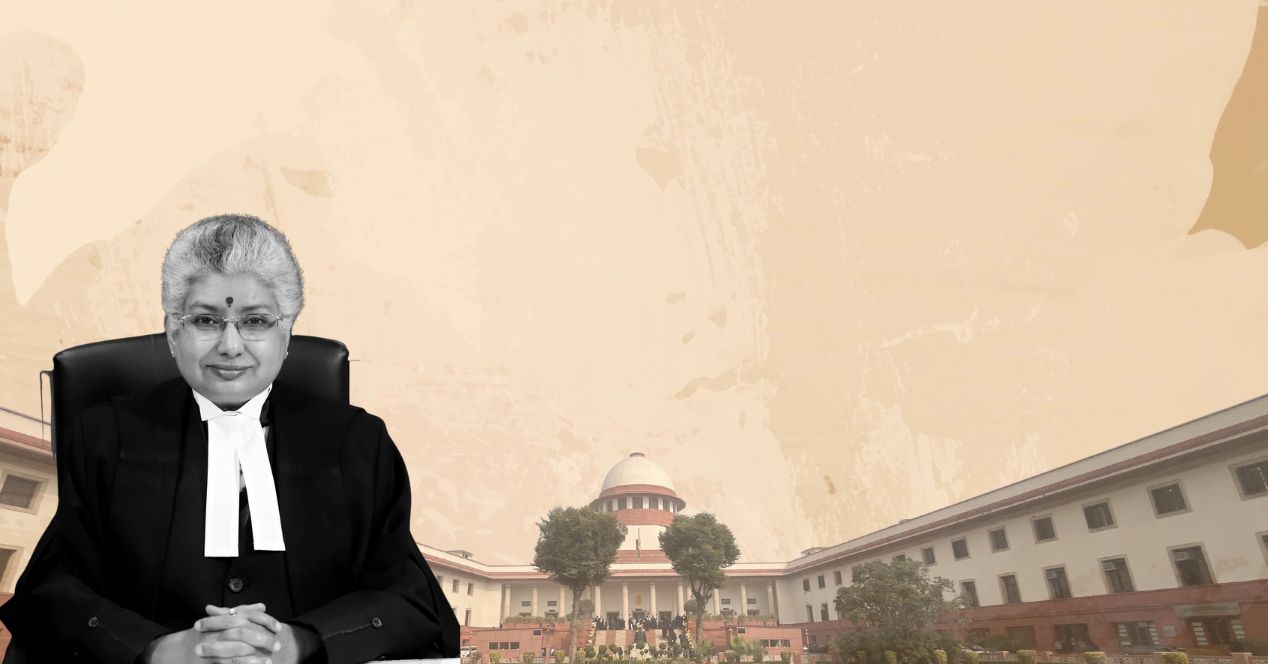
Justice Nagarathna’s reported dissent against a recent recommendation highlights the lack of transparency around Collegium deliberations

Analysis
Has the Supreme Court Collegium’s Focus Shifted to Diversity and Inclusion?
DESK BRIEF: Recent Collegium recommendations show a renewed attention towards ensuring regional and gender diversity in Indian courts.