


Surya Kant
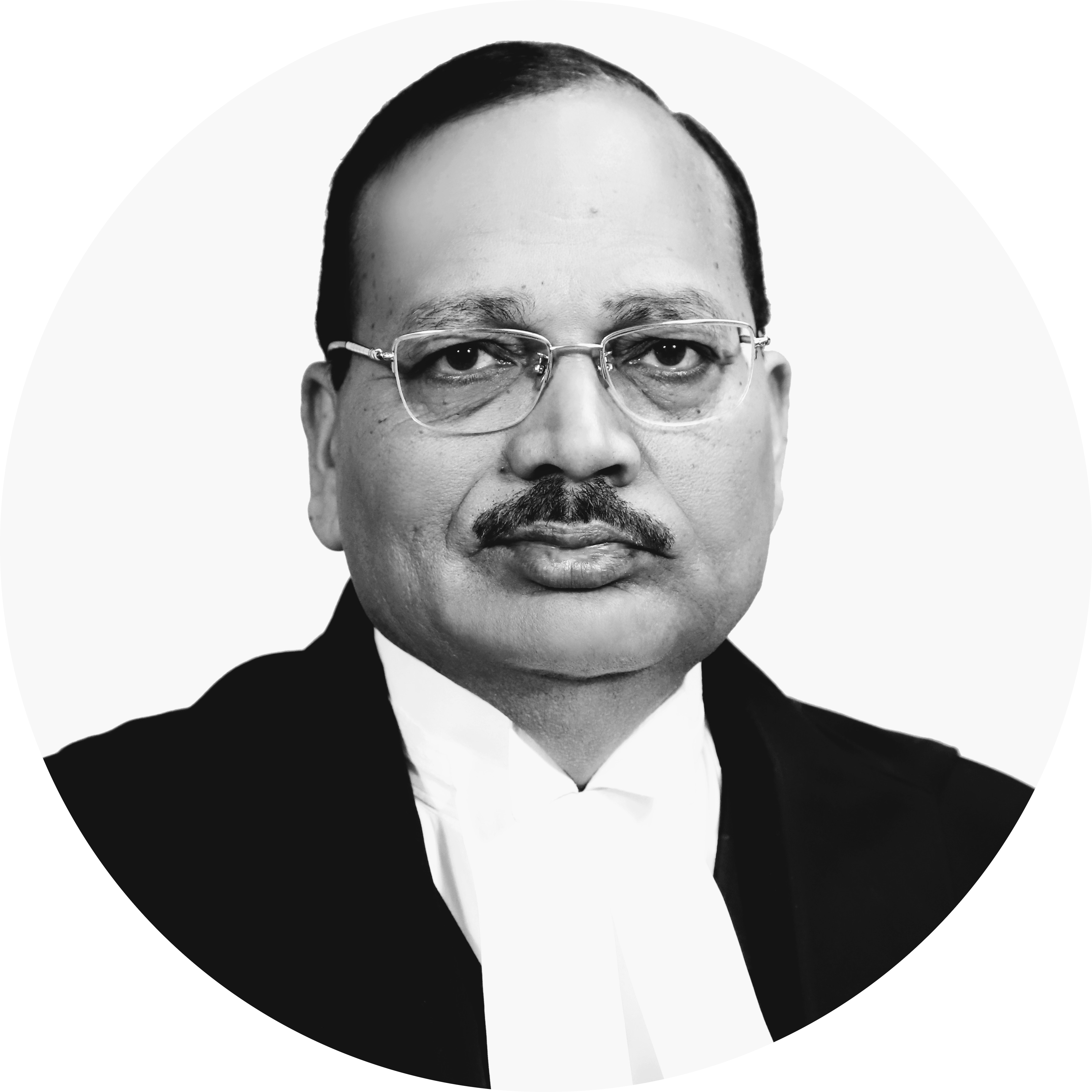
Surya Kant
Chief Justice of India
Assumed Office24th Nov, 2025
Retires On9th Feb, 2027
Previously
Sitting Judge of the Supreme Court of IndiaMay 24th 2019 - November 23rd 2025
Chief Justice of the Himachal Pradesh High CourtOctober 5th 2018 - May 23rd 2019
Judge of the Punjab and Haryana High CourtJanuary 9th 2004 - October 4th 2018
Advocate General of HaryanaJuly 7th 2000 - January 8th 2004
Profile
Early life and Education
Justice Surya Kant was born on 10 February 1962 in Hisar,Haryana. Several members of his family were teachers. He graduated from Government Post Graduate College, Hisar in 1981. After his graduation, Justice Surya Kant studied law at the Maharshi Dayanand University in Rohtak. He graduated with a Bachelor’s in Law in 1984.
Justice Surya Kant obtained a Master of Laws degree in 2011 from the Directorate of Distance Education, Kurukshetra University, Kurukshetra.
Career as an Advocate
Justice Surya Kant began practicing law at the District Court, Hisar in 1984. He later moved his practice to the Punjab and Haryana High Court in 1985. On 7 July 2000, at the age of 38, Justice Surya Kant was appointed Advocate General of Haryana, becoming the youngest person to hold the post.
Justice Surya Kant practised constitutional, service and civil law matters appearing for universities, boards, corporations, banks and the Punjab and Haryana High Court itself. He was designated as a Senior Advocate in March 2001. He served as Advocate General for four years before being appointed a Permanent Judge of the Punjab and Haryana High Court.
Career as a Judge
On 9 January 2004, Justice Surya Kant was elevated as permanent judge of the Punjab and Haryana High Court. He was sworn in as the Chief Justice of Himachal Pradesh High Court on 3 October 2018.
His appointment drew controversy as Justice A.K. Goel, a consultee who had been elevated to the Supreme Court from the Punjab and Haryana High Court, disagreed with the Collegium. A consultee judge’s views are sought by the Collegium due to their familiarity with the High Court from which a judge is being considered for elevation. Nonetheless, the Collegium appointed Justice Kant as Chief Justice of Himachal Pradesh High Court.
In 2019, the Collegium elevated Justice Surya Kant to the Supreme Court. In elevating him, the Collegium emphasised it was placing due weight on having adequate representation from all High Courts in the Supreme Court. Justice Surya Kant served as a sitting judge of the Supreme Court until he assumed office as the 53rd Chief Justice of India on 24 November 2025. He is the first from the state of Haryana to become the CJI.
Justice Surya Kant is expected to serve a tenure of 7 years and 8 months until his retirement on 9 February 2027.
Justice Surya Kant has authored 311 judgements and has been a part of 462 benches so far.
Justice Surya Kant has authored most judgements in criminal matters (90), followed by Direct Taxation (40), Service matters (32), Motor Vehicles (30) and Civil (30).
Notable Judgements
In State of Uttar Pradesh v Jai Bir Singh (2026), a nine-judge Constitution Bench held that the triple test laid for determining whether an establishment is an “industry”, as laid down in Bangalore Water Supply & Sewerage Board v A. Rajappa (1978), will govern all pending disputes under the Industrial Disputes Act, 1947. CJI Surya Kant authored an opinion for himself and on behalf of three other judges holding that the triple test needed reformulation. The proposal for reformulation did not find support by other judges on the Bench.
In Bhumika Trust v Union of India (2026), the Supreme Court modified its 2025 judgement by reducing the mandatory eligibility requirement for Civil Judge (Junior Division) from three years of Bar practice to one year of actual practice. CJI Surya Kant authored the majority opinion in the case.
In Association for Democratic Reforms v Election Commission of India (2026), a Bench of Chief Justice Surya Kant and Justice Joymalya Bagchi upheld the ECI’s Special Intensive Revision (SIR) in Bihar. The judgement, authored by CJI Surya Kant, held that the measures adopted by the ECI were neither excessive nor manifestly arbitrary.
In In re: Section 6A of the Citizenship Act, 1955, a five-judge Constitution Bench upheld the validity of Section 6A of the Citizenship Act, 1955, which grants citizenship to Bangladeshi immigrants who entered Assam before March 1971. Justice Surya Kant (as he then was) authored the majority opinion in the case. He observed that Section 6A was consistent with the purpose of Articles 6 and 7 “to extend citizenship rights to those affected by the country’s partition”. He noted that the provision was a political compromise between several protesting groups in Assam and the Union government. He directed the constitution of a bench to oversee its effective implementation.