


Analysis
Can a court forbid a future bail plea?
The Supreme Court will decide whether a judge may bar an accused from renewing a bail plea for a specified period
On 25 June, a Bench of Justices Ujjal Bhuyan and Arun Palli issued notice in Abbuhurera alias Munna v State of Gujarat, recording a question framed with precision. Can a court “restrain or prohibit an accused from filing a fresh bail application for a certain period”, say a year, while rejecting bail?
Notably, in May the apex court referred a similar question for reconsideration by a larger Bench.
A one-year embargo
On 24 April, the Gujarat High Court permitted Abbuhurera to withdraw a successive regular bail application. However, it allowed a fresh application only after one year, and only if the trial had not progressed.
Abbuhurera’s subsequent special leave petition does not ask the Supreme Court to grant bail. It confines the challenge to the prospective restriction imposed by the High Court, contending that the right to seek bail is a continuing statutory and constitutional remedy. A court may dismiss a bail plea or permit its withdrawal. It cannot, the petition argues, prospectively bar the accused from approaching a competent court under changed circumstances such as failing health, prolonged custody, trial delay, the examination of material witnesses or fresh evidence.
The High Court’s condition arguably goes beyond an ordinary one-year bar. Even after a year, Abbuhurera may move afresh only if there has been “no progress” in the trial. The order provides no clarity on what constitutes sufficient “progress”.
The NDPS prosecution
Abbuhurera faces charges under Sections 8(c), 21(c) and 29 of the Narcotic Drugs and Psychotropic Substances (NDPS) Act, 1985 based on the First Information Report (FIR) by the Gujarat Anti-Terrorism Squad.
The prosecution case, as recorded in the petition, rests on a 2024 raid on an industrial unit in Kareli, Surat, in which over 35 kilograms of mephedrone were seized. Abbuhurera was not present at the factory during the raid, and was arrested in Mumbai two days later. He has remained in custody ever since.
Aside from a mobile phone seized from his possession, the petition claims no narcotic, precursor chemical, cash, equipment or document was recovered from him or his property. The prosecution case rests primarily on statements of co-accused persons made in police custody. These assertions are relevant to the merits of his bail claim but remain unadjudicated.
Diverging precedent
Having appeared for Abbuhurera, Advocate-on-Record Nivesh Kumar told the Supreme Court Observer that the High Court order had “eclipsed” his client’s right to seek bail. He said Justice Bhuyan referred at the hearing to the Court’s recent decision in Syed Iftikar Andrabi v NIA. While Kumar noted that the Bench made no observation on the correctness of any preceding bail decision, recent criticism of the Court’s approach form the backdrop to Abbuhurera’s petition.
In Gulfisha Fatima v State (Government of NCT of Delhi), the Court granted bail to five persons accused in the 2020 Delhi riots case, while denying bail to student activists Umar Khalid and Sharjeel Imam. It held that their detention had not yet crossed the threshold to override the bar under Section 43D(5) of the Unlawful Activities (Prevention) Act, 1967.
Permitting Khalid and Imam to renew their pleas after one year or the examination of protected witnesses (whichever came first), the direction does not permanently exclude bail. Yet it bars subsequent bail pleas, imposing conditions in addition to the normative consideration of changed circumstances.
On 18 May, a Bench of Justices B.V. Nagarathna and Bhuyan voiced “serious reservations” in Andrabi, about several aspects of Gulfisha Fatima. It questioned in particular the direction foreclosing Khalid and Imam’s right to seek bail for a year and faulted the narrow interpretation of Union of India v K.A. Najeeb (2021).
In K.A. Najeeb, the Court held that statutory bail bars do not strip constitutional courts of the power to grant bail when prolonged custody and a distant trial breach Article 21 of the Constitution.
Justice Bhuyan sits on both the Andrabi and the Abbuhurera Bench, lending unusual weight to the present matter. Yet, as both were two-judge benches, counter-observations from one cannot overrule the other. In case of fundamental disagreement, the matter must be referred to the Chief Justice of India, who alone may constitute an appropriate bench. This holds especially if the disagreement concerns a binding larger Bench decision.
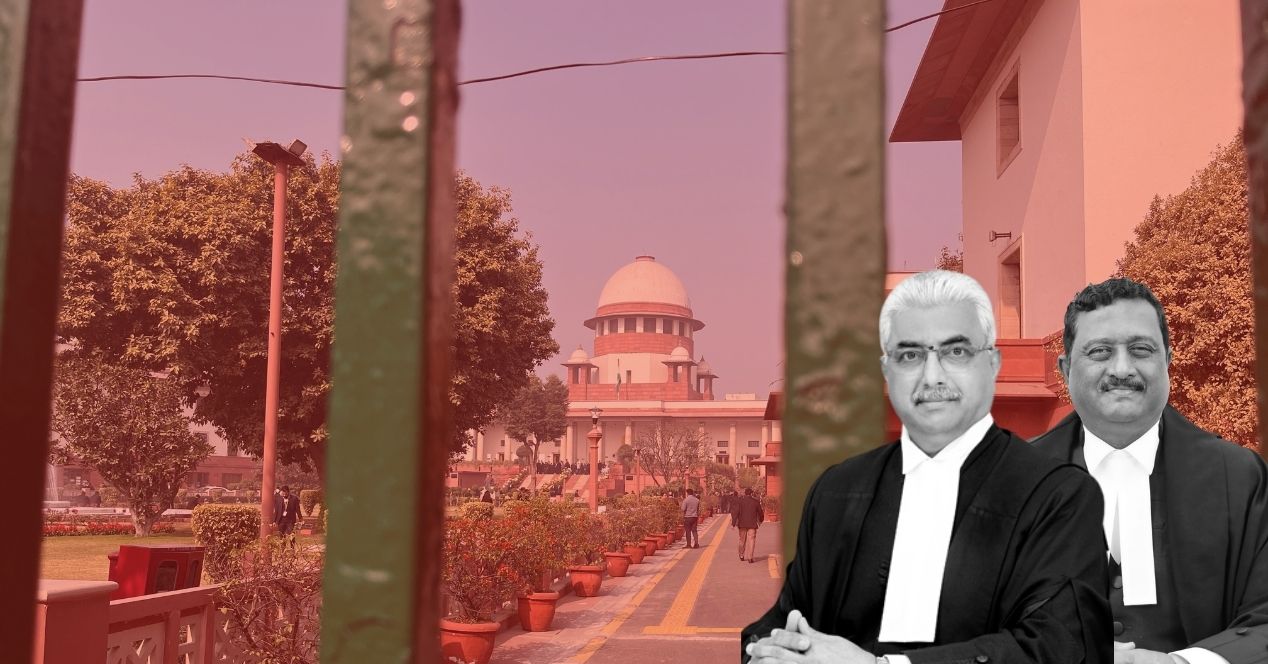
Four days after Andrabi, this problem was recognised by a Bench of Justices Aravind Kumar and P.B. Varale in Tasleem Ahmed v State (Government of NCT of Delhi) (2026).
The Bench directed the Registry to place the papers before the CJI, asking him to settle the correct approach to bail under special statutes, reconciling Article 21, prolonged custody and statutory bail bars.
In both Andrabi and Tasleem Ahmed, the Court granted interim bail to the accused, reasoning that they should not remain in custody until a question of law is resolved.
Does Abbuhurera’s case also require a larger bench reference?
Suppose the present Bench, led by Justice Bhuyan, holds that a court can never fix a period barring renewal of bail. Such a ruling may be hard to square with the operative direction in Gulfisha Fatima, giving rise to the need for a reference.
However, the Court could decide Abbuhurera on a narrow ground, limiting its decision to the case at hand and not every decision regulating successive bail applications.
Gulfisha Fatima and Abbuhurera differ in material ways. In Gulfisha Fatima, the Court refused bail on merits after weighing the UAPA bar and allowed renewal on the basis of two defined events. In Abbuhurera, the Gujarat High Court permitted withdrawal and then imposed a one-year bar, providing no fixed trigger and no liberty to approach the court on a material change.
The Supreme Court could thus break it down into two independent questions. One, can a court curb repetitive pleas on identical grounds? Two, can it impose a bar on prospective pleas?
It may reiterate the need to demonstrate material change for subsequent bail pleas, and caution courts from shutting their doors to unforeseeable events such as illness, long custody or examination of a key witness.
Framed this way, the case concerns access to bail jurisdiction. It would not touch the conditions for bail under the NDPS Act or the UAPA and could then be decided without reopening the conflict referred in Tasleem Ahmed.
Alternatively, Abbuhurera’s petition could be tagged with the Tasleem Ahmed reference.
The eventual decision could clarify an important distinction in bail law. A court may require a successive plea to show new circumstances. Whether it may forbid such a plea before those circumstances arise remains unsettled. The matter is scheduled for hearing on 28 July.
Related articles
Analysis
Part 1 | Andrabi’s unprecedented reliance on conviction data for granting bail under UAPA
The UAPA reference on the face of it has to only weigh the liberty consideration. Five years worth of cases suggest more nuances
Analysis
Part 2 | Andrabi engages with the Union’s deferring tactic in UAPA bail cases
The Union’s approach to defer bail pleas by a year was rejected by the Bench, paving the way for bail under the stringent statute
Analysis
SC seeks reference to a larger Bench to resolve UAPA bail divergence
Two coordinate Benches read K.A. Najeeb differently; the Court referred the question and granted interim bail to two accused.
Analysis
2026 Supreme Court mid-year review: Bail
Recognising unresolved questions in bail jurisprudence, the top court signalled its intent to arrive at uniformity