


Analysis
2026 Supreme Court mid-year review: Bail
Recognising unresolved questions in bail jurisprudence, the top court signalled its intent to arrive at uniformity
The first six months of 2026 saw 13 notable decisions on bail by the Supreme Court. The cases concerned the imposition and fulfillment of bail conditions, prolonged incarceration, matters for trial-stage determination and more.
In a significant development, the Court referred questions regarding the applicability of Article 21 as a grounds for bail under the Unlawful Activities (Prevention) Act, 1967 to a larger bench.
With the Court on partial working days this month, we step back for a bird’s eye view of bail jurisprudence at the apex institution.
Prolonged incarceration
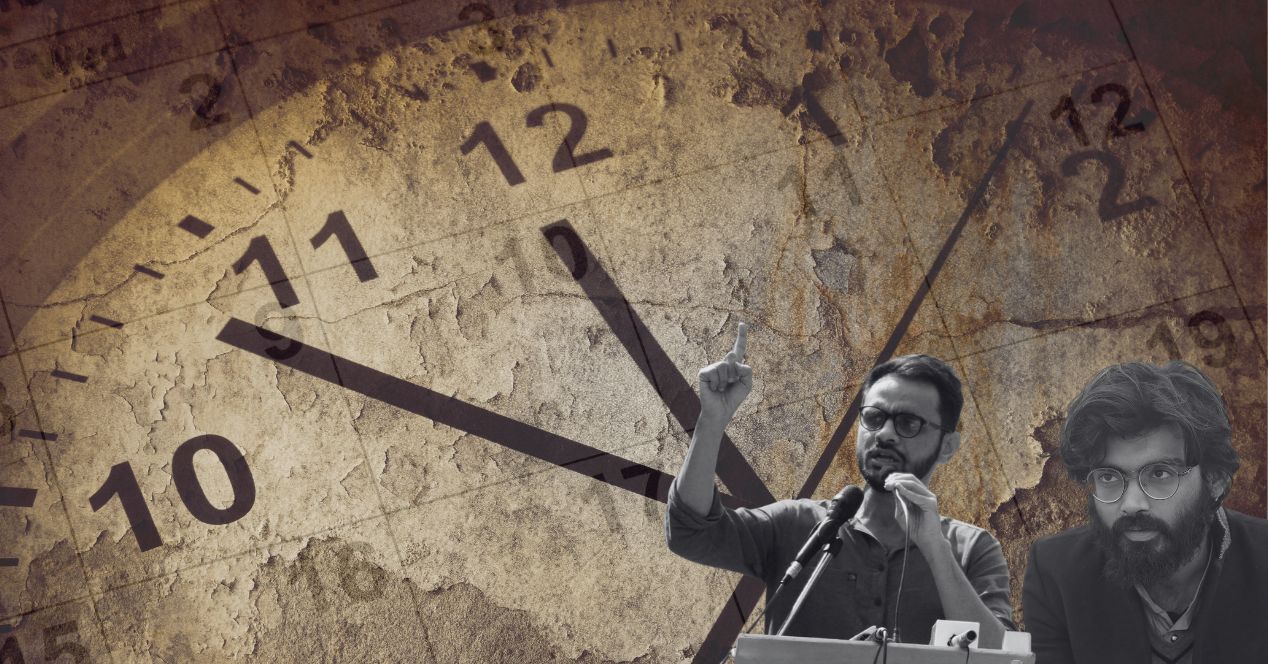
On 5 January, in Gulfisha Fatima v State (Govt. of NCT of Delhi), a bench of Justices Aravind Kumar and N.V. Anjaria dismissed the bail pleas of Umar Khalid and Sharjeel Imam while granting bail to five co-accused in the 2020 Delhi Riots case. Both Khalid and Imam were in custody for over 5 years. The Bench rejected the petitioner’s reliance on Union of India v K.A. Najeeb, which held that bail may be granted to UAPA accused if there is delay in trial. The Bench in Gulfisha Fatima observed that while prolonged pre-trial incarceration “implicates the constitutional guarantee under Article 21”, duration alone cannot serve as a basis for bail.
A day later, Justices P.V. Sanjay Kumar and Alok Aradhe granted bail on the ground of prolonged incarceration in Arvind Dham v Directorate of Enforcement. The Bench relied on a UAPA precedent to observe that Article 21 “applies irrespective of the nature of the crime.” The accused was charged under the Prevention of Money-Laundering Act, 2002 and had been in pre-trial custody for 16 months and 20 days.
On 18 May, in Syed Iftikhar Andrabi v National Investigation Agency, Jammu, the Court expressed reservations and diverged from Gulfisha Fatima. It explicitly upheld prolonged incarceration as a ground for bail under the UAPA, adding that a Division Bench of two judges is bound by a decision delivered by a three-judge bench i.e. K.A. Najeeb. The Bench of Justices B.V. Nagarathna and Ujjal Bhuyan granted bail to the accused who had been in pre-trial custody for 5 years and 11 months.
Days later, the question of bail in UAPA matters on grounds of prolonged incarceration was referred to a larger bench by Justices Aravind Kumar and P.B. Varale in Tasleem Ahmed v State Govt. of NCT of Delhi. Recognising the “perceived divergence” of views on the subject, the Bench noted the authoritative value of K.A. Najeeb. Interim bail was granted to the appellants.
On 2 June, Justices Sanjay Karol and N.K. Singh in State of Punjab v Balraj Singh @ Billa noted that the Court has not expounded on what constitutes “prolonged incarceration”. The Bench refrained from deliberating on this issue in light of Tasleem Ahmed. Nonetheless, it set aside the High Court’s grant of bail on multiple grounds including short duration of custody (1.6 years) and the maximum sentence for the alleged offence (20 years). It observed that in case of conflict between sovereignty of the nation and personal liberty, the former shall prevail.
Bail conditions
The Court delivered three notable decisions on bail conditions; the limits of judicial powers and the consequences of non-compliance by the applicant.
First, Justices Karol and Singh in Satinder Singh Bhasin v NCT Delhi affirmed that grant of bail is strictly contingent upon bonafide and substantial fulfillment of bail conditions. The Bench cancelled the applicant’s bail after they found that he had unlawfully sourced funds to pay for his bail bond.
A few weeks later, in Sachin Yadav v State (NCT of Delhi), Justices Dipankar Datta and S.C. Sharma clarified that bail conditions which curtail fundamental rights can be imposed only in exceptional circumstances. The Bench set aside the condition restricting the applicant from residing in and conducting business from the same building as the complainant as violative of Article 21.
On 4 May, Chief Justice Surya Kant and Justice Joymalya Bagchi reiterated the limits of judicial discretion and held that bail conditions violating Articles 14 to 17 are null and void. The Court took suo moto cognisance of orders by the Odisha judiciary granting bail to Dalit and Adivasi activists on the condition that they clean the Kashipur police station for two months. The Court set aside the conditions, describing them as “abhorrent and degrading”. The Court also noted the likelihood of serious caste-based bias.
Matters for trial not bail
On 9 January, in State of Uttar Pradesh v Anurudh, Justices Karol and Singh held that age-determination tests are a matter of trial and cannot be directed at the stage of bail wherein only a prima facie consideration may be made under Section 439 of the Code of Criminal Procedure, 1973. The case at hand involved allegations of kidnapping and sexual assault of a minor. While setting aside the High Court order, the Bench decided not to revoke the bail granted to the accused.
On 23 February, Justices Sandeep Mehta and Vikram Nath pronounced a similar ruling in Shobha Sonavane v Samadhan Sonavane. While asserting the equal liability of persons accused of unlawful assembly, they held that consideration of medical evidence and the individual role of each person is a matter of trial, not bail.
Guidelines on promptitude and disclosure of facts
On 11 February, in Zeba Khan v State of Uttar Pradesh, Justices Ahsanuddin Amanullah and R. Mahadevan and revoked bail upon finding the applicant guilty of suppressing material facts regarding criminal antecedents. The Bench directed all high courts to adopt frameworks to mandate disclosure of criminal antecedents, prior bail rejection, duration of custody, compliance with constitutional and statutory safeguards, and the progress of trial.
Recently, CJI Surya Kant and Justice Bagchi issued guidelines to prevent undue delay on part of the judiciary in Pila Pahan @ Peela Pahan v State of Jharkhand. These included timelines for pronouncement of reserved judgements, uploading of judgements, monitoring of delayed matters and notably, “extra promptitude” in matters of bail. Once bail applications are heard, the Bench noted that pronouncement, uploading, communication to jail authorities and release from custody should preferably take place on the same day.
Change in circumstances and grounds of parity
Once an application for bail is denied, there is no bar on granting bail in a subsequent application as long as the decision is informed by a change in circumstances, new grounds and due consideration of the applicant’s conduct after the first rejection. This clarification was issued by Justices Karol and Singh on 22 May in Mohseen v State of Uttar Pradesh.
The Bench further clarified that bail on grounds of parity with co-accused persons cannot be mechanically granted.
Related articles
Analysis
The first half: A Court under strain
As the Court's strength rises to 38, old cases, open questions and new controversies crowd its attention
Analysis
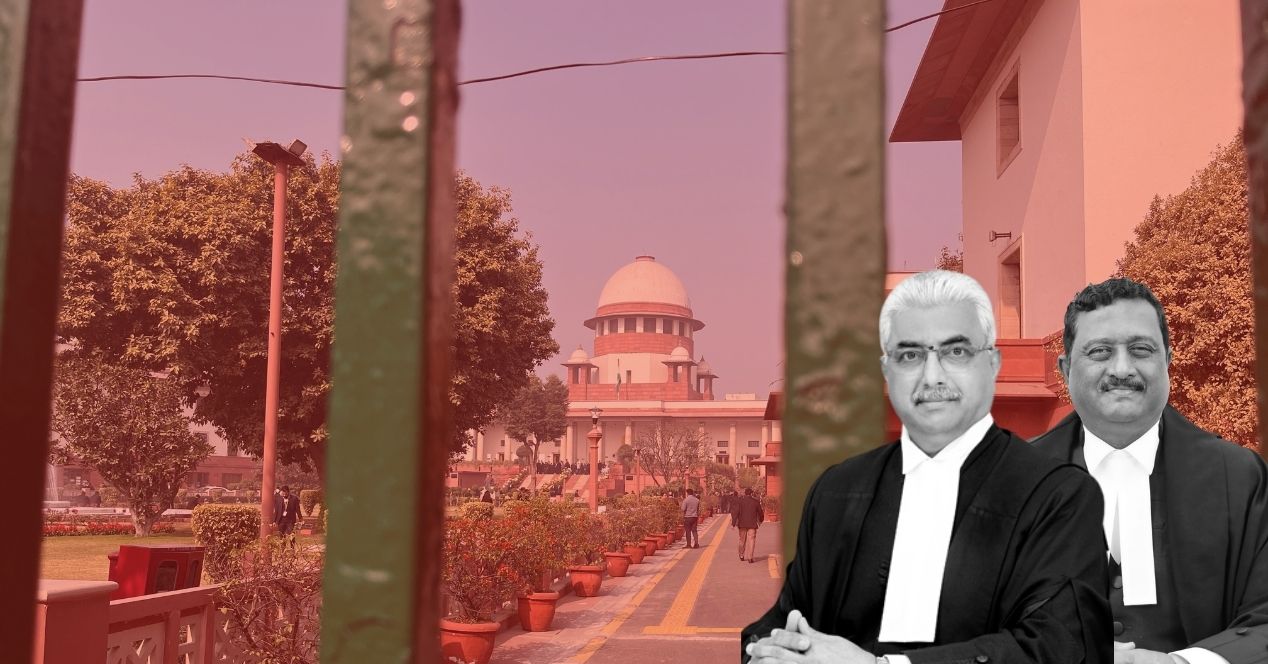
SC seeks reference to a larger Bench to resolve UAPA bail divergence
Two coordinate Benches read K.A. Najeeb differently; the Court referred the question and granted interim bail to two accused.
Analysis
Sedition in abeyance, but not in limbo
The Court's clarification protects accused persons trapped by its 2022 freeze, but the constitutional question lingers
Analysis
Umar Khalid bail case: Constitutional abdication, not judicial restraint
By denying bail to Khalid and Sharjeel Imam, the Supreme Court could have precipitated a doctrinal shift with implications for undertrials