


Analysis
Delhi CEC protests | SC seeks police orders, considers plea for women-led committee
The Bench declined immediate restoration of Jantar Mantar as a protest site and sought State responses on 46 related petitions
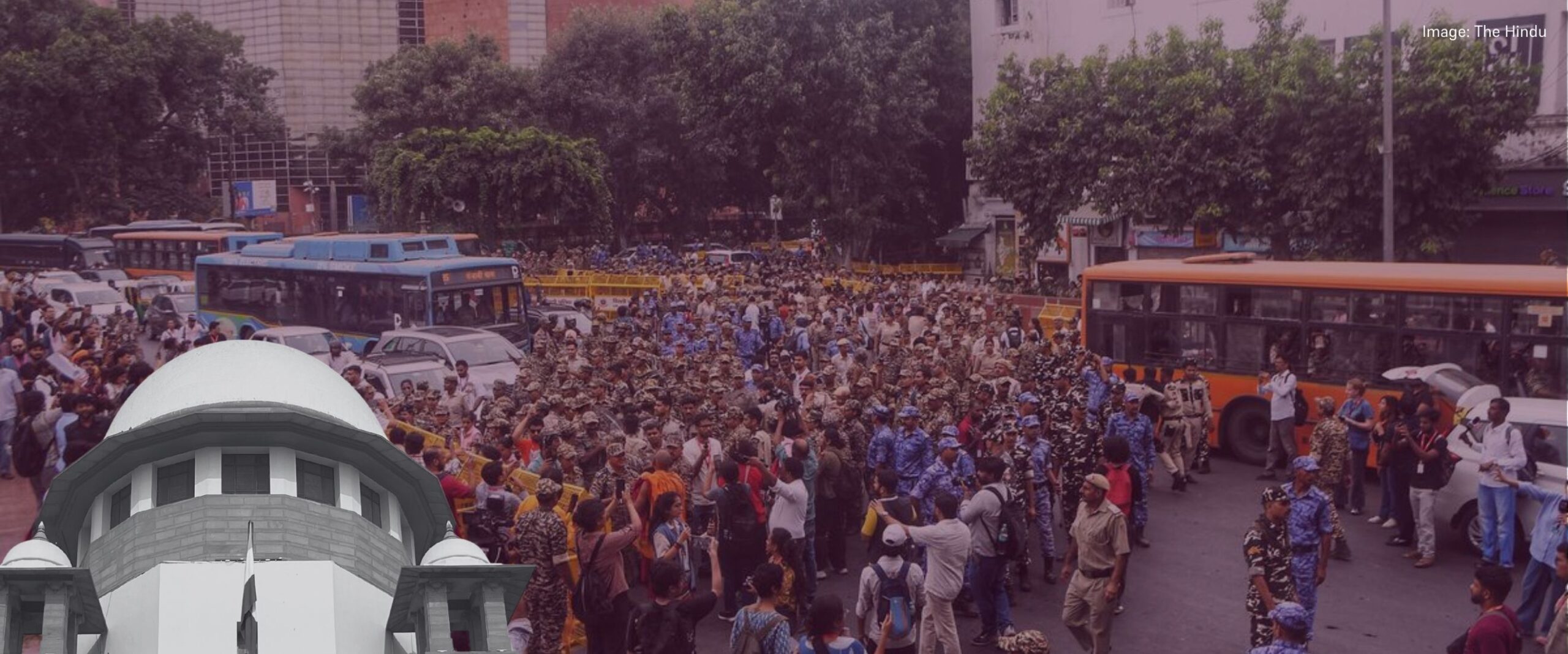
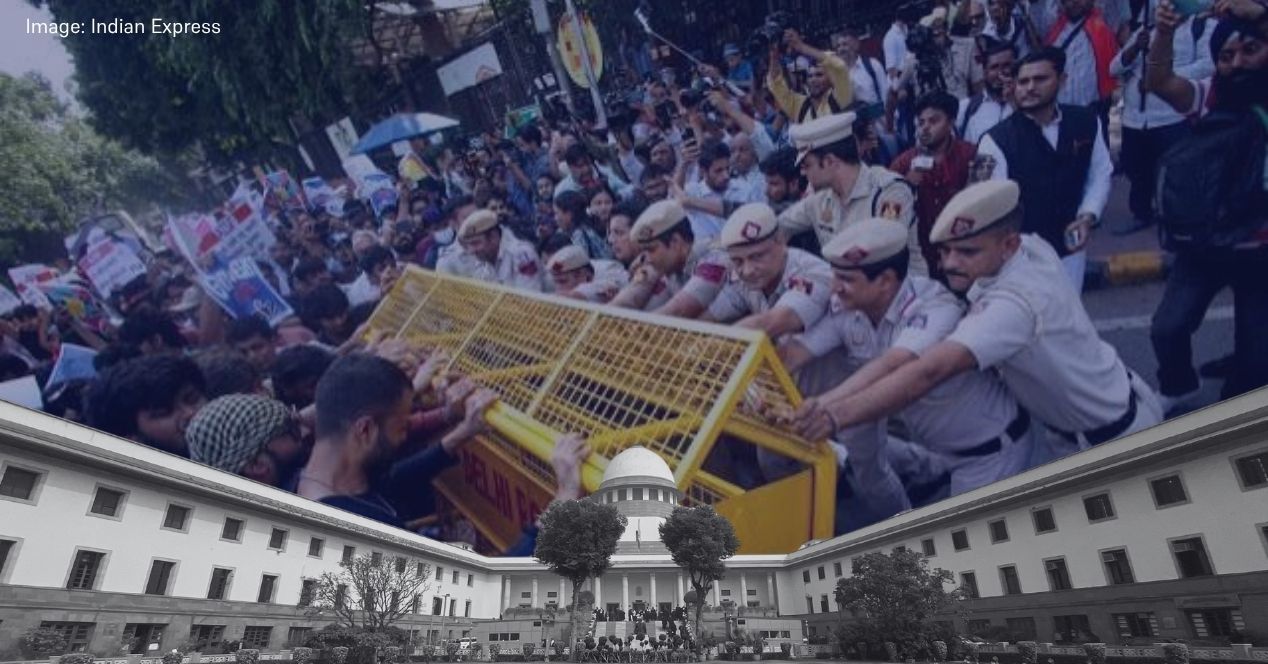
The Chief Justice’s court was chaotic and overcrowded today, with advocates spilling into the aisles and shouting over each other, forcing the Bench to sit well past its usual recess. Chief Justice Surya Kant and Justice Joymalya Bagchi heard a cluster of petitions arising from the recent protests in New Delhi against Chief Election Commissioner Gyanesh Kumar.
The hearing covered several disputes: whether prohibitory orders were in force when demonstrators were detained, whether the police had complied with the Court’s earlier directions on public transport, and how complaints of police harassment of women journalists should be investigated.
‘Arguing against a ghost’: Where are the Section 163 orders?
Senior Advocate Menaka Guruswamy questioned the legal basis for police action against protesters between 10-12 October, pointing to the absence of relevant orders under Section 163 of the Bharatiya Nagarik Suraksha Sanhita, 2023 (BNSS). Justice Bagchi asked the Solicitor General Tushar Mehta to produce the orders, describing the challenge as “arguing against a ghost”.
At a special Sunday hearing on 11 October, the Bench had iterated that protesters should not be detained except in accordance with law, particularly during peaceful, unarmed assemblies outside areas covered by Section 163. Authorities were instructed to remove boards imposing Section 163 restrictions on the Supreme Court premises.
Delhi Police denies contempt
On 15 October, a counter-affidavit was filed in the petition alleging contempt of the Court’s 9 October directives. Delhi Police Commissioner Anurag Kumar denied wilful or deliberate disobedience and defended the restrictions imposed on 10 October, including those affecting Metro and rail services. According to the police, restrictions initially covered 57 Metro stations before being reduced to 45 and operations across the Delhi Metro network resumed at 10 PM.
The affidavit cites public-order concerns to justify the restrictions, alleging that an earlier protest organised by the Cockroach Janta Party (CJP) at Jantar Mantar continued beyond its permitted period and that a subsequent march towards Parliament proceeded without permission. It claimed that more than 35,000 people attended the march, breaching barricades and injuring over 240 police personnel. The police claim to have deployed 15,000 personnel, including 3,750 women officers on 10 October.
The affidavit further refers to disturbances between 6 and 8 October, alleging injuries to police personnel and damage to detention buses. It identifies CJP founder Abhijeet Dipke and Chief spokesperson Saurav Das as responsible for the party’s protest communications. An application dated 7 October was submitted by Das to intimate the police of the 10 October demonstration at Jantar Mantar.
Treating the 7 October communication as an intimation rather than an application seeking permission to hold the protest, the police stated that they denied permission for the protest on grounds of public order.
De-notification of protest sites
Senior Advocate Gopal Sankaranarayanan urged the Court to restore Jantar Mantar’s status as a designated protest site. The challenge questioned the basis for its de-notification, submitting that the Delhi Police informed the Delhi High Court that their decision followed the 9 October directions. Mehta responded that the Court’s order was not the basis for the decision and submitted a report, stating that a committee had been constituted earlier. CJI Surya Kant said the Court would examine the reasons for the decision.
The question is significant in light of Mazdoor Kisan Shakti Sangathan v Union of India (2018), in which the Court rejected a blanket prohibition on protests in Jantar Mantar and called for peaceful demonstrations to be regulated instead.
Senior Advocate Mukta Gupta relied on the right to protest, arguing that demonstrations must be permitted at locations where protesters can be heard and seen by the public.
Women journalists allege harassment by police
Appearing for the Network of Women in Media, Senior Advocate Indira Jaising sought constitution of a women-led committee to examine complaints from women journalists of sexual harassment and violence by the police. The committee must frame guidelines for journalists covering demonstrations, she submitted, proposing a panel of women judges, former police officers, social workers and other eminent persons. When asked by the Bench to suggest potential members, Jaising said she would submit their names in a sealed envelope.
Mehta opposed the proposal and Jaising’s involvement in selection of members. He opposed blanket guidelines on the protection of journalists, arguing that carrying a phone could not, by itself, establish someone’s status as a journalist.
Jaising then referred to the case of a woman journalist who had accused Assistant Commissioner of Police Vivek Bhagat of inappropriate touching and pushing during the protest. The woman alleged that the police refused to register her complaint against him. An FIR was subsequently registered against her under the Scheduled Castes and Scheduled Tribes (Prevention of Atrocities) Act, 1989 after Bhagat filed a complaint alleging use of casteist slurs and public humiliation. Mehta disclosed the woman’s name and later withdrew his response with an apology for doing so.
The Court granted the woman interim protection from coercive action.
Court seeks records, orders preservation of evidence
The Bench issued notice to the Union Government and Delhi Police on the batch of petitions and directed the respondents to file their replies. It ordered all law enforcement agencies to preserve CCTV footage and other digital material relating to the protests, while allowing private parties to preserve recordings in their possession. Both sides were instructed to appoint nodal counsel to compile overlapping issues across the 46 pending matters and lawyers were not to file further petitions on the protests.
Related articles
Analysis
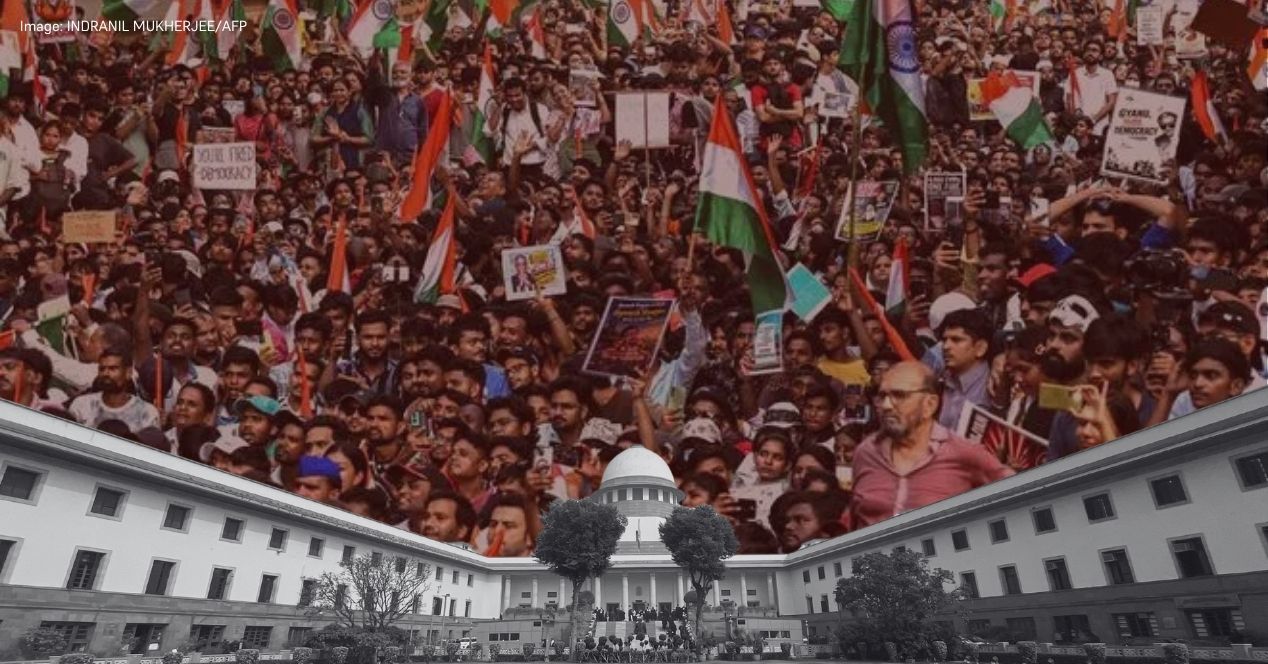
Delhi CEC Protests | Live Updates from the Supreme Court
On the extraordinary occasion of a march to the Supreme Court by the Leader of Opposition, we report between Court and the streets
Analysis
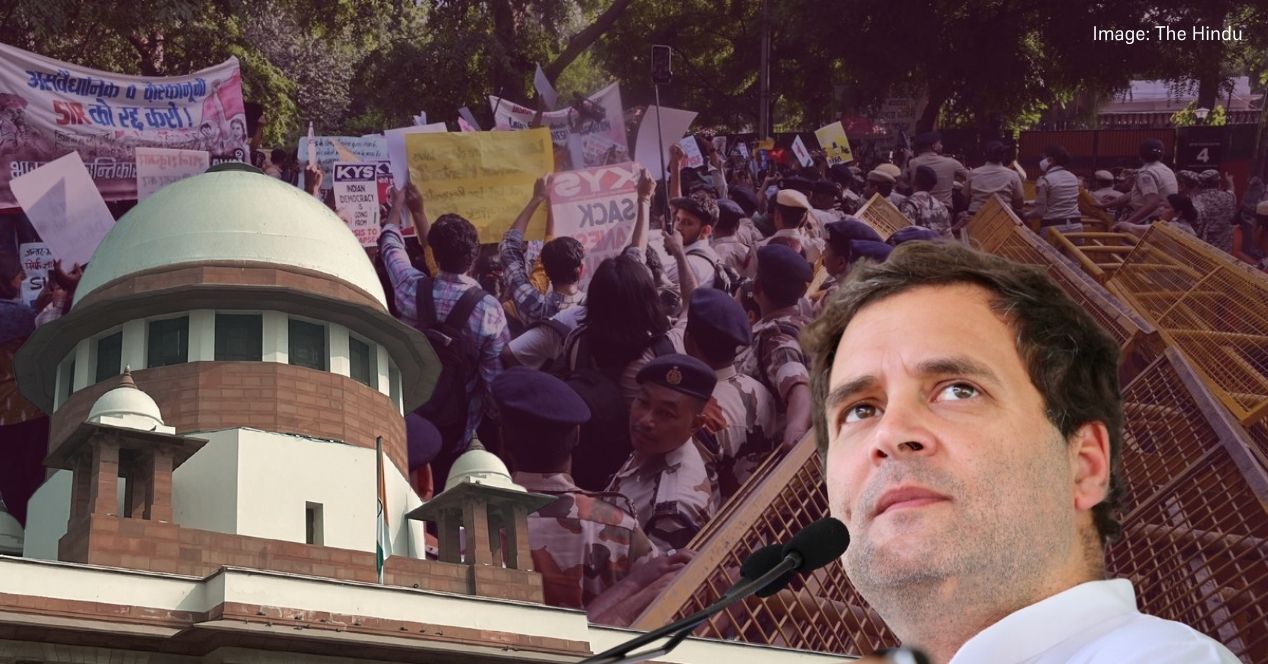
What are the sub judice cases that form part of INDIA Bloc’s memorandum to CJI Surya Kant?
CJI Surya Kant declined to meet INDIA bloc leaders as matters concerning alleged electoral irregularities are pending before the SC
Analysis
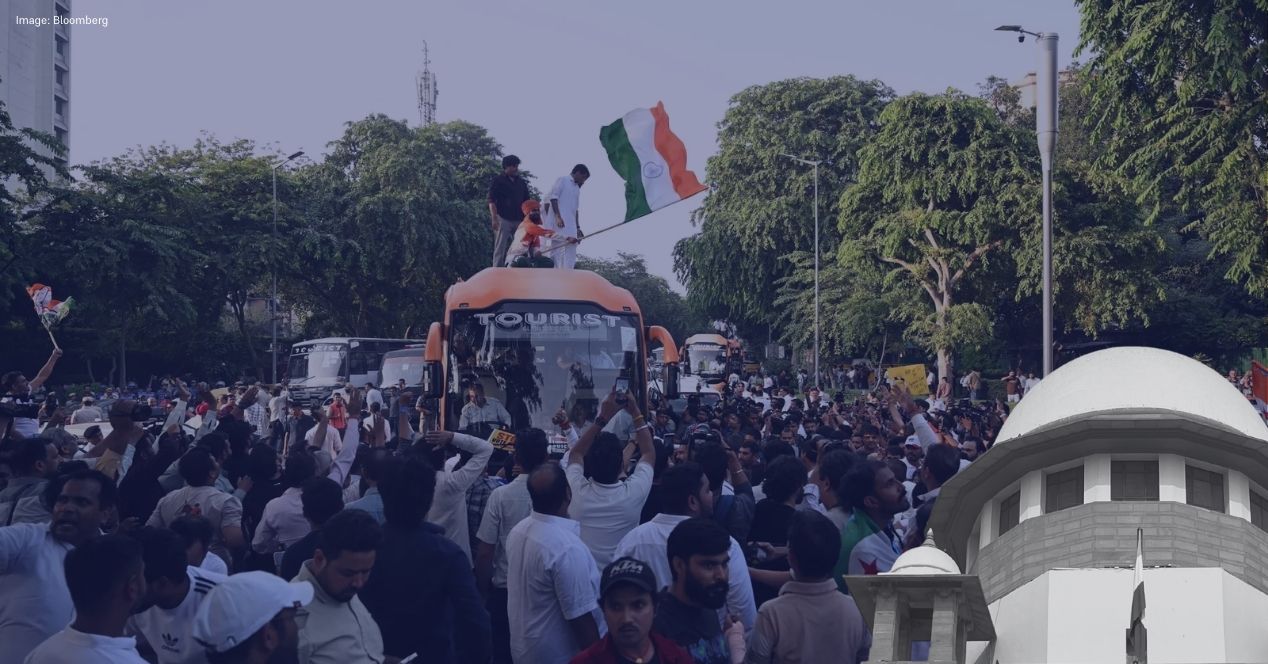
Delhi protests: No immediate relief on contempt and Habeas Corpus petitions
The Supreme Court directed restoration of services in New Delhi and will hear compliance reports from State authorities on Tuesday
Analysis
Dissent over SIR: Making sense of Supreme Court hearings
The extraordinary Sunday sitting raised expectations, but its directions will count only if the following proceedings produce safeguards